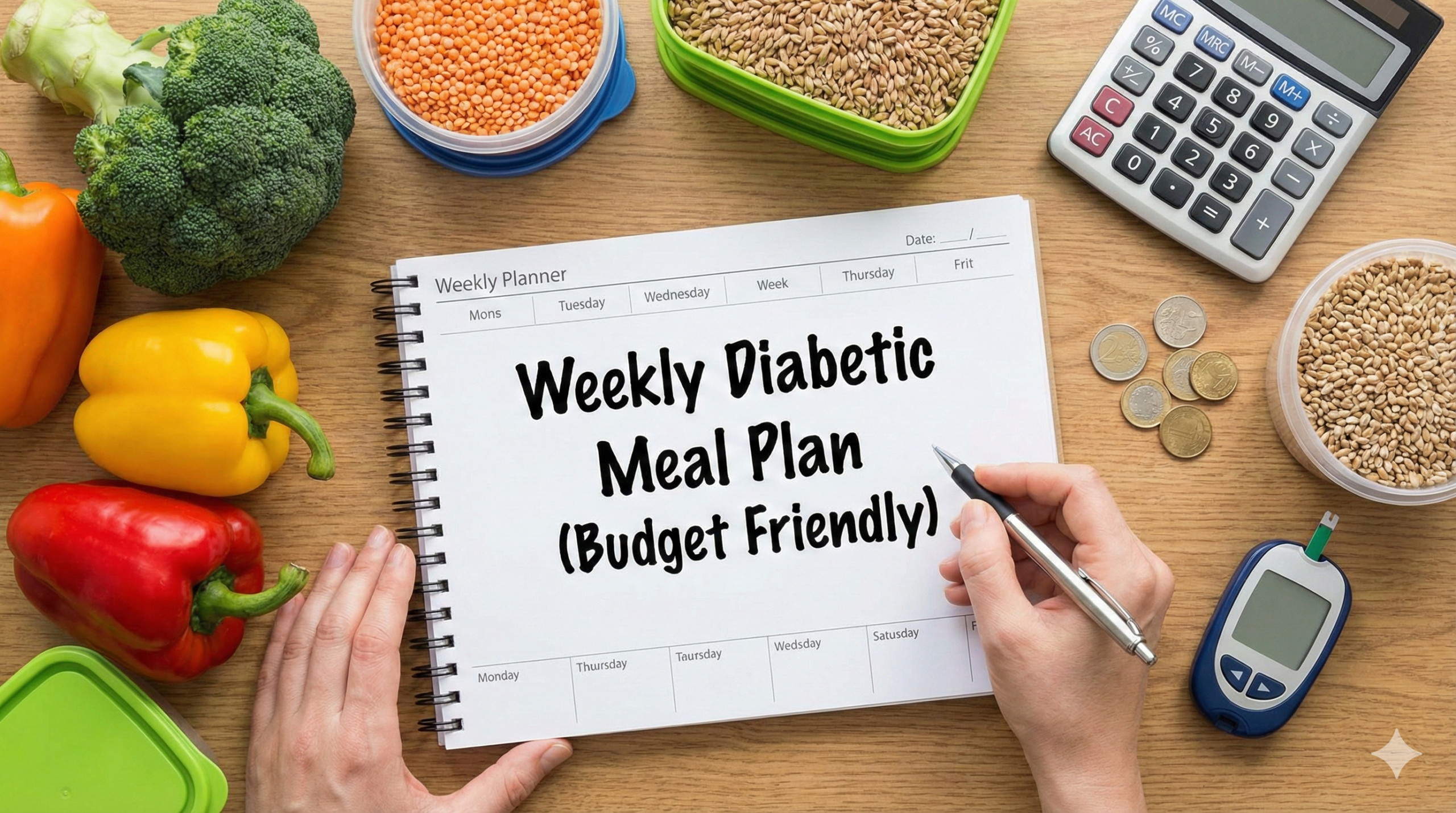
The Ultimate Budget-Friendly Weekly Diabetic Meal Plan: Health Without the High Price Tag
There is a pervasive myth in the world of nutrition that eating healthy requires a celebrity-sized bank account. You walk into a health food store and see $12 almond butter, $8 loaves of gluten-free bread, and organic produce that costs more than your monthly utility bill. For someone managing diabetes, where medication and monitoring supplies already strain the wallet, this can feel discouraging.
However, the truth is quite the opposite. Some of the most powerful foods for stabilizing blood sugar—beans, eggs, oats, and frozen vegetables—are also the most affordable items in the grocery store. A weekly diabetic meal plan (budget friendly) isn’t just about saving pennies; it is about simplifying your nutrition to its most effective, unprocessed roots. By focusing on whole foods and smart shopping, you can eat delicious, blood-sugar-stabilizing meals for under $50 a week.
This guide will dismantle the idea that you need “fancy” food to manage your A1C. We are going to build a robust, flavor-packed week of eating that respects your physiology and your finances. Whether you are looking for a classic 7-day diabetic menu or need to pivot to a low-carb approach, the principles of economy remain the same.
The “Cheap & Healthy” Strategy (Backed by Basics)
Before we dive into the daily menu, we need to establish the ground rules of budget diabetic shopping. To make this plan work, we lean on specific strategies that lower costs while keeping nutrient density high and glycemic load low.
1. Embrace the Freezer Aisle (Nutrient Lock, Lower Price)
Fresh produce is wonderful, but it spoils quickly and fluctuates in price. Frozen vegetables (spinach, broccoli, green beans, cauliflower) are picked at peak ripeness and flash-frozen. They are often 30-50% cheaper than fresh equivalents and result in zero food waste. They are perfect for stir-fries, soups, and even smoothies. Plus, frozen berries cost a fraction of fresh out-of-season ones.
2. Proteins: Think Beyond Steak (Value Cuts & Plants)
Meat is usually the most expensive part of a meal. In this plan, we utilize:
- Eggs: The gold standard of cheap protein. At ~$2-3 per dozen, each egg is a powerhouse of protein and healthy fats.
- Canned Tuna: High protein, healthy omega-3s, shelf-stable. Buy in bulk when on sale.
- Chicken Thighs: Often half the price of breasts and more flavorful, staying moist during cooking.
- Plant-Based Proteins: Lentils and dried beans cost pennies per serving and are packed with fiber that blunts blood sugar spikes. A one-pound bag of lentils feeds a family of four for under $2.
3. Bulk Buying “Smart Carbs” (Low-GI Staples)
We avoid processed “diabetic-friendly” bars and shakes. Instead, we buy large bags of rolled oats, brown rice, and dried beans. These provide complex carbohydrates that digest slowly, unlike cheap white bread or pasta. Oats, for instance, cost about $0.10 per serving.
Pro Tip: The “Cook Once, Eat Twice” Rule (Leftover Magic)
This meal plan relies on leftovers. Cooking a large batch of chili or roasting a whole chicken saves electricity/gas and ensures you have a free lunch the next day. This prevents the “I have nothing to eat, I’ll just buy fast food” trap – which can cost $10+ per meal. Reheating costs pennies.

The Budget Chef’s Secret Weapon: The Slow Cooker
Turn cheap cuts of meat and dried beans into gourmet meals while you work. A slow cooker is essential for maximizing flavor on a budget – it tenderizes inexpensive cuts and cooks beans from scratch for pennies.
Check Price on AmazonYour 7-Day Budget-Friendly Diabetic Menu
This plan assumes a pantry with basic spices (salt, pepper, garlic powder, paprika, chili powder) and oil (vegetable or olive). It is designed to minimize waste—ingredients bought on Day 1 will be used again on Day 4. Estimated costs are based on average U.S. grocery prices (2025).
Day 1: The Pantry Staples Kickoff (Oats & Lentils)
Focus: utilizing eggs and oats for a low-cost start.
- Breakfast: Oatmeal (1/2 cup rolled oats cooked with water/milk), topped with 1 tbsp peanut butter and a dash of cinnamon. (Cost: ~$0.40)
- Lunch: Egg Salad (2 hard-boiled eggs, mustard, splash of mayo) served over a bed of spinach or in lettuce cups. (Cost: ~$1.20)
- Dinner: Lentil Stew: 1 cup dried lentils simmered with 1 diced carrot, 1 onion, and 1 can diced tomatoes (no salt). Season with garlic powder and cumin. Serves 4, cost per serving ~$1.50. Freeze extras.
- Snack: An apple (approx $0.50).
Cost note: day total ~$3.60
Day 2: Tuna & Frozen Veggies (Omega‑3 on a Dime)
Focus: High protein, omega-3s, low cost using canned tuna and frozen spinach.
- Breakfast: 2 Scrambled Eggs with 1/2 cup frozen spinach (thawed and squeezed). (Cost: ~$0.80)
- Lunch: Leftover Lentil Stew from Day 1. (Cost: $0.00 – already paid for!)
- Dinner: Tuna Patties: 1 can tuna (drained) mixed with 1 egg and 2 tbsp breadcrumbs (or oats), pan-fried in minimal oil. Served with steamed frozen broccoli. (Cost: ~$2.00 for two patties).
- Snack: Carrot sticks (from bulk carrots) with 2 tbsp hummus. (Cost: ~$0.60).
Day 3: The Chicken Thigh Feast (Bulk Buy)
Focus: Buying a family pack of chicken thighs for multiple meals. Thighs are ~$1.99/lb vs. breasts $3.99/lb.
- Breakfast: Yogurt (buy a large 32oz tub, not single cups) with 1 tbsp sunflower seeds. (Cost per serving: ~$1.00)
- Lunch: Tuna Salad over greens (use remaining half can of tuna from Day 2). (Cost: ~$1.50)
- Dinner: Baked Chicken Thighs (2 thighs) with 1 small roasted sweet potato (cubed) and 1 cup frozen green beans. Season with paprika and garlic. (Cost: ~$2.50)
- Snack: Hard-boiled egg (from the dozen).
Need a quicker plan? Check our 1-day simple diabetic menu for ultra-fast ideas.
Day 4: Leftover Leverage (Zero Cooking for Lunch)
Focus: Zero cooking for lunch to save time and money. Using leftover chicken and sweet potato.
- Breakfast: Oatmeal with peanut butter (repeat of Day 1). (Cost: ~$0.40)
- Lunch: Leftover Baked Chicken Thigh (sliced) and leftover sweet potato from Day 3, served over a handful of spinach. (Cost: $0.00)
- Dinner: “Fried” Rice: 1 cup cooked brown rice (made in bulk) sautéed with 1 cup frozen mixed veggies (peas/carrots/corn) and 2 scrambled eggs. Add soy sauce and a dash of sesame oil. (Cost: ~$1.20)
- Snack: Popcorn (air-popped from bulk kernels – about 3 tbsp kernels). (Cost: ~$0.15).
Day 5: Ground Turkey/Beef Day (Stretching Meat)
Focus: Ground meat stretches further than whole cuts, especially when combined with beans.
- Breakfast: Spinach and Cheese Omelet (2 eggs, handful frozen spinach, 1 oz cheddar). (Cost: ~$1.20)
- Lunch: Rice and Veggie bowl (leftover from Day 4). (Cost: $0.00)
- Dinner: Turkey/Beef Chili: 1/2 lb ground turkey or beef (browned), 1 can kidney beans (rinsed), 1 can diced tomatoes, chili powder, onion. Simmer 20 min. Serves 4, per serving ~$2.50. Freeze half.
- Snack: A banana (approx $0.30).
Day 6: Soup Saturday (Volume & Hydration)
Focus: Volume eating with high fluid content – filling and cheap.
- Breakfast: Scrambled eggs with salsa (2 eggs, 2 tbsp salsa). (Cost: ~$0.90)
- Lunch: Leftover Chili from Day 5. (Cost: $0.00)
- Dinner: Vegetable Frittata: Use up any remaining fresh veggies (onions, spinach, maybe a bell pepper) baked with 6 eggs (serves 2-3). Serve with a simple side salad (lettuce, lemon). (Cost: ~$1.50 per serving)
- Snack: Sunflower seeds (1/4 cup). (Cost: ~$0.30).
Looking for more structure on the weekend? See our 3-day diabetic meal plan.
Day 7: The Fridge Clear-Out (Waste‑Free Sunday)
Focus: Ensuring no food goes to waste before the next shopping trip.
- Breakfast: Banana Pancakes (2 eggs + 1 mashed banana, cooked like pancakes). High protein, no added sugar. (Cost: ~$0.80)
- Lunch: Leftover Frittata from Day 6. (Cost: $0.00)
- Dinner: “Kitchen Sink” Stir-fry: Any remaining meat (even a little), frozen veggies, served over the last of the brown rice. Use soy/ginger for flavor. (Cost: ~$1.50)
- Snack: Apple slices (last apple).

Save Leftovers, Save Money
Don’t let that chili or lentil stew go to waste. A good set of airtight containers pays for itself in one week by preserving your bulk-cooked meals. Perfect for freezing portions.
Check Price on AmazonThe Math: Budget vs. Standard Diet (Real Numbers)
Let’s look at the numbers. Why is this plan cheaper than a standard “American” diet or even a typical “Health Food” diet? We compare per serving costs.
| Category | This Budget Plan | Typical “Healthy” Diet | Standard Takeout/Processed |
|---|---|---|---|
| Protein | Eggs, Beans, Canned Tuna, Chicken Thighs (~$0.50-$1.50/serving) | Grass-fed Steak, Fresh Salmon, Organic Chicken Breast (~$4.00-$8.00/serving) | Fast Food Burgers, Fried Chicken (~$5.00-$10.00/meal) |
| Vegetables | Frozen Veggies, Cabbage, Carrots, Onions (~$0.50/serving) | Organic Kale, Fresh Berries, Out-of-season Asparagus (~$2.50/serving) | Usually absent or a token lettuce leaf |
| Carbohydrates | Bulk Oats, Brown Rice, Dried Beans (~$0.15/serving) | Quinoa, Ancient Grains, Gluten-Free Artisan Bread (~$1.50/serving) | Fries, Soda, White Buns (cheap but high healthcare cost) |
| Total Daily Cost (avg) | ~$5.00 – $7.00 per day | ~$15.00 – $25.00 per day | ~$20.00 – $30.00 per day |
By saving ~$10 a day, you save $300 a month. That covers a significant portion of diabetic supplies (test strips, etc.) or allows you to invest in a 30-day comprehensive plan for future variety.
Your Budget Shopping List (Total ~$40-50 for the week)
Stick to this list to avoid impulse buys. Shop the perimeter of the store for fresh items and the bottom shelves for bulk items (top shelves usually have more expensive brands).
🥕 Produce
- Bananas (1 bunch, ~5-6)
- Apples (bag of 6)
- Carrots (2 lb bag)
- Onions (3 lb bag)
- Sweet Potatoes (3 large)
- Spinach (fresh or frozen – frozen is cheaper)
- Lemons (2, for flavor)
🥚 Proteins & Dairy
- Eggs (1 dozen, preferably large)
- Chicken Thighs (family pack, ~2 lbs)
- Ground Turkey or Beef (1 lb)
- Canned Tuna (3 cans, in water)
- Plain Yogurt (32 oz tub)
- Optional: block of cheddar cheese (lasts longer than shredded)
🥫 Pantry & Frozen
- Rolled Oats (canister or bulk bin)
- Brown Rice (1 lb bag)
- Dried Lentils (1 lb bag)
- Canned Kidney Beans (or dried, if you have time)
- Peanut Butter (natural, no sugar)
- Frozen Mixed Veggies (peas/carrots/corn)
- Frozen Broccoli (large bag)
- Frozen Spinach (block or bag)
- Popcorn kernels (bulk)
Expert Tips for Sticking to the Budget (Mindset Matters)
Creating the plan is easy; sticking to it when life gets busy is the hard part. Here is how to stay on track and keep your wallet happy.
1. Drink Water (The Ultimate Free Drink)
Soda, juice, and fancy coffees drain your budget and spike your sugar. Water is free (from the tap) and essential for kidney health. Flavor it with a slice of lemon or cucumber if you need variety. A reusable bottle saves hundreds a year.
2. Check the Unit Price (Don’t Be Fooled by Sales)
Always look at the small print on the price tag that says “price per ounce” or “per 100g.” Sometimes the larger bag isn’t cheaper. Sometimes the “sale” item is still more expensive than the store brand. Store brand oats and canned goods are usually identical to name brands.
3. Don’t Shop Hungry (The Golden Rule)
Shopping while hungry leads to buying snacks. Diabetic snacks are notoriously expensive. Eat a hard-boiled egg or a spoon of peanut butter before you leave the house.
4. Use Inexpensive Flavor Boosters
Garlic, onions, spices, and vinegar add flavor without carbs or cost. Buy spices from bulk bins or international aisles – they’re often much cheaper.
Once you master this week, you might feel ready to tackle a longer duration. Our 14-day diabetic meal plan builds on these principles with slightly more variety.

Stop Buying Drinks
A durable, reusable water bottle saves you hundreds of dollars a year on bottled beverages and keeps your hydration levels optimal. Plus, it’s eco-friendly.
Check Price on AmazonFrequently Asked Questions (Budget Edition)
Is diabetic diet expensive?
No, whole foods like beans, oats, eggs are cheap. Avoid processed “diabetic” snacks.
Canned veggies ok?
Yes, choose “no salt added” or rinse well to reduce sodium.
Frozen vs fresh?
Frozen is just as nutritious, often cheaper, and reduces waste.
Cheapest protein?
Eggs, lentils, canned tuna, chicken thighs, and bulk beans.
How meal prep saves?
Prevents takeout, uses every ingredient, saves time.
Brown rice worth it?
Yes, low-GI and only ~$0.15/serving – far better than white.
Can I drink coffee?
Brew at home – black or splash of milk, very cheap and healthy.
Need organic?
No, conventional is fine; prioritize whole foods over organic processed.
Save more on veg?
Buy cabbage, carrots, onions – cheap and long‑lasting. Frozen spinach is a lifesaver.
Leftovers for breakfast?
Absolutely! Top chili with an egg for a fast, zero‑cost breakfast.
Best cheap sweetener?
Bulk stevia or monk fruit – zero glycemic impact, pennies per serving.
Vegetarian version?
Swap tuna/chicken for extra beans, lentils, eggs – still budget‑friendly.
Final Thoughts: Your Health is an Investment, Not an Expense
Following a budget-friendly weekly diabetic meal plan requires a shift in mindset. It asks you to value simple, raw ingredients over convenient packaging. But the payoff is immense. Not only do you save money at the checkout line, but you also invest in your long-term health, potentially saving thousands in future medical costs.
Start with this 7-day plan. See how much money you save. Feel the difference in your energy levels. And remember, healthy eating doesn’t have to be complicated or costly—it just has to be consistent. You’ve proven you can eat well for less.
*affiliate links help us create free resources – all product URLs unchanged.