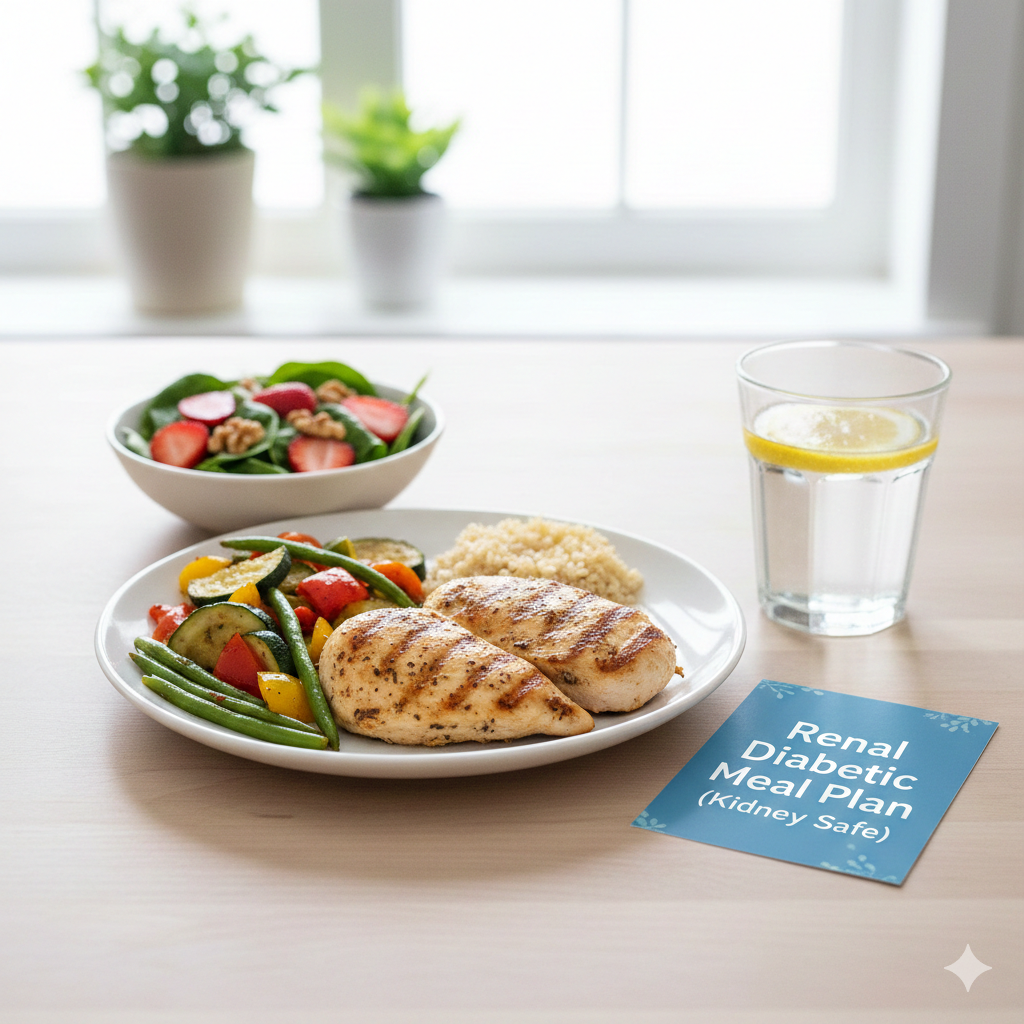
Renal Diabetic Meal Plan: The Kidney-Safe Guide to Dual Management
Managing diabetes is complicated. Managing Chronic Kidney Disease (CKD) is complicated. When you have both—a condition often called “Diabetic Kidney Disease”—nutritional advice can feel like a paradox. Foods that are celebrated in a standard diabetic diet, like whole grains, nuts, and avocados, can be dangerous for someone with advanced kidney disease due to high potassium and phosphorus levels.
This guide cuts through the confusion. We are moving beyond generic advice to provide a medically aligned renal diabetic meal plan. This approach balances the tightrope of controlling blood sugar (to preserve remaining kidney function) while limiting the waste products (urea, potassium, phosphorus) that damaged kidneys struggle to filter.
Whether you are in Stage 3 CKD looking to delay progression, or navigating life with diabetes, this guide provides the structure, food lists, and menu samples you need.
The “Healthy” Food Paradox: Why Standard Advice Fails
If you have recently visited a dietitian, you might be feeling overwhelmed. Standard diabetes advice focuses on “complex carbs” and “fiber.” However, renal diets focus on “low mineral load.” Here lies the conflict:
- Whole Grains (Brown Rice/Wheat Bread): Great for diabetes because of fiber. Bad for kidneys because of high phosphorus content.
- Leafy Greens & Tomatoes: Anti-inflammatory superstars. Bad for kidneys due to extremely high potassium levels.
- Dairy: A source of protein and calcium. Restricted in renal diets due to phosphorus overload.
The solution is a hybrid diet. We prioritize low-potassium fruits and vegetables (like berries and cauliflower) and choose carbohydrates that are lower in phosphorus, controlling the blood sugar spike through strict portion sizing rather than fiber density alone. For general diabetes management, you might look at a weekly diabetic meal plan, but for renal issues, we must be much more selective.
The Big 4: Nutrients You Must Monitor
To successfully execute a renal diabetic meal plan, you need to be a detective for four specific elements.
1. Sodium (Salt)
High blood pressure destroys kidney filters. Both diabetics and renal patients must limit sodium to under 2,000mg (or sometimes 1,500mg) per day. This means avoiding processed meats, canned soups, and fast food.
2. Potassium
Damaged kidneys cannot remove excess potassium. High levels can cause fatal heart arrhythmias.
Avoid: Bananas, Potatoes, Tomatoes, Avocados, Spinach.
Eat: Apples, Berries, Cauliflower, Red Bell Peppers, Green Beans.
3. Phosphorus
High phosphorus pulls calcium from your bones, making them weak and causing calcification in blood vessels.
Avoid: Dark colas, Chocolate, Nuts, Dairy, Bran.
Eat: Light-colored sodas (if sugar-free), Rice milk, Refined grains (in moderation).
4. Carbohydrates
While we might switch to white rice or white bread to save on phosphorus, these spike blood sugar faster. The trick is pairing them with safe proteins and fats to slow absorption. If you are struggling with carb counting, reviewing the low-sugar diabetic weekly menu can help with portion concepts.

Need More Recipes?
Finding recipes that satisfy both low-sugar and kidney-safe requirements is tough. This cookbook is specifically dedicated to the “Renal Diabetic” diet.
Check Price on Amazon7-Day Renal Diabetic Meal Plan
Note: This plan assumes a “moderate” restriction suitable for Stage 3-4 CKD. Patients on dialysis often need MORE protein, while pre-dialysis patients need LESS. Always consult your nephrologist.
Day 1: The Safer Start
- Breakfast: Egg white omelet (lower phosphorus than yolks) with red bell peppers and onions. 1 slice of sourdough toast (white) with non-hydrogenated margarine.
- Lunch: Grilled chicken breast served on a bed of mixed lettuces (limit spinach) with cucumber, radish, and olive oil vinaigrette.
- Dinner: Baked Cod (white fish) seasoned with lemon and dill. Side of white rice (½ cup) and steamed green beans.
- Snack: ½ cup of Raspberries.
Day 2: Low-K Comfort
Many diabetics rely on potatoes, but they are potassium bombs. Here we use cauliflower. For other low-carb ideas that might need tweaking for renal safety, see our low-carb weekly diabetic menu.
- Breakfast: Cream of Wheat (lower phos than oatmeal) made with water or rice milk, topped with blueberries.
- Lunch: Turkey burger (lean) wrapped in lettuce. Side of carrot sticks.
- Dinner: “Cauliflower Mash” (steamed and mashed cauliflower with garlic powder/olive oil) served with a small pork chop.
- Snack: An Apple (skin on is fine, low potassium).
Day 3: Pasta Night Done Right
- Breakfast: Poached egg on half an English muffin.
- Lunch: Tuna salad (made with low-fat mayo) with low-sodium crackers. ½ cup of grapes.
- Dinner: White pasta (1 cup cooked) tossed with olive oil, garlic, and sautéed zucchini. Top with grilled shrimp.
- Snack: Strawberries.
Day 4: The Vegetarian Balance
Vegetarian protein can be tricky because beans are high in phosphorus/potassium. However, newer studies suggest plant phosphorus is absorbed less than animal phosphorus. If you are older, soft textures matter—check the diabetic menu for elderly with no teeth.
- Breakfast: Smoothie with rice milk, strawberries, and whey protein isolate (check label for phos).
- Lunch: Egg salad sandwich on white bread. Side of coleslaw (vinegar based, no salt).
- Dinner: Tofu stir-fry with broccoli, carrots, and white rice. Use low-sodium soy sauce sparingly.
- Snack: Pineapple chunks.
Day 5: Poultry & Peppers
- Breakfast: Scrambled egg whites with diced ham (rinse ham to reduce salt).
- Lunch: Leftover Tofu stir-fry.
- Dinner: Roast chicken thigh (skinless) with roasted red peppers and onions. Small baked potato (leached*: peel, slice, soak in water for 4 hours to remove potassium) or swap for corn.
- Snack: Shortbread cookie (check sugar).
Day 6: Simple Saturday
If you are busy working, meal prepping is key. See our diabetic menu for working adults for batch cooking strategies.
- Breakfast: Pancakes made with white flour (limit baking powder which has phosphorus) and blueberries. Sugar-free syrup.
- Lunch: Grilled chicken wrap with lettuce and mayonnaise.
- Dinner: Beef kebab (small portion) with peppers and onions. Couscous side.
- Snack: Plum.
Day 7: Sunday Reset
- Breakfast: French toast (using egg whites and white bread) with cinnamon.
- Lunch: Shrimp salad with pasta and vinaigrette.
- Dinner: Meatloaf made with oatmeal binder (small amount) or breadcrumbs, low-sodium tomato glaze. Steamed broccoli.
- Snack: Rice cake with a thin layer of cream cheese.
For long-term planning, consider adapting our 30-day diabetic menu by swapping out the high-potassium/phosphorus ingredients identified above.

Flavor Without the Sodium
The hardest part of a renal diet is the lack of salt. Reclaim the joy of eating with kidney-safe, salt-free seasoning blends that don’t rely on potassium chloride (a common salt substitute that is dangerous for renal patients).
Check Price on AmazonPros and Cons of the Renal Diabetic Diet
✅ Advantages
- Preserves Kidney Function: Reduces the filtration workload, delaying dialysis.
- Controls Blood Pressure: Low sodium naturally lowers hypertension.
- Prevents Bone Disease: Managing phosphorus keeps bones stronger.
- Heart Health: Avoiding potassium spikes prevents cardiac events.
❌ Challenges
- Highly Restrictive: Eliminates many common “healthy” foods (avocados, nuts, whole grains).
- Preparation Time: Requires cooking from scratch to avoid sodium/phosphorus additives.
- Conflicting Advice: Requires constant balancing between diabetic needs (low carb) and renal needs (low protein/mineral).
- Social Eating: Very difficult to eat at restaurants due to hidden salt and phosphorus.
Comparison: Renal Diabetic vs. Standard Diabetic Diet
| Category | Standard Diabetic Diet | Renal Diabetic Diet |
|---|---|---|
| Fiber Sources | Whole grains, bran, nuts, seeds | Fruits, vegetables, refined grains (to lower phos) |
| Fruits | Any (focus on GI), Avocados, Bananas | Low Potassium only (Berries, Apples, Pineapple) |
| Protein | Moderate to High (satiety) | Low to Moderate (reduce urea waste) |
| Dairy | Encouraged (yogurt, cheese) | Restricted (high phosphorus) |
| Salt Substitutes | Often used (Potassium Chloride) | FORBIDDEN (Dangerous Potassium levels) |
If your kidney function is still normal, you do not need these restrictions. Please refer to the 7-day diabetic menu or high-protein diabetic menu instead.
Expert Insight: The “Leeching” Technique
One of the best tricks in the renal toolkit is “leeching” vegetables. If you absolutely crave potatoes or sweet potatoes, you can reduce their potassium content by nearly half:
- Peel and slice the vegetable into small pieces.
- Rinse under warm water.
- Soak in a large pot of warm water for at least 2 hours (change water once).
- Rinse again and cook with heavy water (boil).
This allows you to incorporate some variety back into your meals, which is crucial for mental health and diet adherence.
Frequently Asked Questions
Yes, but moderation is key. Egg whites are an excellent source of high-quality protein with low phosphorus. Egg yolks contain high phosphorus, so many renal dietitians recommend limiting yolks to 2-3 per week or switching to whites only.
Oatmeal is higher in phosphorus than cream of wheat or grits. However, it is a great source of fiber for diabetes. It can be included occasionally if your phosphorus levels are under control, but portion size is critical.
Whole grains contain the bran and germ, which are rich in phosphorus and potassium. In advanced kidney disease, the body cannot filter these minerals. White refined grains have these removed, making them “safer” for kidneys, though you must monitor portion sizes strictly to manage blood sugar.
Water is always best. Unsweetened tea and light-colored diet sodas (like Sprite Zero or Ginger Ale) are generally lower in phosphorus than dark colas. Avoid fruit juices due to high sugar and potassium.
No. Most salt substitutes are made of Potassium Chloride. For a kidney patient, this can cause dangerous spikes in blood potassium levels, leading to heart issues. Use herbs, lemon juice, and garlic instead.
Final Verdict: Balance is Possible
Navigating a renal diabetic meal plan is undeniably challenging. It requires unlearning some “healthy eating” habits and paying close attention to blood work. However, by focusing on low-potassium fruits, controlling your protein intake, and eliminating processed sodium, you can significantly slow the progression of kidney disease while keeping your diabetes in check.
Remember, this diet is highly individual. Your stage of CKD (3, 4, or 5) dictates exactly how much protein and fluid you need. Use this guide as a foundation, but treat your renal dietitian as your architect.
Ready to start simple? Try incorporating just one kidney-safe meal from our list tomorrow. If you need a shorter test run, look at our 3-day diabetic meal plan and swap the high-potassium ingredients for the kidney-safe alternatives listed here.