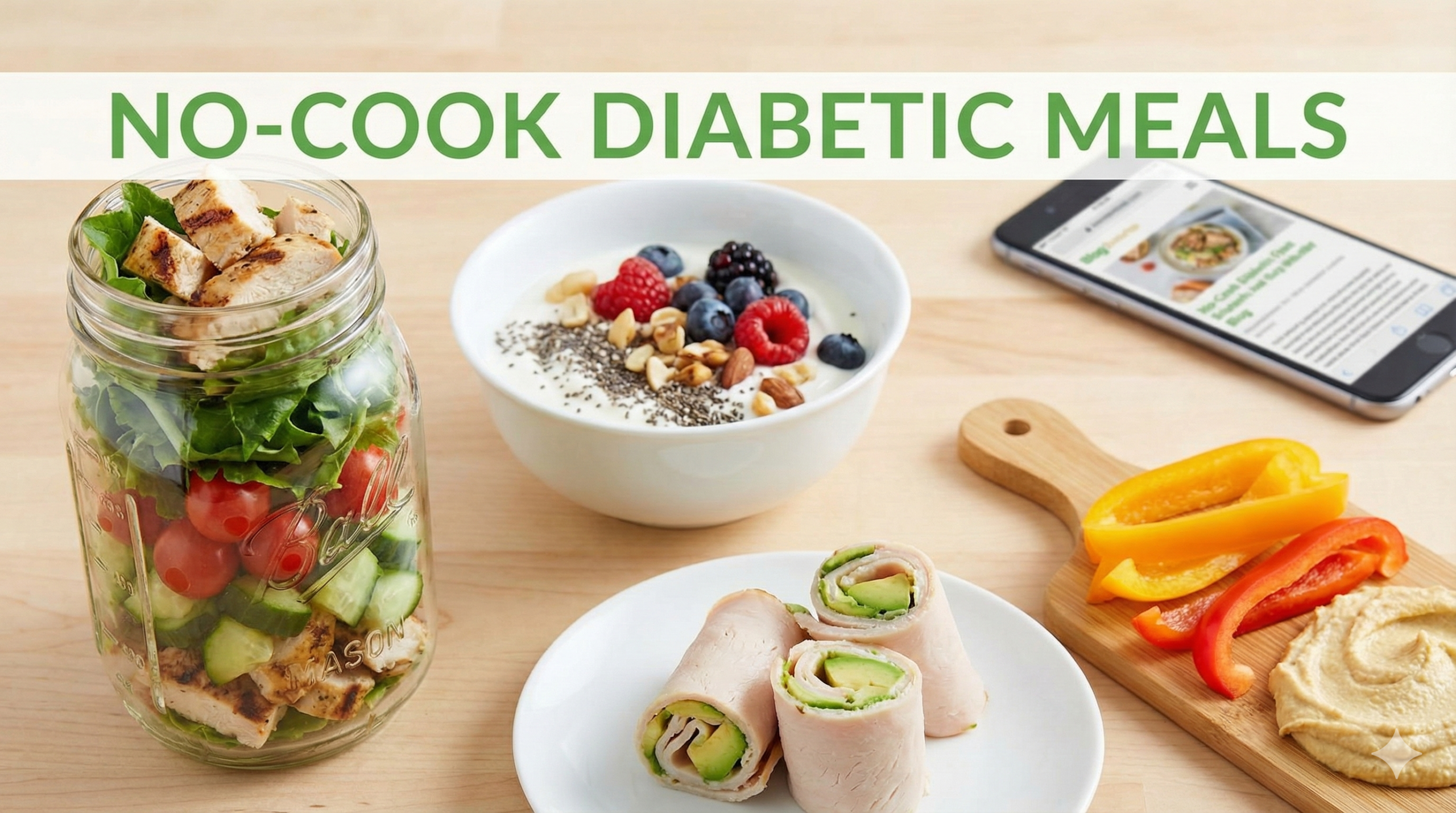
No-Cook Diabetic Meals: The Ultimate Guide to Managing Blood Sugar Without Turning on the Stove
Discover how to maintain stable glucose levels, save time, and eat delicious food without ever touching an oven or stove. Perfect for hot summers, busy workdays, or kitchen-free living.
Why “No-Cook” is a Secret Weapon for Diabetes Management
Let’s be honest: managing diabetes is a full-time job. Between monitoring glucose levels, managing medication, and navigating stress, the last thing you want to do after a long day is stand over a hot stove for an hour. This is where no-cook diabetic meals transform from a convenience into a necessity.
There is a misconception that a healthy diabetic diet requires complex cooking methods like steaming, poaching, or grilling. While those are excellent, raw and assembled meals can be just as potent—and sometimes better—for your health. By utilizing raw vegetables, healthy canned proteins, and pre-prepared healthy fats, you can build a heart-healthy diabetic diet in minutes.
This guide isn’t just about salads. We are talking about hearty wraps, protein-packed bowls, savory soups, and satisfying breakfasts that keep your insulin sensitivity in check and your taste buds happy. For individuals with type 2 diabetes or prediabetes, reducing cooking time also reduces the temptation to order takeout — which is often loaded with hidden sugars and unhealthy fats. By embracing no-cook meals, you naturally increase your intake of raw vegetables, which are rich in enzymes and antioxidants that combat inflammation.
The “No-Cook” Diabetic Pantry Essentials
The secret to success with no-cook meals is having the right building blocks. If you have the right ingredients on hand, you are never more than 5 minutes away from a meal. Below we deep‑dive into must‑have staples that support stable blood sugar and satisfy hunger.
1. High-Quality Canned Proteins
You don’t need to cook raw chicken to get protein. Stock up on wild-caught canned salmon, tuna packed in water, and canned chicken breast. For plant-based options, chickpeas, black beans, and lentils (rinsed well to lower sodium) are vital. These are cornerstones of a high fiber diabetic meal plan. Don’t overlook canned sardines or mackerel — they’re rich in omega‑3 fatty acids, which support heart health and reduce insulin resistance.
2. Healthy Fats & Flavor Boosters
Fat slows down the absorption of carbohydrates, preventing sugar spikes. Avocado, nuts (walnuts, almonds), seeds (chia, flax, pumpkin), and high-quality extra virgin olive oil are essential. Don’t forget vinegar (apple cider, balsamic, red wine) and mustard for flavor without the sugar found in BBQ sauces. Fresh herbs like basil, cilantro, and dill can be kept in the fridge and add a burst of flavor without calories or carbs.
3. Resistant Starches & Low-Carb Bases
Instead of rice or pasta, stock your kitchen with leafy greens (spinach, arugula, kale), cucumber noodles, zucchini ribbons, and whole-grain crackers that are high in fiber. Rolled oats are also fantastic as they can be eaten raw when soaked (overnight oats), acting as a resistant starch that feeds healthy gut bacteria. For variety, try cauliflower rice (raw, pulsed in a food processor) as a base for grain bowls.
4. Smart Flavor Enhancers (Zero Sugar)
Keep sugar‑free condiments like salsa (watch for added sugar), tahini, sugar‑free pickles, kimchi (check sodium), and hot sauce. These transform simple ingredients into exciting meals without spiking glucose.

Glass Meal Prep Containers (3 Compartment)
Perfect for assembling “adult lunchables” and storing no-cook ingredients to keep them fresh for days.
Check Price on AmazonNo-Cook Breakfasts to Jumpstart Your Blood Sugar Control
Mornings are often the most chaotic time of day. Skipping breakfast can lead to liver glucose dumping, causing high blood sugar. Conversely, eating a high-carb cereal spikes you immediately. Here is the middle ground — plus a few extra ideas to keep your mornings interesting.
The Overnight Oats Formula
Overnight oats are the king of no-cook breakfasts. The process of soaking oats breaks down the starches, making them digestible without heat. Combine 1/2 cup rolled oats with 1/2 cup almond milk, a tablespoon of chia seeds, and a dash of cinnamon. Let it sit in the fridge overnight. In the morning, top with a few crushed walnuts or a spoonful of peanut butter. For a tropical twist, use unsweetened coconut flakes and a few raspberries.
If you need variety, check out our extensive list of breakfast ideas for diabetes.
Greek Yogurt Power Bowls
Unsweetened Greek yogurt provides a massive protein punch (approx. 15-20g per serving). Top with low-glycemic berries (raspberries or blackberries) and a handful of walnuts. This mimics the benefits of a high protein diabetic menu without turning on a burner. Add a tablespoon of ground flaxseed for extra fiber and omega‑3.
Avocado & Cottage Cheese Boats
Slice an avocado in half, remove the pit, and fill the center with cottage cheese. Sprinkle with Everything Bagel seasoning. It’s high in fat and protein, keeping you full until lunch. For a savory twist, add a few cherry tomato halves on top.
Chia Pudding in Two Minutes
Mix 3 tablespoons chia seeds with 1 cup unsweetened almond milk, a few drops of vanilla extract, and a pinch of cinnamon. Stir well, wait 5 minutes, stir again to prevent clumps, then refrigerate for at least 30 minutes (or overnight). Top with sliced almonds or a few blackberries. It’s a fiber‑rich, no‑cook breakfast that’s also perfect for meal prep.
Lunch: The Art of the “Assemble”
For diabetic menu for working adults, portability is key. No-cook meals mean you don’t even need access to a microwave at the office. Here are more ideas to keep midday blood sugar steady.
Mason Jar Salads
The strategy is simple: dressing goes at the bottom, hard veggies (carrots, cucumbers, bell peppers) next, proteins (beans, cheese, chickpeas) in the middle, and leafy greens on top. When you dump it into a bowl, the dressing coats everything perfectly, and the greens never get soggy. Try a Greek version: Greek yogurt dressing (yogurt + dill + lemon), cucumber, Kalamata olives, feta, and romaine.
Canned Fish Lettuce Wraps
Mix a can of tuna or salmon with half a mashed avocado (instead of mayo for heart health) and some lemon juice. Scoop this mixture into large Romaine or Butter lettuce leaves. It’s crunchy, satisfying, and nearly zero carb. This aligns perfectly with a low carb weekly diabetic menu. Add diced celery for extra crunch.
The Diabetic “Charcuterie” Box
Adult lunchables are trending for a reason. Pack a container with hard-boiled eggs (buy pre-peeled to save time), cubes of cheddar cheese, almonds, cherry tomatoes, and turkey slices rolled up. It’s grazing with a purpose. Include some sliced bell peppers or jicama sticks for extra fiber.
No‑Cook Gazpacho (Cold Soup)
Blend ripe tomatoes, cucumber, bell pepper, a small garlic clove, a splash of olive oil, and vinegar until smooth. Chill and enjoy. It’s like drinking a salad, packed with lycopene and hydration. Perfect for hot days.
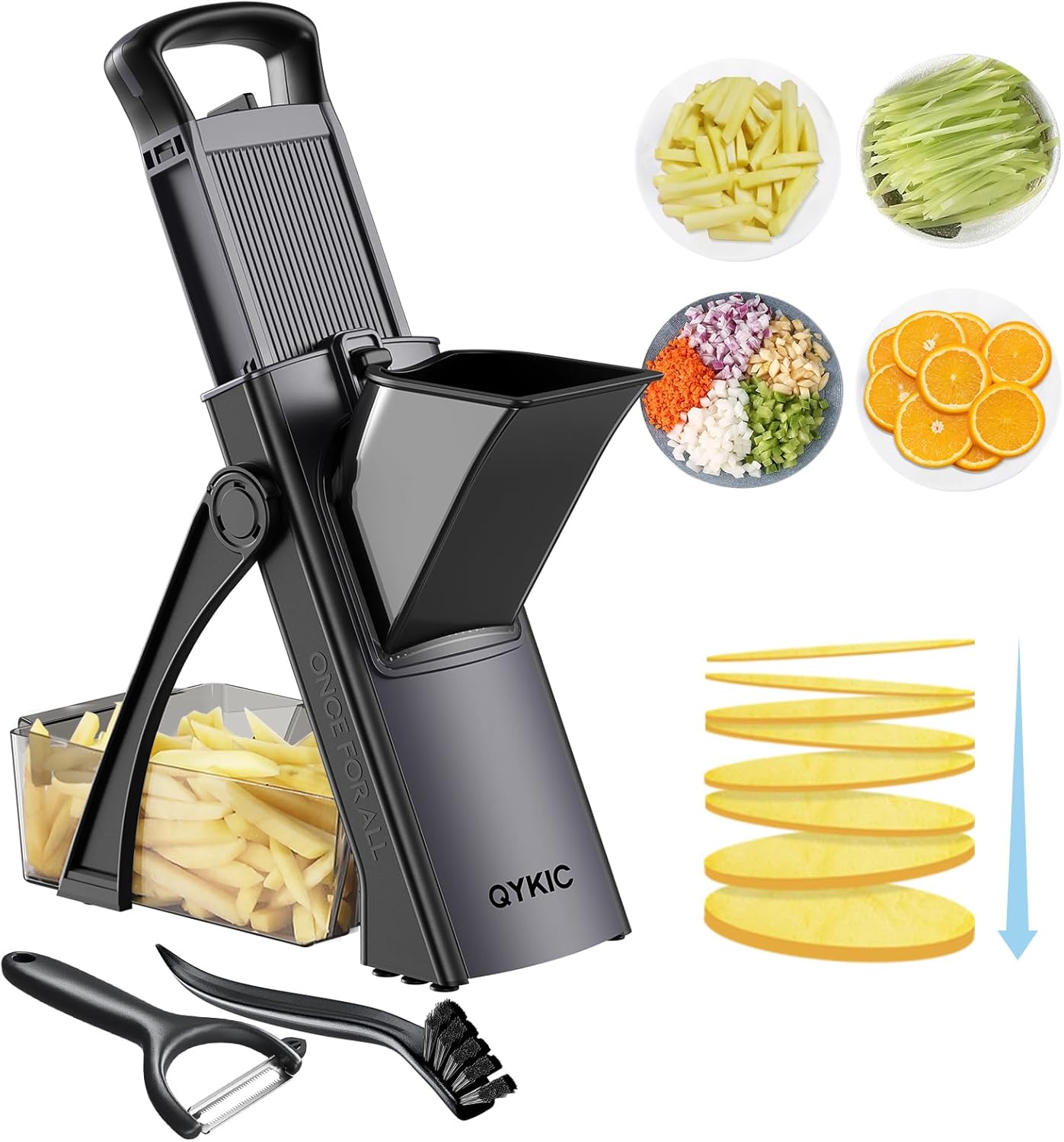
Safe Mandoline Slicer
Speed up your prep time by 50%. Slice cucumbers, radishes, and zucchini uniformly for salads and slaws in seconds.
Check Price on AmazonDinner: Hearty Meals Without the Heat
Dinner is where people feel they must cook. But on hot summer nights, or simply exhausted evenings, these no-cook dinners are life-savers. If you are looking for more structured evening plans, browse our diabetic dinner menu ideas. Below, we’ve added a few new ideas to keep dinner exciting.
Southwest Bean Salad
Rinse a can of black beans and a can of corn. Mix with diced bell peppers, red onion, cilantro, and lime juice. Serve this over a bed of spinach or scoop it with low-carb tortilla chips. It’s fiber-dense and fills you up fast. For extra protein, toss in diced avocado or leftover rotisserie chicken.
Zucchini Noodle “Pasta” with Pesto
Using a spiralizer, turn raw zucchini into noodles. Toss them with a high-quality jarred pesto (check the label for added sugar—it should have none) and halved cherry tomatoes. Top with parmesan cheese. The acid in the tomatoes and the salt in the pesto soften the raw zucchini slightly, giving it an “al dente” texture without boiling water. Add canned white beans for extra protein and creaminess.
The Rotisserie Chicken Hack
Okay, technically someone cooked this chicken, but you didn’t. Buying a rotisserie chicken is the ultimate no-cook hack. Shred the meat and use it for chicken salad, toss it into a kale Caesar salad, or wrap it in low-carb tortillas with hummus. Make a quick “no-cook curry” by mixing shredded chicken with plain Greek yogurt, curry powder, and diced apples (small amount) – serve in lettuce cups.
Smoked Salmon & Cucumber Bites
Slice cucumber into thick rounds. Top each with a dollop of cream cheese (or dairy-free alternative), a piece of smoked salmon, and a sprig of dill. It’s an elegant dinner that takes 5 minutes and is rich in omega‑3s.
No-Cook Adaptations for Specific Needs
For Seniors and Dental Issues
Many elderly diabetics struggle with chewing raw vegetables. This doesn’t mean you can’t do no-cook. Focus on soft proteins like cottage cheese, smooth nut butters, and smoothies. A well-blended gazpacho (cold soup) packs veggies in without the crunch. Mashed avocado with canned tuna is also easy to swallow.
See more: Diabetic menu for elderly with no teeth.
For Budget-Conscious Dieters
Fresh produce can be expensive. To keep costs down, lean heavily on canned legumes and seasonal produce. Frozen vegetables (thawed) can also be used in salads (like thawed peas or edamame). Buy nuts in bulk and store in the freezer to prevent rancidity.
See more: Low income diabetic menu.
For Vegans and Vegetarians
Plant-based no-cook meals are incredibly easy. Tofu can be eaten raw (silken tofu makes great pudding/smoothies, firm tofu can be marinated). Canned chickpeas are your best friend here. Try a “no-cook taco bowl” with raw walnut taco meat (walnuts pulsed with chili powder, cumin, and lime) over lettuce with salsa and avocado.
See more: Vegan diabetic meal plan.
Cooking vs. No-Cook: A Nutritional Comparison
Is raw always better? Not necessarily, but for diabetes, it offers distinct advantages regarding fiber structure and glycemic index. Below is a detailed look.
| Feature | Traditional Cooked Meal | No-Cook / Raw Meal |
|---|---|---|
| Preparation Time | 30 – 60 Minutes | 5 – 15 Minutes |
| Nutrient Retention | Some Vitamin C/B lost in heat | High retention of heat-sensitive vitamins (C, B, folate) |
| Glycemic Impact | Cooking breaks down cell walls, potentially raising GI (e.g., carrots) | Intact fiber structures often result in lower Glycemic Index |
| Hydration | Variable, often lower water content | High water content from raw veggies helps hydration |
| Cleanup | Pots, pans, utensils, stove | Cutting board, knife, bowl (often just a rinse) |
The Liquid Meal: Diabetic Smoothies
When you really don’t want to chew, a smoothie is the answer. However, fruit smoothies can be sugar bombs. The key is the ratio: 2 parts veg to 1 part fruit. Also, always add a source of protein and healthy fat.
- Base: Unsweetened almond milk, coconut water (no sugar added), or plain water.
- Green: Spinach or kale (you won’t taste it) – a handful.
- Fat: 1 tbsp peanut butter or 1/4 avocado (essential for slowing sugar absorption).
- Protein: A scoop of low-carb protein powder or 1/2 cup Greek yogurt.
- Fruit: 1/2 cup berries (fresh or frozen) or a small green apple.
- Extras: 1 tbsp ground flaxseed or chia seeds for fiber.
For specific recipes, check out our diabetic smoothie menu.

NutriBullet High-Speed Blender
Pulverize kale, nuts, and seeds into smooth, drinkable meals in under 60 seconds.
Check Price on AmazonGrab-and-Go No-Cook Snacks
Snacking can break a diet, but it can also save blood sugar from crashing. Keep these ready:
- String Cheese: Perfectly portioned protein.
- Raw Almonds: A handful (about 23 almonds) provides magnesium and healthy fats.
- Cucumber Slices with Hummus: Hydrating and savory.
- Celery with Peanut Butter: A classic for a reason.
- Pickles: Zero calorie, crunchy satisfaction (watch the sodium if you have high blood pressure).
- Hard-boiled eggs: Buy pre-peeled or boil a batch on Sunday.
- Edamame pods (thawed): Lightly salted, fun to eat, high in protein.
Find more inspiration in our diabetic snack ideas guide.
Sample 1‑Day No‑Cook Diabetic Menu
Frequently Asked Questions About No-Cook Diabetic Diets
Can I lose weight on a no-cook diabetic diet?
Absolutely. No-cook meals often emphasize whole, raw vegetables and lean proteins, which are naturally lower in calories and higher in fiber. This promotes satiety and can lead to weight loss. Many people find they automatically eat fewer processed foods when they stop cooking.
Is raw food harder to digest for diabetics?
For some, a sudden increase in raw fiber can cause bloating. It is best to introduce raw cruciferous vegetables (like broccoli and cauliflower) slowly. Marinating them in lemon juice or vinegar helps break down the fibers before eating. Chewing thoroughly also aids digestion.
How do I get enough protein without cooking meat?
Canned fish (tuna, salmon, sardines), canned chicken, Greek yogurt, cottage cheese, tofu, beans, lentils, nuts, and seeds are all excellent protein sources that require no cooking. Protein powders can also be added to smoothies or yogurt.
Are canned foods safe for diabetics due to sodium?
Sodium can be an issue in canned goods. To mitigate this, always choose “low sodium” or “no salt added” versions, and thoroughly rinse beans and vegetables in a colander before using them. This removes a significant amount of excess salt. Drain tuna and salmon as well.
Can no-cook meals help with insulin resistance?
Yes, because they emphasize whole foods, healthy fats, and fiber — all of which improve insulin sensitivity. Avoiding cooking also means avoiding added sugars and unhealthy oils often used in cooking.
Final Thoughts: Simplify Your Life and Your Diet
Adopting a no-cook strategy for your diabetic meal plan isn’t just about avoiding the stove—it’s about reclaiming your time and reducing the mental load of diabetes management. By keeping your pantry stocked with these essentials and relying on assembly rather than complex recipes, you make healthy eating the path of least resistance.
Start small. Try swapping just your lunches for no-cook mason jar salads this week. Monitor how your blood sugar responds to the increase in raw fiber and healthy fats. You might find that the best meal you ever made was the one you didn’t cook at all.
Ready to plan your whole week? Check out our comprehensive weekly diabetic meal plans to get started.