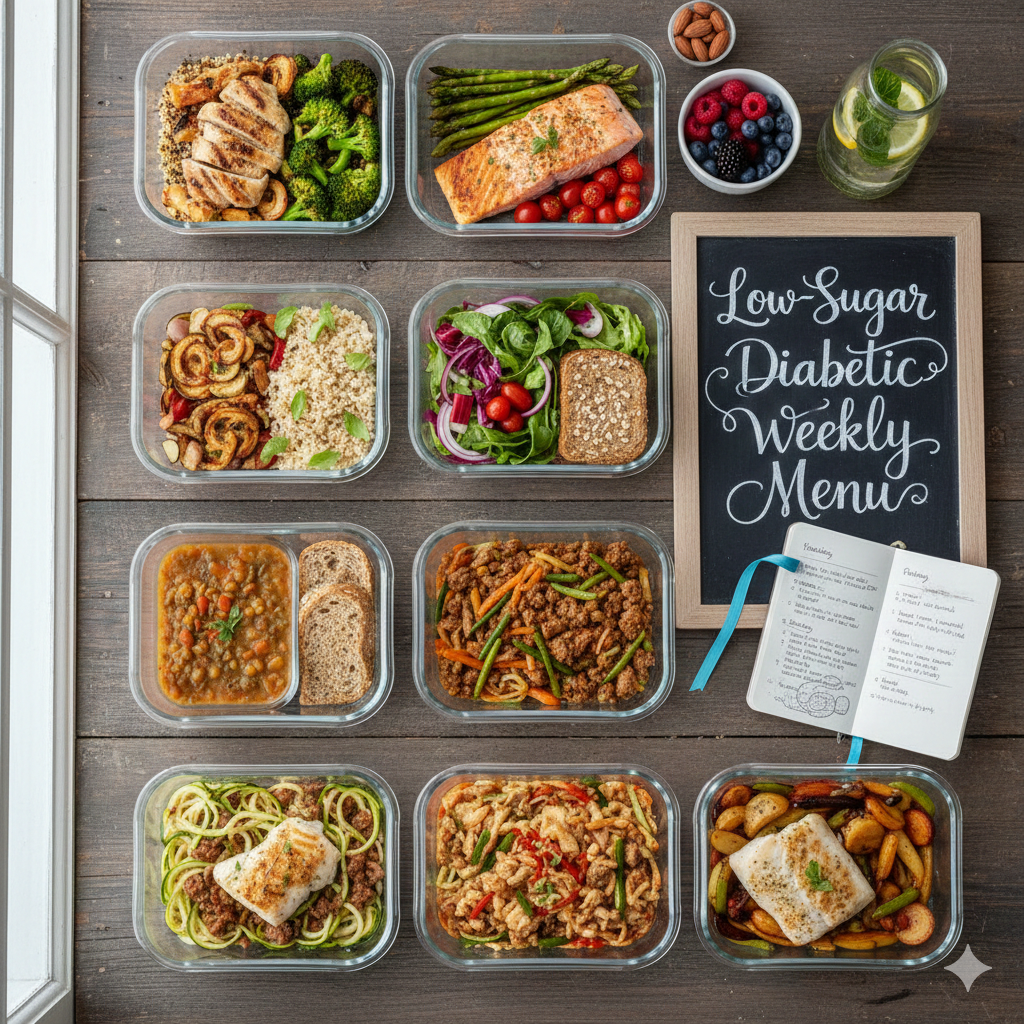
The Ultimate Low-Sugar Diabetic Weekly Menu: Reclaim Your Energy
For individuals living with diabetes, the grocery store can feel like a minefield. Sugar hides everywhere—in pasta sauces, salad dressings, and even “healthy” granola bars. But adopting a low-sugar diabetic weekly menu isn’t just about restriction; it is about liberation. It is about freeing yourself from the rollercoaster of glucose spikes and crashes that dictate your mood, energy, and long-term health.
This comprehensive guide goes beyond simple advice. We will construct a strategic, delicious, and medically sound nutritional architecture for your week. Whether you are newly diagnosed or a veteran looking to tighten your control, this plan focuses on nutrient density, fiber, and low-glycemic impact foods that keep your A1C in check without sacrificing flavor.
Defining “Low Sugar” in a Diabetic Context
When we talk about a low-sugar menu for diabetics, we aren’t just banning the white granular stuff in your sugar bowl. We are addressing total glycemic load. A bagel might not taste sweet, but it converts to glucose in your bloodstream faster than table sugar. A true low-sugar approach involves prioritizing complex carbohydrates and pairing them with healthy fats and proteins to slow absorption.
Expert Insight: “The goal isn’t zero carbohydrates. The goal is ‘slow’ carbohydrates. By reducing added sugars and refined grains, we reduce the burden on your pancreas and improve insulin sensitivity.”
If you are looking for a broader foundation before diving into this specific menu, you might want to review our comprehensive weekly diabetic meal plan which covers the basics of macronutrient balancing.
Building Your Low-Sugar Arsenal
Success starts with what you keep in your kitchen. If it’s not in the pantry, you can’t eat it during a late-night craving. Here is how to stock up for success.
| Category | Green Light (Eat Freely/Moderately) | Red Light (Avoid/Minimize) |
|---|---|---|
| Proteins | Salmon, Chicken breast, Tofu, Eggs, Greek Yogurt (plain) | Breaded fried meats, Sweet BBQ meats, Honey-glazed ham |
| Vegetables | Leafy greens, Broccoli, Cauliflower, Zucchini, Peppers | Corn (in excess), Sweet glaze carrots, Canned veggies with sugar |
| Fruits | Berries (Raspberries, Blackberries), Avocado, Green Apple | Dried fruit, Canned fruit in syrup, Bananas (very ripe) |
| Grains/Starches | Quinoa, Chia seeds, Almond flour, Shirataki noodles | White rice, White pasta, sugary cereals, Instant oats |
For those interested in how fiber plays a role in negating sugar spikes, our guide on the high-fiber diabetic meal plan is an essential companion piece to this low-sugar approach.

Master Your Macros
Eye-balling portions is the enemy of blood sugar control. Use these color-coded containers to ensure your low-sugar grains don’t accidentally become high-sugar portions.
Check Price on AmazonYour 7-Day Low-Sugar Diabetic Weekly Menu
This menu is designed to provide approximately 1500-1800 calories per day with a focus on low added sugars. If you have specific calorie requirements, you can scale portions up or down. (See our 1500 calorie diabetic menu or 2000 calorie diabetic menu for precise scaling).
Day 1: The Fresh Start
- Breakfast: Spinach and mushroom omelet cooked in olive oil. Side of ½ grapefruit.
- Lunch: Grilled chicken salad with mixed greens, cucumber, cherry tomatoes, and a vinegar-oil dressing (avoid store-bought creamy dressings which hide sugar).
- Dinner: Baked Salmon with asparagus and cauliflower rice.
- Snack: A handful of walnuts.
Day 2: Plant-Forward Power
Sometimes, giving your digestion a break from heavy meats can improve insulin sensitivity. If you are curious about a shorter commitment, check out our 1-day simple diabetic menu.
- Breakfast: Chia seed pudding made with unsweetened almond milk and a few raspberries.
- Lunch: Lentil soup (watch the sodium) with a side of celery sticks.
- Dinner: Zucchini noodles (Zoodles) with homemade turkey meatballs and marinara (sugar-free).
- Snack: Sliced bell peppers with hummus.
Day 3: Mid-Week Stability
- Breakfast: Greek yogurt (plain, full fat) with flaxseeds and a dash of cinnamon.
- Lunch: Tuna salad served in lettuce cups (no bread).
- Dinner: Stir-fry beef with broccoli, snap peas, and ginger-soy sauce (use Tamari or coconut aminos).
- Snack: Hard-boiled egg.
Day 4: The Protein Boost
Protein is satiating and has minimal impact on blood sugar. For a deeper dive, read about our high-protein diabetic menu.
- Breakfast: Scrambled tofu with turmeric and kale.
- Lunch: Leftover beef stir-fry from Day 3.
- Dinner: Roast chicken thighs (skin on) with Brussels sprouts and a small portion of quinoa.
- Snack: String cheese.
Day 5: Comfort Food Reimagined
- Breakfast: Avocado toast on low-carb/high-fiber bread topped with red pepper flakes.
- Lunch: Chicken vegetable soup (skip the noodles, add extra carrots and celery).
- Dinner: “Burger Night” – Lean beef patty wrapped in lettuce with tomato, onion, and mustard (no ketchup).
- Snack: Cucumber slices with guacamole.
Day 6: The Weekend Social
Weekends are harder. If you are a working professional preparing for the week ahead, you might find our diabetic menu for working adults helpful for batch cooking tips.
- Breakfast: Cottage cheese with savory toppings (cherry tomatoes, cucumber, black pepper).
- Lunch: Cobb salad (egg, bacon, chicken, avocado, greens, blue cheese).
- Dinner: Grilled shrimp skewers with a large side salad and olive oil dressing.
- Snack: Sugar-free gelatin or a small square of 85% dark chocolate.
Day 7: Prep for Success
Use Sunday to prep for the next cycle. If you want to extend this plan, look at our 14-day diabetic meal plan.
- Breakfast: Almond flour pancakes (sugar-free syrup or just butter).
- Lunch: Turkey and cheese roll-ups (no tortilla) with a side of pickles.
- Dinner: Pork tenderloin with roasted green beans and a small sweet potato.
- Snack: Pumpkin seeds.
Adapting the Low-Sugar Menu for Special Needs
Diabetes affects everyone differently. A generic plan is a starting point, but customization is key to long-term adherence.
For Seniors
As we age, our appetite and ability to chew may diminish. However, the need for blood sugar control remains. If chewing raw vegetables is difficult, opt for soups and smoothies. We have a specialized diabetic menu for seniors and, for those with dental challenges, a diabetic menu for elderly with no teeth.
For Budget Conscious Shoppers
A low-sugar diet often implies expensive meats and fresh produce. However, frozen vegetables (without sauce) and eggs are budget-friendly low-sugar staples. Check our low-income diabetic menu for tips on saving money while saving your health.
For Pregnant Women (Gestational Diabetes)
Strict low-sugar diets during pregnancy must be balanced to ensure the baby gets enough energy for growth. Ketosis is generally avoided in pregnancy. Please consult the diabetic menu for pregnant women for a safety-first approach.
For Teenagers
Teens need higher energy for growth and sports. Cutting sugar doesn’t mean cutting energy. Focus on complex carbs. See the diabetic menu for teenagers for age-appropriate strategies.

Sweeten Without the Spike
Missing your sweet treats? High-quality Monk Fruit or Erythritol blends can replace sugar in your coffee and baking without raising blood glucose.
Check Price on AmazonLow Sugar vs. Low Carb vs. Keto: What’s the Difference?
It is easy to get confused by the terminology. Here is a quick breakdown to help you decide if this menu is right for you, or if you need something more restrictive like our low-carb weekly diabetic menu.
- Low Sugar: Focuses primarily on eliminating added sugars (sucrose, high fructose corn syrup) and simple starches. Fruit and whole grains are usually allowed in moderation.
- Low Carb: Limits all carbohydrates, usually to under 100g or 50g per day. This restricts grains and some fruits.
- Keto: Extremely restrictive (under 20g net carbs). High fat, moderate protein. Forces the body to burn fat for fuel.
For most diabetics, a Low Sugar approach is the most sustainable long-term lifestyle, whereas Keto is a short-term therapeutic intervention.
Pros and Cons of a Low-Sugar Lifestyle
✅ The Benefits
- Lower A1C: Direct correlation between reduced sugar intake and better 3-month averages.
- Reduced Inflammation: Sugar is a known inflammatory agent; reducing it eases joint pain.
- Weight Loss: Cutting empty calories naturally leads to a caloric deficit.
- Better Energy: No more “sugar crash” naps in the afternoon.
❌ The Challenges
- Withdrawal: The first week can cause headaches and irritability (the “sugar flu”).
- Social Difficulty: Dining out requires vigilance and asking questions about sauces.
- Cost: Fresh whole foods are often more expensive than processed sugary fillers.
Frequently Asked Questions
Yes, but choose wisely. Berries (strawberries, blueberries, raspberries) are low in sugar and high in fiber. Avoid high-sugar tropical fruits like mangoes, pineapples, and very ripe bananas, or eat them in very small portions paired with protein.
Generally, yes. Sweeteners like Stevia, Monk Fruit, and Erythritol do not spike blood sugar. However, some studies suggest that artificial sweeteners might increase cravings for sweet foods, so use them in moderation.
Many people see improved fasting glucose numbers within 3 to 7 days of eliminating added sugars and refined carbs. However, significant changes in A1C take about 3 months.
This menu is healthy for Type 1s, but you must adjust your insulin bolus accordingly. Lower carbohydrate intake requires less rapid-acting insulin. Always consult your endocrinologist to prevent hypoglycemia.
Alcohol can be tricky. Dry wines and spirits (vodka, whiskey) have no sugar, but beer and sweet cocktails are sugar bombs. Also, alcohol can block the liver from releasing glucose, leading to delayed hypoglycemia.
Cravings usually peak in the first week. Hydrate, eat enough protein, and ensure you are getting enough sleep. Sometimes a small piece of dark chocolate (85% cocoa) is enough to satisfy the urge without the spike.
Not necessarily, but calories still matter for weight management. If you are replacing sugar with excessive amounts of fat (cheese, nuts), you might stall weight loss. If you need structure, check our 1200 calorie diabetic menu.
Standard white bread converts to sugar rapidly. Look for sprouted grain breads (like Ezekiel bread) or low-carb keto breads that use fiber to lower the net carb count.

Expand Your Culinary Horizons
Boredom is the biggest threat to your diet. Get 500+ recipes that adhere to low-sugar principles so you never run out of ideas.
Check Price on AmazonFinal Verdict: Consistency Over Perfection
Embarking on a low-sugar diabetic weekly menu is one of the most powerful steps you can take for your health. It is not about being perfect every single meal; it is about creating a new baseline where nutritious, whole foods are the norm, and sugary processed foods are the rare exception.
By following the 7-day plan outlined above, you give your body a chance to reset. Your insulin sensitivity can improve, your energy levels can stabilize, and your palate will eventually change to appreciate the natural sweetness in foods like berries and almonds. If you are ready to commit to a longer timeline, we highly recommend transitioning from this week into our 30-day diabetic menu to solidify these habits into a lifestyle.
Pingback: 5 Best Sugar-Free Condiments: Flavor Without the Spike (2026 Review) – Best Diabetic Menu