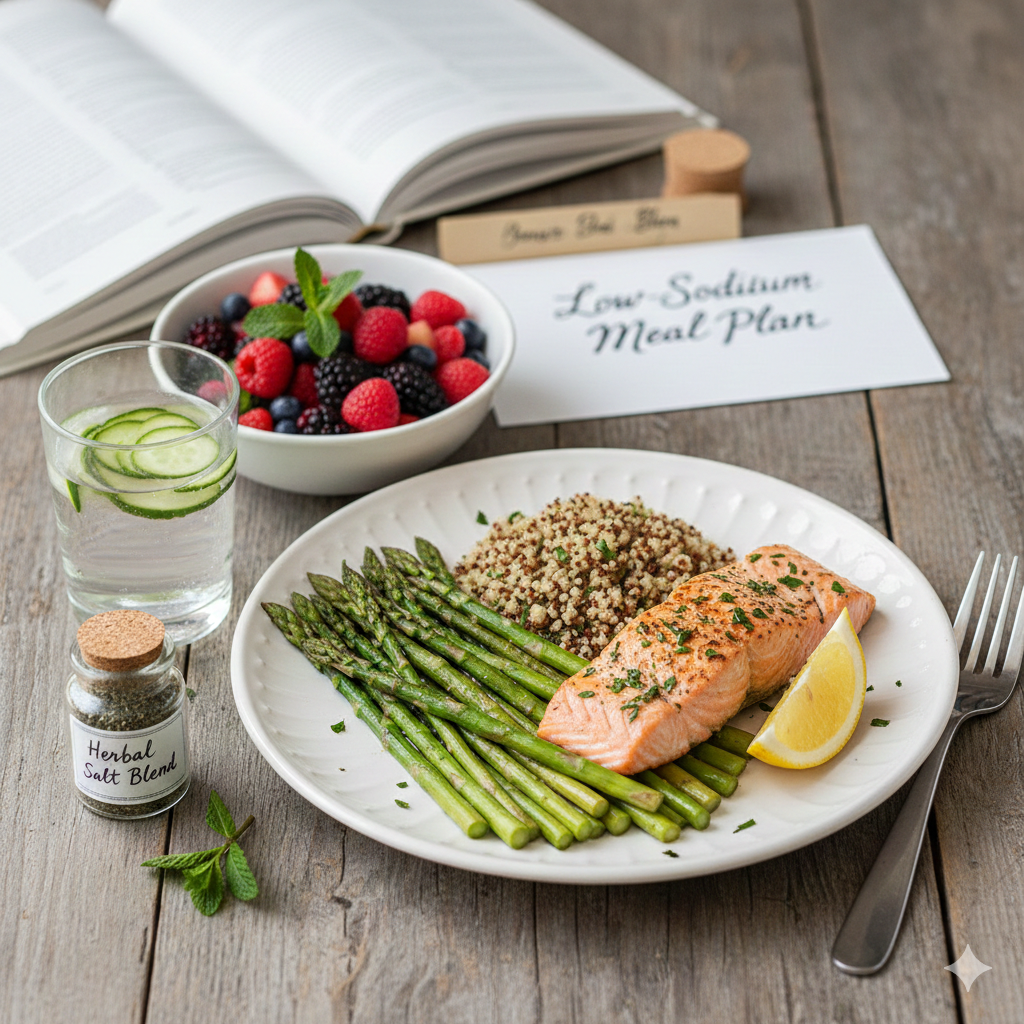
Low-Sodium Diabetic Meal Plan: The Ultimate Double-Defense Guide
Managing diabetes is rarely a solo act. It often brings along an unwanted partner: hypertension (high blood pressure). In fact, statistics suggest that nearly two out of three people with diabetes also report having high blood pressure. This creates a physiological “double whammy” that significantly increases the risk of heart attack, stroke, and kidney failure.
The solution isn’t just cutting carbs; it’s cutting the salt. A low-sodium diabetic meal plan is the gold standard for metabolic protection. It’s about more than just hiding the salt shaker—it’s about reimagining how you flavor food, understanding hidden sodium traps, and balancing your blood sugar simultaneously.
In this comprehensive guide, we will dismantle the myth that “low salt” means “no flavor.” We will provide you with a structured plan, shopping strategies, and the culinary secrets needed to protect your heart and pancreas without sacrificing the joy of eating.
The Lethal Combination: Why Sodium Matters for Diabetics
Why is salt such a villain in the diabetic narrative? When you consume excess sodium, your body holds onto water to dilute it. This increases blood volume, which raises blood pressure. For a diabetic whose blood vessels are already prone to damage from high glucose, this added pressure is disastrous.
Expert Insight: “Think of your blood vessels like a garden hose. Diabetes causes the hose to become stiff and brittle. High sodium turns up the water pressure. A stiff hose under high pressure is a recipe for a burst.”
Furthermore, there is a direct link to kidney health. The kidneys act as the body’s filtration system. High blood pressure damages these delicate filters. If you are already concerned about renal function, adopting a low-sodium approach is the first line of defense. (See our detailed renal diabetic meal plan for advanced kidney care).
The “Healthy” Foods That Are Salt Bombs
Many diabetics switch to “healthy” foods to control their sugar, inadvertently spiking their sodium intake. It is crucial to identify these imposters.
| Food Item | Why It’s Dangerous | Better Alternative |
|---|---|---|
| Canned Veggies | Preserved in brine. One can may contain 1000mg+ sodium. | Frozen vegetables (plain) or “No Salt Added” cans. |
| Cottage Cheese | Often recommended for protein, but loaded with salt. | Greek Yogurt (plain) or Low-Sodium Cottage Cheese. |
| Deli Turkey | Processed with sodium nitrate to preserve color/texture. | Home-roasted turkey breast or boiled chicken. |
| Vegetable Juice | A single glass can exceed the daily sodium limit. | Homemade smoothies or raw veggies. |
| Salad Dressings | “Light” or “Fat-Free” versions often add salt for flavor. | Olive oil & vinegar with fresh herbs. |
If you are shopping on a budget, it is tempting to rely on canned goods. Check our low-income diabetic menu for tips on how to rinse canned foods to reduce sodium by up to 40%.

Flavor Without the Spike
Retrain your palate with high-quality, salt-free seasoning blends. Garlic herb, lemon pepper, and spicy chipotle blends can make you forget the salt shaker entirely.
Check Price on Amazon7-Day Low-Sodium Diabetic Meal Plan
This menu is designed to keep sodium under 1,500mg per day while maintaining stable blood glucose. It emphasizes fresh ingredients and whole foods.
Day 1: The Herb Garden
- Breakfast: Oatmeal cooked with water, topped with walnuts and cinnamon (naturally sodium-free).
- Lunch: Grilled chicken breast seasoned with rosemary and lemon juice. Spinach salad with oil/vinegar.
- Dinner: Baked Salmon (use fresh dill, no salt) with quinoa and steamed broccoli.
- Snack: Apple slices with almond butter.
Day 2: Potassium Power
Potassium helps counteract sodium. (Note: Limit this if you have advanced kidney disease).
- Breakfast: Avocado toast on low-sodium sprouted grain bread. Sprinkle with red pepper flakes.
- Lunch: Lentil soup made from scratch (dry lentils, no bouillon cubes) with carrots and celery.
- Dinner: Stir-fry using low-sodium soy sauce substitute (Coconut Aminos), tofu, bell peppers, and snap peas.
- Snack: Unsalted sunflower seeds.
Day 3: Heart Healthy Focus
For a deeper dive into cardiac care, refer to the heart-healthy diabetic menu.
- Breakfast: Egg white omelet with mushrooms and onions. Flavor with nutritional yeast instead of cheese.
- Lunch: Tuna salad made with mashed avocado instead of mayonnaise. Serve in lettuce cups.
- Dinner: Roast Turkey Tenderloin with sweet potato (skin on) and green beans.
- Snack: Pear.
Day 4: Plant-Based Low Sodium
- Breakfast: Smoothie with spinach, banana, flaxseed, and unsweetened almond milk.
- Lunch: Quinoa bowl with black beans (rinsed thoroughly), corn, and fresh salsa (check label for sodium).
- Dinner: Whole wheat pasta tossed with olive oil, garlic, roasted cherry tomatoes, and basil.
- Snack: Carrot sticks with homemade hummus (limit tahini/salt).
Day 5: Comfort Food Remixed
- Breakfast: Greek yogurt (plain) with berries and chia seeds.
- Lunch: Leftover Turkey Tenderloin sandwich on low-sodium bread with mustard.
- Dinner: “Unstuffed” Cabbage Rolls: Ground lean beef, cabbage, onions, and low-sodium tomato sauce over brown rice.
- Snack: Air-popped popcorn seasoned with garlic powder (no salt).
Day 6: The Weekend Prep
Batch cooking helps control sodium. See our diabetic menu for working adults for prep ideas.
- Breakfast: Scrambled eggs with diced bell peppers. Side of orange slices.
- Lunch: Grilled shrimp skewers with a large mixed green salad.
- Dinner: Roasted Chicken Thighs (skinless) with root vegetables (parsnips, turnips) roasted in olive oil.
- Snack: Handful of unsalted almonds.
Day 7: Simple Sunday
- Breakfast: Whole grain toast with peanut butter (check ingredients: just peanuts).
- Lunch: Chicken vegetable soup (homemade stock is essential here).
- Dinner: Flank steak (marinated in lime, cumin, cilantro) with grilled zucchini.
- Snack: Grapes.
Looking for more variety? You can adapt our 30-day diabetic menu by simply removing added salt and processed meats from the recipes.

Recipes That Actually Taste Good
Don’t get stuck eating bland chicken. Get hundreds of chef-created recipes that prioritize flavor profiling over sodium content.
Check Price on AmazonFlavor Engineering: How to Cook Without Salt
The biggest fear when starting a low-sodium diabetic meal plan is that food will taste bland. This only happens if you simply remove salt without replacing it. You must use the “Flavor Triangle”: Acid, Heat, and Herbs.
1. Acid (The Salt Mimic)
Lemon juice, lime juice, and vinegar (apple cider, balsamic, red wine) brighten up food in a way that mimics salt. A squeeze of lemon on steamed broccoli or fish makes the natural flavors pop.
2. Heat (The Distractor)
Chili flakes, cayenne pepper, and fresh jalapenos distract the tongue from the lack of salt. Spicy food is also great for metabolism.
3. Fresh Herbs (The Aromatic)
Dried herbs lose potency. Fresh basil, cilantro, parsley, and mint provide a complexity that salt cannot match. If you are a senior with diminishing taste buds, increasing aromatics is crucial.
Read more: Diabetic menu for seniors.
Pros and Cons of a Low-Sodium Diabetic Diet
✅ Advantages
- Blood Pressure Control: Significant reduction in systolic pressure within weeks.
- Reduced Bloating: Less water retention means you feel lighter and less puffy.
- Kidney Protection: Slows the progression of diabetic nephropathy.
- Better Taste Sensitivity: After 2-3 weeks, your taste buds reset, and natural foods taste sweeter.
❌ Disadvantages
- Adjustment Period: Food may taste “bland” for the first 14 days.
- Cooking Time: Requires more scratch cooking; convenience foods are usually off-limits.
- Social Difficulty: Eating out becomes challenging as restaurant food is notoriously salty.

Track Your Vital Stats
You manage your glucose with a meter; manage your heart with a BP monitor. Seeing the numbers drop is the best motivation to stick to the diet.
Check Price on AmazonFrequently Asked Questions
The American Heart Association generally recommends no more than 2,300 mg per day for healthy adults, but for those with diabetes or hypertension, the ideal limit is often lowered to 1,500 mg per day. Always consult your doctor for your specific target.
This is a common misconception. By weight, sea salt and pink salt contain roughly the same amount of sodium as table salt. While they have trace minerals, they still raise blood pressure just as much as regular salt.
Proceed with caution. Many salt substitutes are made from Potassium Chloride. If you have any level of kidney disease (common in diabetics) or take certain blood pressure medications, excess potassium can be dangerous. Ask your doctor before using them.
Yes! Draining and thoroughly rinsing canned beans and vegetables under running water can reduce the sodium content by about 40%. It’s a great budget hack.
Indirectly, yes. Sodium causes water retention, so cutting it leads to immediate “water weight” loss. Furthermore, low-sodium diets usually eliminate processed foods (chips, fast food), which significantly reduces calorie intake.
Final Verdict: A Lifestyle of Longevity
Adopting a low-sodium diabetic meal plan is one of the most proactive steps you can take for your longevity. It effectively creates a shield around your kidneys and heart while you manage your blood sugar. It requires a shift in mindset—viewing food not as a vehicle for salt, but as a complex tapestry of natural flavors waiting to be unlocked.
Start small. Try one low-sodium day this week. Experiment with lemon juice instead of the salt shaker. If you are ready to take the next step, consider downloading our 7-day diabetic menu guide and applying the low-sodium principles you learned here.