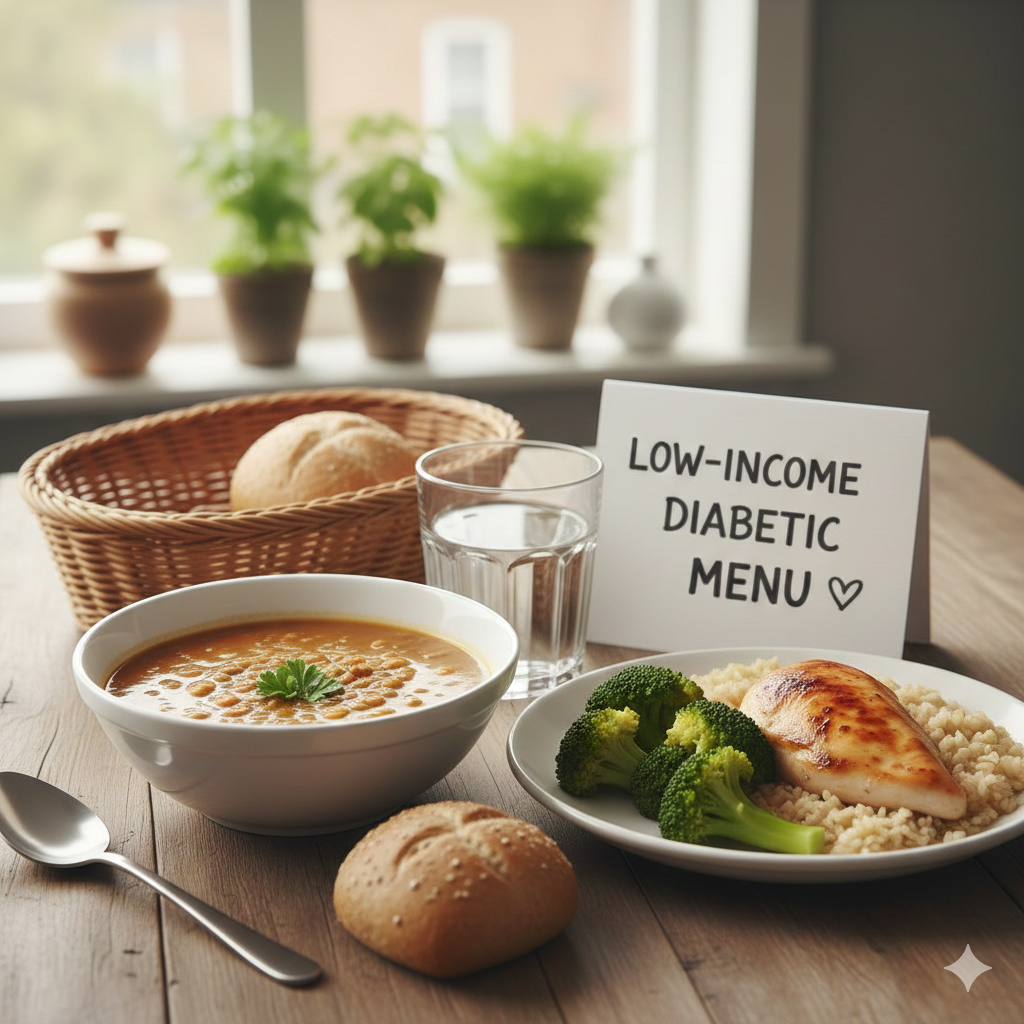
The Ultimate Low-Income Diabetic Menu: Managing Blood Sugar on a Shoestring Budget
There is a pervasive and damaging myth in the world of nutrition: that healthy eating is a luxury reserved for the wealthy. When you walk into a high-end grocery store and see $12 green juices and $8 loaves of artisanal keto bread, it is easy to feel defeated. For those managing diabetes on a tight budget—whether you’re a senior on a fixed income, a single parent, or someone facing food insecurity—the stress is twofold: paying for medication and supplies while trying to afford the “right” food.
But here is the truth: You do not need expensive superfoods to manage your A1C. In fact, some of the most powerful foods for blood sugar control—beans, lentils, eggs, oats, cabbage, and frozen spinach—are the cheapest items on the shelf. Managing diabetes on a low income isn’t just possible; it can be done with delicious, satisfying meals that the whole family will enjoy, without expensive “diet” products.
This guide is a practical, no-nonsense roadmap to a Low-Income Diabetic Menu. We prioritize nutrient density, shelf life, and minimal waste. Whether you are a senior looking for a diabetic menu for seniors or a parent trying to feed hungry teenagers, these strategies work. We’ll also show you how to adapt meals for specific needs: soft food options or low-calorie senior menus — all while stretching every dollar.
The “Smart Shopper” Diabetic Strategy
Before we dive into the meal plan, we need to reset how we shop. The goal is to maximize nutrition per dollar and reduce food waste — the hidden budget killer.
Top 5 Budget Rules for Diabetics (plus bonus tips)
- The Freezer is Your Best Friend: Fresh produce spoils. If you throw away a bag of spinach, you’ve thrown away money. Frozen vegetables (broccoli, spinach, mixed blends, bell peppers) are flash-frozen at peak ripeness, retain all nutrients, are often 50% cheaper, and never rot. They’re also pre-chopped, saving time.
- Embrace Plant Protein & Bulk Legumes: Meat is the most expensive part of a meal. Dried beans, chickpeas, and lentils cost pennies per serving, are packed with fiber (which blunts blood sugar spikes), and keep you full. A 1lb bag of dry lentils = 7 servings for about $1.50.
- Buy in Bulk, Cook in Batches: A 5lb bag of brown rice or rolled oats is significantly cheaper per ounce than small boxes. “Unit Price” is the only number that matters on the price tag. Same goes for frozen veggies in family-size bags.
- Strategic Canned Goods: Canned tomatoes, no-salt veggies, and water-packed tuna are shelf-stable and versatile. Always rinse canned beans to cut sodium by 40%. Stock up when they’re on sale (buy 10 cans if budget allows).
- Reduce Food Waste = Free Money: Vegetable scraps and chicken bones become broth. Wilted veggies go into frittatas. Stale bread becomes breadcrumbs. Use every part.
Budget spice hack: Check international aisles or small tiendas — spices in bags are 80% cheaper than bottled brands. Cumin, chili, garlic powder, and cinnamon are must-haves.
If you are new to meal planning, you might want to start with our 1-day simple diabetic menu to get the hang of it without feeling overwhelmed. For more structured help, the 3-day plan gives you a short shopping list.

The Budget Chef’s Secret Weapon
A slow cooker turns the cheapest, toughest cuts of meat and dried beans into tender, gourmet meals while you are at work. It pays for itself in a week. Use it for stews, chilis, and even oatmeal.
Check Price on Amazon7-Day Low-Income Diabetic Meal Plan (Budget Stretch Edition)
This menu relies on “staple ingredients” that are used multiple times to ensure nothing goes to waste. It focuses on affordable proteins like eggs, tuna, chicken thighs, and plant-based combinations. Every day includes a snack, and we show how to repurpose leftovers.
Processed Food vs. Budget Diabetic Cooking — Real Cost Breakdown
Many people believe fast food is cheaper. Let’s break down the cost per meal and the true impact on your health and wallet.
| Meal Type | Average Cost | Nutritional Value | Diabetic Impact |
|---|---|---|---|
| Fast Food Combo | $8.00 – $12.00 | High sodium, trans fats, low fiber | High Spike (sugar/refined carbs) |
| Frozen “Diet” Meal | $4.00 – $6.00 | Low protein, processed starches, preservatives | Moderate Spike (hidden sugars/starches) |
| Homemade Lentil Stew | $0.75 – $1.50 | High fiber, plant protein, iron, low fat | Stable glucose (slow digestion) |
| Homemade Omelet (2 eggs + veg) | $1.00 – $1.50 | High protein, healthy fat, vitamins | Very stable (minimal carbs) |
| Bean & Rice Bowl | $0.90 – $1.75 | Complete protein, fiber, magnesium | Low glycemic response |
Note: Prices estimated based on national average for generic/store brands in 2025.

Save Your Leftovers, Save Your Money
Throwing away food is throwing away money. Good airtight containers (glass or BPA-free plastic) extend the life of your bulk cooking and prevent the need for costly takeout. Perfect for soups, chili, and meal prep.
Check Price on AmazonAdapting for Specific Needs on a Tight Budget
For Seniors on Fixed Incomes & Those with Chewing Difficulties
Seniors often face the tightest budgets and unique health challenges. The menu above is ideal because it uses soft foods (eggs, beans, soups, cooked veggies) which are easier to chew and digest. If chewing is a significant issue, see our guide on the diabetic menu for elderly with no teeth (mashed beans, smooth soups, oatmeal). For those needing strict calorie control to save even more, the 1200 calorie senior menu reduces portion sizes, further stretching the budget and supporting weight management.
For Large Families or Teens with Diabetes
If you are feeding a hungry teenager with diabetes, portion sizes need to increase without breaking the bank. Rice and beans are your best friend here—they are cheap fillers that are healthy. Add extra eggs or peanut butter sandwiches on whole-wheat bread. Buy the largest size of peanut butter and oats. Check our diabetic menu for teenagers for high-energy, low-cost ideas that keep them satisfied.
For Pregnant Women Needing High Nutrition
Pregnancy requires extra nutrients like folate, iron, and omega-3s. While budget is a concern, prioritize eggs (choline), frozen spinach (folate), and canned sardines or mackerel (cheaper than salmon but high in Omega-3). See our pregnancy menu for nutrient specifics and affordable swaps.
Expert Tips: Hidden Savings & Shelf-Life Hacks
- Check Unit Prices relentlessly: The price tag on the shelf usually has a smaller number in the corner (price per ounce/100g). Use this to compare different brands and sizes — sometimes buying two smaller bags is cheaper than one “family size”.
- Shop the “ugly” or discount rack: Many grocery stores have a clearance section for produce that is slightly bruised or near expiration. These are perfect for soups, stews, and smoothies where texture doesn’t matter. Freeze them immediately.
- Drink water (and save hundreds): Soda, juice, sweet tea, and fancy coffees destroy budgets and blood sugar. Water is free. If you miss fizz, buy generic sparkling water or invest in a water filter pitcher (one-time cost).
- Grow your own herbs: Fresh herbs are expensive ($3 for a tiny packet that wilts). Buying a potted basil, parsley, or cilantro plant for the same price gives you fresh herbs for months on a windowsill.
- Flash freeze chopped veggies: If you buy fresh onions, peppers, or carrots in bulk, chop and freeze them on a tray, then store in bags. They’re ready for cooking and won’t rot.
If you can master these habits for a month, check out our 30-day diabetic menu to turn this into a permanent lifestyle — with rotating seasonal savings.
Frequently Asked Questions — Real Answers for Tight Budgets
Is it expensive to eat a diabetic-friendly diet?
It is a common myth that you need expensive specialty foods to manage diabetes. Staples like dried beans, eggs, frozen vegetables, and oats are some of the most affordable foods in the grocery store and are excellent for blood sugar control.
Are canned vegetables okay for diabetics?
Yes, canned vegetables are a budget-friendly option. However, it is important to choose ‘no salt added’ varieties or rinse them thoroughly under water to remove excess sodium, which can affect blood pressure.
What is the cheapest source of protein for diabetics?
Eggs, dried lentils, beans, and canned tuna are generally the most cost-effective protein sources. Buying chicken thighs or whole chickens instead of boneless skinless breasts also saves significant money.
Can I eat rice on a low-income diabetic diet?
White rice can spike blood sugar, but brown rice is a budget-friendly whole grain that is better for diabetics. Buying it in bulk bags reduces the cost per serving significantly.
Are frozen fruits and vegetables as healthy as fresh?
Yes, often they are even healthier because they are flash-frozen at peak ripeness, locking in nutrients. They are also usually cheaper and prevent food waste since they don’t spoil quickly.
How can I make cheap meat taste good?
Cheaper cuts of meat are often tougher but have more flavor. Using a slow cooker or braising them with low-cost spices, onions, and garlic can turn tough cuts into tender, delicious meals.
Should I buy generic store brands?
Absolutely. Generic or store-brand oats, beans, rice, and frozen veggies are often processed in the exact same facilities as name brands but cost 20-30% less. Read the ingredients list to ensure no added sugars.
What is a good budget-friendly diabetic snack?
Hard-boiled eggs, homemade popcorn (air-popped), peanut butter on celery, or a small handful of bulk-bin sunflower seeds are excellent low-cost snacks.
Can I use leftovers safely for meal prep?
Absolutely — leftovers are the cornerstone of a low-income menu. Store them in airtight containers and consume within 3-4 days, or freeze portions for later. This prevents waste and saves money. Always reheat to steaming hot.
What spices should I start with on a shoestring?
Focus on inexpensive, versatile spices: cinnamon (for oatmeal and fruit), chili powder, cumin, garlic powder, onion powder, and black pepper. Check international markets for 50¢ packets — avoid $8 jars.
Health is Within Your Budget — Start Today
Managing diabetes on a low income is undeniably challenging, but it is not impossible. By shifting your focus to whole, unprocessed staples like beans, lentils, eggs, and frozen vegetables, you can create a Low-Income Diabetic Menu that is healthier than the expensive processed diets many people follow. Every dollar saved by cooking from scratch is a dollar that can go toward medication, supplies, or simply peace of mind.
Start small. Buy one bag of lentils. Cook one big pot of soup. Use your freezer. Repurpose leftovers. Every small change you make is an investment in your future health, saving you from costly medical complications down the road. You can do this — one meal at a time.
(affiliate links help keep this content free)