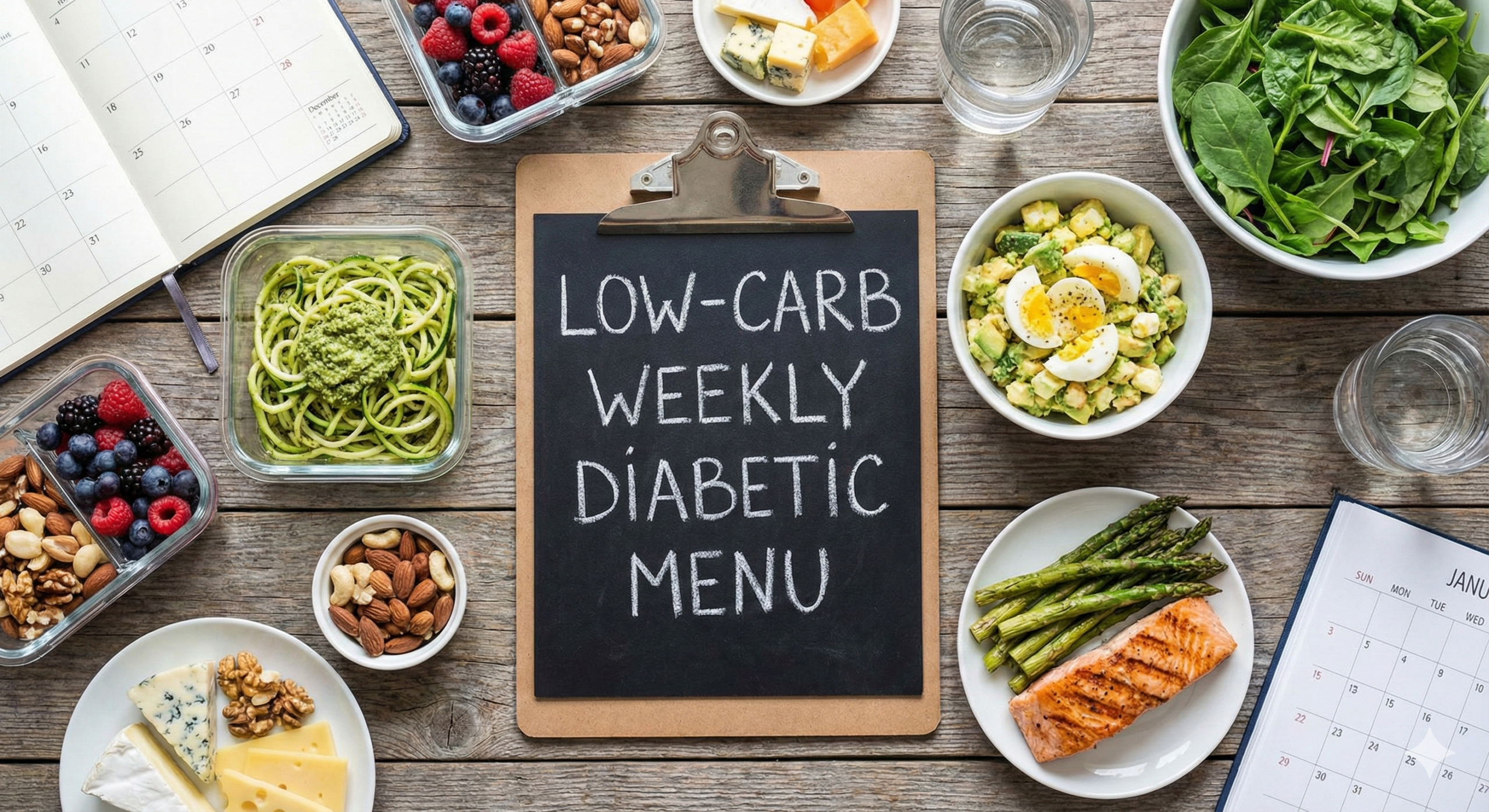
The Definitive Low-Carb Weekly Diabetic Menu: Master Your Metabolism
For millions of people managing diabetes, the standard advice to “eat balanced meals” often leads to confusion and, frustration, resulting in blood sugar spikes. The modern nutritional landscape has shifted, and evidence increasingly points to a low-carb approach as one of the most effective tools for managing insulin resistance and lowering A1C levels.
But cutting carbohydrates doesn’t mean resigning yourself to a life of plain boiled chicken and lettuce. A well-designed Low-Carb Weekly Diabetic Menu should be vibrant, satisfying, and full of healthy fats that keep you full for hours. By reducing the glucose load on your bloodstream, you give your pancreas a much-needed break and reduce post-meal inflammation.
This comprehensive guide is more than just a list of recipes. It is a strategic blueprint. Whether you are transitioning from a standard 7-day diabetic menu or you are an experienced low-carb eater looking for structure, this plan is designed to optimize your metabolic health. Each day targets 30–50g net carbs, with ample protein and healthy fats.
Why Low-Carb Works for Diabetes (Physiology Explained)
Diabetes is essentially a condition of carbohydrate intolerance. When you eat carbohydrates, they break down into glucose. In a healthy body, insulin shuttles that glucose into cells for energy. In a diabetic body, that process is broken or inefficient due to insulin resistance or lack of insulin.
The Insulin-Sparing Effect (Lowering the Demand)
By drastically reducing carbohydrate intake, you reduce the amount of insulin your body needs to produce (or inject). This lowers baseline insulin levels, allowing your body to access stored fat for fuel and reducing the inflammation associated with chronic hyperglycemia. It also leads to more stable energy throughout the day without the mid-afternoon crash.
Unlike our standard weekly diabetic meal plan which incorporates moderate complex carbs like oatmeal and brown rice, this low-carb version replaces those starches with fibrous vegetables and healthy fats. This approach typically results in “flat-lining” your blood sugar curves—eliminating the dangerous peaks and valleys that cause fatigue and long-term complications.
If you are looking for a gentle introduction, you might start with our 1-day simple diabetic menu before committing to a full low-carb week.

Miss Bread? You Don’t Have To.
One of the hardest parts of low-carb is giving up sandwiches. Fortunately, almond flour-based mixes allow you to bake delicious, blood-sugar-friendly bread at home. Look for mixes with no added sugar.
Check Price on AmazonThe Core Rules of This Menu (Non‑Negotiable)
To succeed with this plan, we follow three non-negotiable rules:
- Net Carbs Over Total Carbs: We focus on fiber. A food with 10g of carbs and 8g of fiber has only 2g of “net carbs.” Fiber is subtracted because it doesn’t raise blood glucose. Aim for under 20g net carbs per meal.
- Protein Pacing: We include 25–35g of protein at every meal to ensure satiety and muscle maintenance. Protein also has a minimal effect on blood sugar.
- Hydration + Electrolytes: When you cut carbs, your kidneys flush out water and sodium. You must salt your food and drink plenty of water. Consider a cup of bouillon daily for the first week to avoid headaches.
Your 7-Day Low-Carb Diabetic Menu
This menu targets approximately 30–50g of net carbs per day. It is naturally gluten-free and sugar-free. Portions should be adjusted based on hunger and activity level.

The Low-Carb Baker’s Essential: Almond Flour
Swap white flour for almond flour to create breading for chicken, low-carb muffins, and pancakes that won’t spike your sugar. It’s also high in healthy fats and vitamin E.
Check Price on AmazonComparison: Low-Carb vs. Standard Diabetic Diet vs. Strict Keto
Why choose this specific approach over traditional advice? Let’s compare the macronutrient profiles and practical aspects.
| Feature | Low-Carb Menu (This Plan) | Standard Diabetic Diet | Strict Keto Diet |
|---|---|---|---|
| Carb Limit (Net) | 30–50g / day | 150–200g total carbs/day | < 20g / day |
| Focus Foods | Proteins, healthy fats, greens, above‑ground veg | Whole grains, fruits, lean meat | High fat (70%+), moderate protein |
| Blood Sugar Impact | Minimal / Flat curves | Moderate spikes possible | Minimal / Flat |
| Hunger Levels | Low (high satiety from fat/protein) | Moderate (glucose dips cause hunger) | Very Low |
| Sustainability | High (flexible, includes berries, nuts) | High | Moderate (socially restrictive) |
Your Low-Carb Grocery List (Essentials for the Week)
Navigate the grocery store with confidence. Notice what is missing from this list: bread, pasta, rice, potatoes, and sugar. Stock up on these staples.
🥑 Produce
- Spinach & Mixed Greens (2 bags)
- Zucchini (3-4)
- Cauliflower (1 head or 2 bags frozen rice)
- Avocados (4-5 ripe)
- Asparagus (1 bunch)
- Cabbage (or coleslaw mix)
- Berries (Blackberries/Raspberries, 1 punnet)
- Radishes (1 bunch, for roasting)
🥩 Proteins
- Eggs (2 dozen, pastured if possible)
- Bacon (sugar-free cured, 1 pack)
- Chicken Breast & Thighs (total ~2 lbs)
- Ground Beef (1 lb, 80/20)
- Ground Pork (1 lb)
- Salmon Fillets (2 portions) & Smoked Salmon (4oz)
- Canned Tuna (2 cans, in water)
- Ribeye or Sirloin Steak (10-12 oz)
🧀 Dairy & Pantry
- Butter (1 stick, grass‑fed)
- Heavy Whipping Cream (small carton)
- Cheese (Cheddar, Mozzarella, Cream Cheese, Parmesan)
- Olive Oil & Avocado Oil
- Almonds / Macadamia Nuts
- Marinara Sauce (Rao’s or similar no‑sugar)
- Chia seeds, flax seeds, hemp hearts
- Pork rinds (for crunch)
Expert Insights: Navigating the Transition to Low‑Carb
Switching to a low-carb menu is a metabolic shift. Here is what you need to know to stay the course and thrive.
1. Monitor Your Meds (Critical Safety)
Crucial Warning: If you take insulin or sulfonylureas, cutting carbs will drastically reduce your need for these medications. If you do not adjust your dosage with your doctor, you risk severe hypoglycemia. Test your blood sugar frequently, especially before driving.
2. Salt is Your Friend (Electrolytes 101)
Low insulin levels signal the kidneys to release sodium. If you feel lightheaded or get headaches, you likely need more salt. Drink a cup of broth daily or add sea salt to your meals freely. Also eat avocados for potassium.
3. Don’t Fear Fat (Fuel Source)
On a low-carb diet, fat is your energy source. If you cut carbs and fat, you will be starving. Enjoy the skin on the chicken and the full-fat dressing on the salad. Fat keeps you satiated and helps absorb fat‑soluble vitamins.
4. Be Patient with Adaptation
The first 3-4 days may bring fatigue or irritability (the “low-carb flu”). Push through by staying hydrated and adding electrolytes. By day 5, most people report increased mental clarity and stable energy.
Ready for a longer commitment? Our 30-day diabetic menu offers extensive strategies for long-term maintenance.

Track Your Metabolic Switch
Are you burning fat or sugar? A dual glucose and ketone monitor gives you the data you need to optimize your low-carb journey. Track your progress and see how different foods affect you.
Check Price on AmazonFrequently Asked Questions (Low‑Carb Edition)
What is “low carb” for diabetics?
Typically 50–100g total carbs or 30–50g net carbs per day. This menu stays under 50g net.
Will I get keto flu?
Possibly; hydrate, add salt, and eat potassium‑rich foods like avocado.
Can I eat fruit?
Berries only in limited amounts; avoid tropical fruits.
Safe for Type 1?
Yes, but must adjust insulin and monitor closely – consult doctor.
Net or total carbs?
Net carbs (total minus fiber) matter most for blood sugar.
High cholesterol concern?
Focus on unsaturated fats (olive oil, nuts) and fatty fish.
Vs standard diabetic diet?
Standard allows grains/starch; this replaces them with fats/greens.
Alcohol allowed?
Spirits/dry wine are low‑carb, but beware of hypoglycemia.
Electrolytes?
Add salt, eat spinach, avocado, and drink broth.
Dairy okay?
Yes, full‑fat cheese, cream, butter – avoid milk.
Gluten‑free?
All meals are naturally gluten‑free (no grains).
Sweeteners?
Stevia, erythritol, monk fruit are fine; avoid maltitol.
Take Control of Your Numbers Today
Adopting a Low-Carb Weekly Diabetic Menu is one of the most proactive steps you can take for your health. It moves you from “managing” a disease to actively improving your metabolic function. The energy stability, mental clarity, and improved A1C results are worth the initial adjustment period.
Start with Day 1. If you stumble, don’t worry—just get back on track with the next meal. Your body has an incredible capacity to heal when given the right fuel.
*affiliate links help us create free resources – all product URLs unchanged.