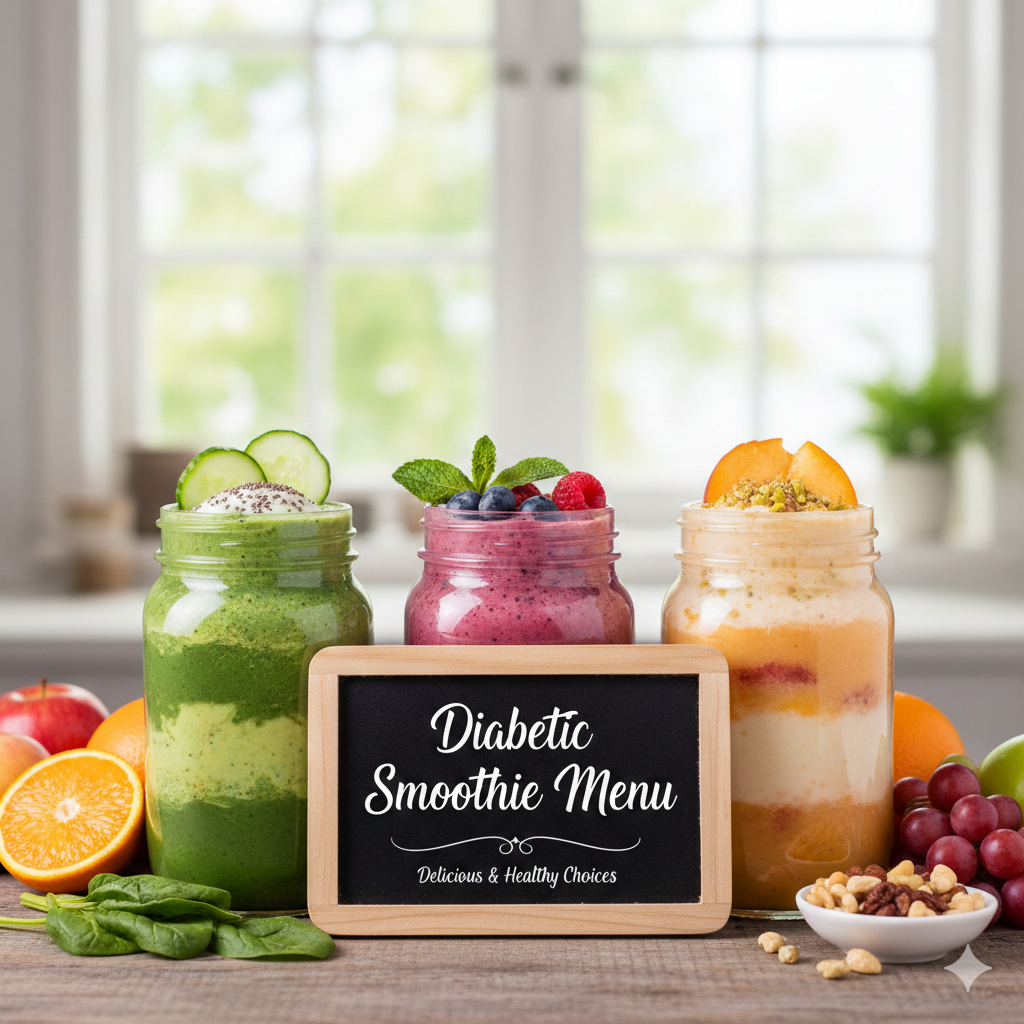
Diabetic Smoothie Menu: Liquid Nutrition Without the Spike
Smoothies have a complicated reputation in the diabetes community. On one hand, they are marketed as the ultimate health food—packed with vitamins, minerals, and antioxidants. On the other hand, a standard smoothie shop offering can contain as much sugar as a can of soda, acting as a “glucose bomb” that sends blood sugar soaring. For anyone managing Type 1, Type 2, or Prediabetes, navigating the world of liquid nutrition requires a strategic approach.
Creating a safe diabetic smoothie menu is not about deprivation; it is about reformulation. It’s about understanding that fruit juice is not a health food for diabetics, but whole fruit (with its fiber intact) can be. It involves mastering the balance of macronutrients to ensure your drink stabilizes blood sugar rather than spiking it.
Whether you need a quick option for a diabetic breakfast menu or a nutrient-dense solution for a diabetic menu for elderly with no teeth, this guide will provide the complete blueprint. We will explore high-protein blends, anti-inflammatory drinks, green detox options, and the critical “add-ins” that transform a simple shake into a genuine metabolic tool.
The Anatomy of a Blood-Sugar-Safe Smoothie
To drink your calories safely, you must follow the “Glucose Buffer” principle. You never want carbohydrates to enter your bloodstream unaccompanied. You need buffers—specifically, fiber, protein, and healthy fats—to slow down digestion and flatten the glucose response curve.
The fundamental problem with most commercial smoothies is that they are essentially fruit juice with fruit in it. Removing the structural integrity of whole fruit by blending removes some—though not all—of the fiber benefit. What’s left is a carbohydrate-dominant liquid that digests faster than eating the same foods whole. This is why building a smoothie with deliberate macronutrient structure is non-negotiable for diabetics.
🚫 The “Never” List for Diabetics
- Fruit Juice bases: Orange juice, apple juice, or grape juice are concentrated sugar with no fiber to slow absorption.
- Sweetened Yogurts: Always opt for plain, unsweetened Greek yogurt.
- Agave or Honey: While “natural,” they spike blood sugar as rapidly as table sugar.
- Canned Fruit in Syrup: Always choose fresh or unsweetened frozen fruit.
- Sweetened protein powders: Many popular powders contain 15–25g of added sugar per scoop.
- Flavored nut milks: Vanilla or chocolate almond milk often contains 8–15g added sugar per cup.
The Golden Smoothie Formula Explained
Every smoothie in your weekly diabetic meal plan should follow this five-component structure. Think of it as a recipe framework, not a rigid prescription. Once you internalize these five roles, you can improvise endlessly while staying blood-sugar safe.
- Liquid Base (1 cup): Unsweetened almond milk, soy milk, water, or green tea.
- Fiber/Green (1–2 cups): Spinach, kale, cucumber, or zucchini.
- Low-GI Fruit (½ cup): Berries, green apple, or cherries.
- Protein (20g+): Protein powder (whey isolate or plant-based), plain Greek yogurt, or silken tofu.
- Healthy Fat (1 tbsp): Chia seeds, ground flaxseed, avocado, or nut butter.
Why Each Component Matters
The liquid base determines the carbohydrate floor. Fruit juice triples the carb count before you add a single ingredient. Unsweetened almond milk often has less than 1g of carbs per cup.
Greens provide volume, magnesium, folate, and fiber without meaningful carbohydrates. They are essentially “free” from a blood sugar perspective.
Low-GI fruit provides sweetness, antioxidants, and the psychological satisfaction that keeps people consistent with the habit. Choose it strategically—not generously.
Protein is the macronutrient that most strongly stimulates satiety hormones and has the least impact on blood glucose. Without it, your smoothie is just a fancy juice.
Healthy fat slows gastric emptying—meaning food leaves your stomach more slowly, which directly translates to a flatter, slower glucose curve after drinking.

NutriBullet Pro High-Speed Blender
The gold standard for breaking down fibrous veggies like kale and nuts into a smooth, drinkable texture without losing the fiber content.
Check Price on AmazonUnderstanding Fruit & Glycemic Impact in Smoothies
Fruit is both the hero and the villain of the smoothie story. It provides natural sweetness, vitamins, antioxidants, and a range of anti-inflammatory phytonutrients. But fruit also contains fructose and glucose—sugars that raise blood glucose, and whose impact is amplified when blended (removing some fiber structure) versus eaten whole.
Whole Fruit vs. Blended Fruit vs. Juice
Research comparing whole fruit, blended fruit, and fruit juice shows a meaningful difference in glycemic response. Whole fruit consumed intact has the slowest glucose rise because chewing and the intact cellular structure slow digestion. Blended fruit is somewhat faster—the cell walls are partially broken down—but retains all fiber. Fruit juice is the fastest because filtration removes fiber entirely, leaving concentrated sugar. This is why smoothies made with whole fruit are categorically different from juices, and why adding protein and fat to smoothies is still important even with whole fruit present.
Fruit Glycemic Reference for Smoothies
| Fruit | GI Score | Net Carbs (½ cup) | Smoothie Verdict |
|---|---|---|---|
| Raspberries | 25 | ~4g | ✅ Best choice |
| Blackberries | 25 | ~4g | ✅ Best choice |
| Strawberries | 41 | ~5g | ✅ Excellent |
| Blueberries | 53 | ~8g | ✅ Good – use ½ cup |
| Cherries (frozen) | 22 | ~9g | ✅ Good – use ½ cup |
| Green Apple | 38 | ~10g | ⚠️ Pair with fat/protein |
| Peach (frozen) | 42 | ~11g | ⚠️ Limit to ¼ cup |
| Banana (⅓ small) | 51 | ~8g | ⚠️ Max ⅓ banana only |
| Mango (frozen) | 55 | ~13g | ⚠️ Small amounts only |
| Pineapple | 66 | ~17g | ❌ Avoid or use 2 tbsp max |
| Melon (any variety) | 65–72 | ~12g | ❌ High GI, avoid |
| Grapes | 59 | ~15g | ❌ Too sweet for smoothies |
The practical takeaway: build your smoothie fruit base almost entirely from the green column. Occasionally reaching into the yellow column for variety is fine—as long as the protein and fat components of the smoothie are solidly in place.
Green Smoothies: The Ultimate Glucose Control Tool
Green smoothies are fantastic for those on a low carb weekly diabetic menu. The volume of leafy greens provides magnesium, which has been shown to improve insulin sensitivity, and chlorophyll, which may support liver function and metabolic health.
🥬 Recipe: The “Green Insulin Stabilizer”
This smoothie is virtually savory, focusing on hydration and fiber rather than sweetness. Ideal for morning fasting blood sugar management.
- Base: 1 cup cold water + juice of ½ lemon
- Greens: 1 cup baby spinach + ½ cup cucumber slices (skin on)
- Fat: ¼ avocado (adds creaminess and slows sugar absorption)
- Boost: 1 tbsp chia seeds
- Flavor: Fresh ginger root and mint leaves
Nutrition Note: Excellent for lowering morning fasting numbers due to minimal carbohydrate load and high magnesium content from spinach.
🥦 Recipe: The Kale & Coconut Cleanser
A creamy, fiber-rich blend that’s filling enough to replace breakfast on busy mornings.
- Base: 1 cup unsweetened coconut milk (carton, not canned)
- Greens: 1 large kale leaf (stem removed) + ½ cup frozen zucchini
- Protein: ½ cup plain Greek yogurt
- Fruit: ½ cup frozen raspberries
- Fat: 1 tbsp almond butter
- Flavor: ½ tsp cinnamon + 3 drops liquid stevia
If you are managing other conditions like high cholesterol, the soluble fiber in leafy greens and berries works double duty. It helps bind bile acids in the digestive tract, lowering LDL cholesterol naturally, fitting perfectly into a diabetic menu for high cholesterol.
High-Protein Blends for Satiety
For working adults, breakfast often needs to be quick and sustaining. A diabetic menu for working adults benefits enormously from high-protein smoothies that prevent mid-morning hunger and the cognitive fog of a blood sugar dip.
Protein stimulates the release of glucagon-like peptide-1 (GLP-1), a hormone that signals fullness and actively regulates blood sugar. If you are aiming for weight management on a 1500 calorie diabetic menu, replacing a bagel breakfast with a 25g-protein smoothie is a clinically meaningful upgrade.
🍫 Recipe: The Chocolate Peanut Butter Powerhouse
- Base: 1 cup unsweetened almond milk
- Protein: 1 scoop chocolate whey isolate (low carb) OR ½ cup plain Greek yogurt
- Fat/Flavor: 1 tbsp natural peanut butter (no sugar added)
- Fiber: 1 tbsp ground flaxseed
- Secret Veggie: ½ cup riced cauliflower (frozen) – adds thickness without taste
🍵 Recipe: The Matcha Protein Shake
Matcha provides slow-release caffeine paired with L-theanine for focused, calm energy—ideal before a workday or light workout.
- Base: 1 cup unsweetened oat milk (or almond milk for lower carbs)
- Protein: 1 scoop vanilla pea protein powder
- Matcha: 1 tsp ceremonial-grade matcha powder
- Fat: 1 tbsp hemp seeds
- Sweetener: 3–4 drops monk fruit liquid
- Ice: ½ cup for a frappuccino-style texture

Isopure Zero Carb Protein Powder
A diabetic favorite because it contains zero carbohydrates and fillers, ensuring your smoothie stays strictly low-glycemic.
Check Price on AmazonAnti-Inflammatory Smoothies for Diabetics
Chronic low-grade inflammation is deeply intertwined with diabetes. High blood sugar promotes inflammatory pathways, and inflammation in turn worsens insulin resistance—creating a vicious cycle. Certain foods contain bioactive compounds that measurably interrupt this cycle. Building anti-inflammatory smoothies is one of the most evidence-backed nutrition strategies available to diabetics.
Top Anti-Inflammatory Smoothie Ingredients
Turmeric + Black Pepper
Curcumin in turmeric reduces inflammatory markers (IL-6, CRP). Black pepper increases absorption by up to 2,000%.
Wild Blueberries
Higher in anthocyanins than regular blueberries. Anthocyanins reduce oxidative stress associated with diabetes complications.
Ground Flaxseed
Alpha-linolenic acid (plant Omega-3) and lignans reduce inflammatory cytokines and support hormonal balance.
Fresh Ginger
Gingerols inhibit the same enzymes targeted by anti-inflammatory medications, with fewer side effects.
Tart Cherry
Anthocyanins and melatonin in tart cherry reduce muscle inflammation and improve sleep quality—both relevant to blood sugar control.
Ceylon Cinnamon
Shown to improve insulin sensitivity and reduce fasting glucose. Use Ceylon (true) cinnamon, not cassia, for safe daily use.
🌅 Recipe: The Golden Anti-Inflammatory Blend
- Base: 1 cup unsweetened almond milk
- Protein: ½ cup plain Greek yogurt
- Fruit: ½ cup frozen wild blueberries
- Anti-inflammatory: ½ tsp turmeric powder + tiny pinch of black pepper
- Fat: 1 tbsp ground flaxseed
- Warming spice: ½ tsp Ceylon cinnamon + ½ tsp fresh ginger
- Sweetener: stevia or monk fruit to taste
Smoothies for Weight Management
For the majority of people with Type 2 diabetes, losing even a modest amount of weight—5 to 10% of body weight—can dramatically improve insulin sensitivity and, in some cases, lead to remission of the disease. Smoothies, when properly constructed, can support this goal by replacing higher-calorie, lower-nutrient meals with filling, nutrient-dense alternatives.
The Volumetrics Approach
Volumetric eating is the principle of choosing foods that provide large volume and weight for fewer calories, creating physical fullness in the stomach. Smoothies are ideal for this strategy. By loading up on leafy greens (essentially zero calories), frozen vegetables like cauliflower and zucchini, and ice, you can build a 16-ounce smoothie that physically fills your stomach while keeping calories and carbohydrates modest.
Weight-Loss Smoothie Principles
- Target 300–400 calories per smoothie if replacing a meal; 150–200 calories as a snack.
- Minimum 20g protein per meal-replacement smoothie to preserve muscle mass during weight loss.
- Include at least 5g of fiber per serving to maximize satiety.
- Avoid calorie-dense add-ins in excess: nut butters and avocado are healthy but calorie-dense—measure, don’t pour.
- Drink slowly. Consuming a smoothie in 60 seconds bypasses satiety signals. Sip over 10–15 minutes.
🍓 Recipe: The Metabolism Booster Smoothie
- Base: 1 cup cold green tea (brewed and cooled) – provides EGCG for metabolism support
- Greens: 1 cup baby spinach + ½ cup frozen cauliflower rice
- Protein: 1 scoop unflavored pea protein
- Fruit: ½ cup frozen strawberries
- Fat: 1 tsp MCT oil (optional – supports fat metabolism)
- Flavor: 1 tbsp fresh lemon juice + stevia to taste
Fiber-Forward Smoothies & Gut Health
The connection between gut health and blood sugar regulation is one of the most exciting frontiers in metabolic medicine. The gut microbiome—trillions of bacteria living in the digestive tract—directly influences insulin sensitivity, inflammation, and even hunger hormone production. People with Type 2 diabetes consistently show lower microbial diversity and fewer short-chain fatty acid-producing bacteria than metabolically healthy individuals.
High-fiber smoothies feed the beneficial bacteria that produce short-chain fatty acids like butyrate, which reduce gut inflammation, improve insulin signaling, and support a healthy intestinal lining. Every smoothie you make is an opportunity to either feed or starve these microbial allies.
Best Prebiotic Fiber Sources for Smoothies
- Jerusalem artichoke powder: One of the highest inulin sources available in powdered form—nearly tasteless in smoothies.
- Psyllium husk (½ tsp): Soluble fiber that forms a gel, slowing glucose absorption and lowering post-meal blood sugar spikes measurably.
- Ground flaxseed: Provides both soluble and insoluble fiber plus Omega-3s.
- Chia seeds: Forms a gel that slows gastric emptying; each tablespoon provides 5g of fiber.
- Frozen peas (small amount): Surprisingly rich in resistant starch—a type of fiber that bypasses the small intestine and feeds colonic bacteria.
⚠️ Fiber Transition Note
If you are dramatically increasing fiber intake via daily smoothies, do so gradually over 2–3 weeks. A sudden large increase in fiber can cause bloating, gas, and digestive discomfort. Start with 1 tsp of psyllium or chia and increase over time. Also ensure you increase water intake alongside fiber consumption.
Best Time to Drink a Diabetic Smoothie
Timing your smoothie consumption strategically can amplify its blood sugar benefits significantly. The body’s insulin sensitivity is not constant throughout the day—it follows a predictable rhythm that you can work with.
Morning: The Prime Smoothie Window
Most people are most insulin-sensitive in the morning. This means the same carbohydrate load produces a smaller blood sugar rise in the morning than it would in the evening. A smoothie consumed as breakfast—after an overnight fast—is processed most efficiently by your metabolic systems. However, some individuals experience elevated morning blood sugar due to the “Dawn Phenomenon” (a cortisol-driven rise in glucose in the early hours). For these individuals, a very low-carb green smoothie is preferable to a fruit-heavy one at breakfast.
Pre-Workout: Fuel Without the Spike
A small, moderate-carb smoothie 30–60 minutes before exercise provides fuel for working muscles while allowing enough time for initial digestion. A banana-free smoothie with berries and a small amount of oats (¼ cup) works well here. During exercise, muscles absorb glucose without insulin, which means carbohydrates consumed around workouts are processed more efficiently.
Post-Workout: Protein Priority
Within 30–60 minutes of finishing exercise, the focus shifts to muscle protein synthesis. A post-workout smoothie should be protein-dominant (25–30g) with moderate carbohydrates to replenish glycogen. Greek yogurt + berries + protein powder is the classic diabetic-friendly post-workout template.
Evening: Exercise Caution
Evening smoothie consumption requires the most caution. Insulin sensitivity naturally declines in the afternoon and evening, meaning the same smoothie consumed at 8 PM will cause a higher blood sugar response than the same smoothie at 8 AM. If consuming a smoothie in the evening, keep carbohydrates to an absolute minimum and prioritize fat and protein to minimize the glucose impact.
7 Common Smoothie Mistakes Diabetics Make
Even well-intentioned diabetics consistently fall into the same pitfalls when building smoothies. Understanding these mistakes helps you avoid them from day one.
Mistake 1: Using Fruit Juice as the Base
This is the most devastating smoothie mistake. Eight ounces of orange juice contains approximately 26g of sugar with essentially no fiber. Starting with juice means your smoothie is sugar-forward before you’ve added a single other ingredient. Always use water, unsweetened plant milk, or brewed tea as your base.
Mistake 2: Overdoing the Fruit
A two-cup serving of mixed mango, pineapple, and banana—a common “tropical” smoothie combination—can contain 50–60g of carbohydrates from fruit alone. This is far beyond what a diabetic smoothie should contain. Limit fruit to a maximum of ½ cup per smoothie and choose from the low-GI column.
Mistake 3: Skipping Protein Entirely
A smoothie without protein is nutritionally a fancy juice. Protein is what converts a liquid snack into a meal, maintains stable blood sugar for 3–4 hours, and prevents the rebound hunger that leads to overeating later. Never skip it.
Mistake 4: Drinking Too Fast
Consuming a smoothie in under two minutes—which is easy to do with a straw—delivers a large carbohydrate and calorie load to the digestive system faster than it can signal fullness. Slow down. Sip your smoothie like a hot beverage over 10–15 minutes.
Mistake 5: Trusting “Healthy” Store-Bought Smoothies
Juice bar “health” smoothies frequently contain 60–90g of carbohydrates per serving. Words like “natural,” “no added sugar,” “superfood,” and “detox” are marketing terms with no nutritional regulation. The only way to verify a smoothie’s safety is to read the full nutrition facts or make it yourself.
Mistake 6: Not Counting Smoothie Calories
Many people treat smoothies as a “free” calorie category because they’re liquid. In reality, a smoothie containing 2 tbsp almond butter (200 cal), full Greek yogurt (150 cal), and multiple fruits can easily reach 600 calories. Track your smoothie calories the same way you track meals.
Mistake 7: Ignoring the Blending Effect
Blending breaks down cell walls and increases the surface area of food particles, which can slightly accelerate digestion compared to eating the same foods whole. This isn’t a reason to avoid smoothies—the difference is modest—but it reinforces why the protein and fat components are essential rather than optional add-ons.
Smoothie Superfoods & Add-Ins Worth Knowing
Beyond the basic framework, a growing body of research supports specific “functional” ingredients that provide measurable metabolic benefits when added to smoothies regularly. These aren’t exotic or expensive—most are available in standard grocery stores or online.
| Add-In | Amount per Smoothie | Evidence-Based Benefit | Flavor Profile |
|---|---|---|---|
| Ceylon Cinnamon | ½–1 tsp | May reduce fasting glucose; improves insulin sensitivity | Warm, sweet |
| Turmeric + black pepper | ¼–½ tsp + pinch | Reduces inflammatory markers (CRP, IL-6) | Mild earthy |
| Ground flaxseed | 1 tbsp | Lowers post-meal glucose; improves lipid profile | Neutral, nutty |
| Chia seeds | 1 tbsp | Slows gastric emptying; fiber for gut microbiome | Neutral |
| Spirulina powder | 1 tsp | May improve fasting blood glucose in Type 2 | Strong – pair with berries |
| Psyllium husk | ½ tsp | Significantly flattens post-meal glucose curve | Tasteless |
| Collagen peptides | 1–2 scoops | Supports joint health, adds protein with no carbs | Tasteless |
| MCT oil | 1 tsp | Rapid ketone production; supports weight management | Neutral |
| Berberine (consult doctor) | Per label | Clinically comparable to metformin in some studies | Bitter – capsule form preferred |
⚠️ Supplement Caution
Several of these add-ins—particularly berberine, spirulina, and high-dose cinnamon—can interact with diabetes medications, including insulin and metformin. Always discuss new supplement additions with your endocrinologist or primary care provider before starting them.
Smoothie Meal Prep & Freezer Packs
The single biggest barrier to consistent diabetic-friendly smoothie consumption is time. When you’re rushing out the door at 7 AM, the appeal of a drive-through is real. Smoothie meal prep eliminates this friction entirely by doing 90% of the work on one day each week.
The Freezer Pack Method
Pre-portion all dry and frozen ingredients for seven smoothies into seven separate zip-lock bags or silicone freezer bags. Label each bag. Store in the freezer. When morning comes, grab one bag, dump it into the blender, add your liquid base and protein, and blend. Total active time: under 3 minutes.
- Measure and portion frozen fruit for all 7 days at once
- Pre-measure chia seeds, flaxseed, and spices into small snack bags, then add to each freezer pack
- Freeze fresh spinach and kale directly—they blend perfectly from frozen
- Use silicone ice cube trays to freeze Greek yogurt in ½-cup portions
- Keep protein powder pre-measured in small containers or protein powder cups
- Label each bag with the smoothie name and date
Storage and Safety Guidelines
Pre-made smoothie freezer packs last up to three months in the freezer without significant nutrient loss. Blended smoothies stored in the refrigerator should be consumed within 24 hours—oxidation begins immediately after blending, reducing antioxidant content over time. If you must store a blended smoothie, add a squeeze of fresh lemon juice (vitamin C acts as an antioxidant) and store in an airtight container with minimal air space.

Reusable Wide Mouth Mason Jars & Straws
Meal prep your smoothie ingredients in these jars. Just dump into the blender, blend, pour back in, and go!
Check Price on AmazonNavigating Store-Bought Smoothies Safely
Life doesn’t always allow for home blending. Airport layovers, office meetings, and travel mean that sometimes a pre-made or commercial smoothie is the only option. Navigating this landscape without sending blood sugar soaring requires a specific label-reading strategy.
What to Look for on a Bottled Smoothie Label
- Total Carbohydrates per serving: Aim for 20g or less per serving. Many bottles are labeled as “2 servings” despite being a single-drink size—check and double.
- Added Sugars: Zero added sugars is the goal. Even “natural” products sometimes add honey, dates, or juice concentrate.
- Protein content: Look for at least 10g of protein per serving. Most pure fruit smoothies have essentially zero protein.
- Fiber content: 3g or more is a green flag indicating whole fruit rather than juice was used.
- Ingredient list: The first ingredient should not be juice. Look for “whole fruit,” “unsweetened,” and protein sources near the top.
Safer Commercial Options to Look For
Rather than endorsing specific brands, look for the category pattern: refrigerated protein smoothies marketed to fitness audiences often contain 20–30g protein, under 15g net carbs, and zero added sugar. These are built around the same formula this guide recommends—protein base with minimal fruit sugar. Greek yogurt-based bottled smoothies are another reasonable option.
🚨 Red Flags on Smoothie Labels
Immediately put it back if you see: “made with real fruit juice,” more than 30g total sugar, “naturally sweetened” with no sugar breakdown, or serving sizes of 4–6 oz when the bottle is 16 oz (a common trick to make carb counts appear lower than they are per bottle).
Budget Smoothies for Diabetics
Diabetes management should not require an expensive blender, premium superfood powders, or specialty health food store ingredients. Some of the most effective diabetic-friendly smoothies can be made for under $2 per serving using accessible, affordable staples.
The Most Cost-Effective Smoothie Ingredients
| Ingredient | Approximate Cost | Servings | Cost Per Smoothie |
|---|---|---|---|
| Frozen spinach (1 lb bag) | ~$2.50 | ~15 | ~$0.17 |
| Frozen mixed berries (2 lb bag) | ~$6.00 | ~12 | ~$0.50 |
| Plain Greek yogurt (32 oz) | ~$6.00 | ~8 | ~$0.75 |
| Unsweetened almond milk (½ gal) | ~$3.50 | ~8 | ~$0.44 |
| Ground flaxseed (16 oz) | ~$5.00 | ~45 | ~$0.11 |
| Peanut butter (16 oz) | ~$3.50 | ~30 | ~$0.12 |
| Whey protein powder (2 lb) | ~$30 | ~28 | ~$1.07 |
| Average Total Per Smoothie | ~$1.80–$2.50 | ||
Budget Freezer Hack
Bananas going brown? Peel and freeze them in ⅓-banana segments (your diabetic serving size) in a zip-lock bag. They become the best natural creamy base in a smoothie and reduce waste entirely. The same applies to any ripe avocado—scoop, portion, freeze, and use directly from frozen.
Smoothies for Specific Health Needs
Not all diabetics have the same nutritional requirements. Here is how to tweak your smoothie menu for specific concurrent conditions.
1. For Seniors and Dysphagia
Elderly individuals often struggle with chewing or have reduced appetite. A diabetic menu for seniors should prioritize calorie and nutrient density in manageable volumes. Smoothies are an ideal vehicle for nutrition when solid food intake is inadequate.
Tip: Use silken tofu or avocado to create a pudding-like texture that is easier to swallow, which is essential for a diabetic menu for elderly with no teeth. Adding powdered multivitamin or protein fortifier to smoothies is a medically common strategy for this population.
2. Renal (Kidney) Diet
If you are managing kidney disease alongside diabetes, potassium restriction becomes critical. Many standard smoothie ingredients—bananas, oranges, spinach, avocado—are high in potassium. A renal diabetic meal plan requires specific modifications that a dietitian should supervise.
- Avoid: Bananas, avocados, dried fruits, orange juice, tomatoes.
- Choose: Blueberries, apples, pineapple (small amounts), and strawberries.
- Liquids: Rice milk or water instead of cow’s milk, depending on phosphorus limits prescribed by your nephrologist.
3. Gestational Diabetes
Pregnancy requires strict glucose control. A diabetic menu for pregnant women should focus on folate and calcium. A smoothie with kale (folate), almond milk (calcium), and berries is excellent, but portion size must be monitored carefully. The gestational diabetes-specific concern is that glucose tolerance changes week by week during pregnancy—a smoothie that worked at 20 weeks may cause a spike at 28 weeks as insulin resistance naturally worsens in the third trimester.
4. Smoothies for Pre-Diabetes
If you are following a menu for prediabetes, you have slightly more flexibility, but the habits you build now are foundational. Fiber-rich smoothies consumed daily can help prevent the progression to Type 2 diabetes by improving insulin sensitivity and supporting healthy weight over time. The pre-diabetic stage is the ideal moment to build the smoothie habit—before stricter restrictions become medically necessary.
The “Yes vs. No” Smoothie Ingredient List
Print this table and stick it on your fridge. It’s the easiest reference to ensure your blender creation remains blood-sugar safe at a glance.
| Component | ✅ Green Light (Go for it) | ⚠️ Yellow Light (Caution) | ❌ Red Light (Avoid) |
|---|---|---|---|
| Liquid Base | Water, Unsweetened Almond/Soy Milk, Green Tea | Coconut water (check sugar), Dairy Milk (contains lactose) | Fruit Juices, Sweetened Plant Milks |
| Fruit | Berries (all kinds), Green Apple, Lemon/Lime, Cherries | Banana (use ⅓), Mango, Pineapple, Melon | Dried Fruit (Dates, Raisins), Canned Fruit in Syrup |
| Greens & Veggies | Spinach, Kale, Cucumber, Zucchini, Cauliflower rice | Carrots (moderate sugar), Beets (high sugar) | Corn, sweet potato, peas in large amounts |
| Protein | Plain Greek Yogurt, Whey Isolate, Pea Protein, Silken Tofu | Cottage Cheese (taste), Flavored protein (check sugar) | Sweetened protein powders (>5g added sugar) |
| Fat | Avocado, Chia Seeds, Flaxseed, Almond/Peanut Butter (natural) | Full-fat coconut milk (high calorie), Hemp seeds | Sweetened nut butters, coconut cream in large amounts |
| Sweetener | Stevia, Monk Fruit, Erythritol, Allulose, Cinnamon | Honey, Maple Syrup, Agave (small amounts only) | Cane Sugar, High Fructose Corn Syrup, dates |
| Thickener | Ice, Avocado, Frozen Cauliflower, Greek Yogurt, Chia | Oats (¼ cup max – measure carefully) | Ice Cream, Frozen Yogurt, Sweetened Condensed Milk |
Smoothies as Snacks and Desserts
Sometimes you just want something sweet without committing to a full meal. If you are looking for diabetic snack ideas, a mini-smoothie (4–6 oz, half-portion) is a brilliant strategy. Build your standard formula, blend the full batch, pour half into a glass for now and refrigerate the other half for later.
The Dessert Replacement
Craving a milkshake? Try blending frozen zucchini (peeled), cocoa powder, sweetener (stevia), a splash of heavy cream or almond milk, and ice. It is thick, creamy, and fits perfectly into a low sugar diabetic weekly menu.
🍦 Recipe: The “Chocolate Fudge” Dessert Smoothie
This one is indistinguishable from a chocolate milkshake in texture—but contains under 8g net carbs.
- Base: ½ cup unsweetened almond milk
- Creaminess: ½ cup frozen peeled zucchini chunks
- Flavor: 1½ tbsp unsweetened cocoa powder
- Protein: ½ scoop chocolate whey isolate
- Fat: 1 tsp almond butter
- Sweetener: Stevia to taste
- Ice: ½ cup for thick milkshake texture
🍋 Recipe: The Lemon Cheesecake Smoothie
- Base: ½ cup unsweetened almond milk
- Protein/creaminess: ½ cup plain Greek yogurt + 2 tbsp cream cheese (softened)
- Flavor: Zest and juice of 1 lemon
- Sweetener: Monk fruit to taste
- Thickener: ½ cup ice
Frequently Asked Questions
Bananas are high in carbohydrates and sugar compared to other fruits. While not strictly “bad,” they should be used in moderation (⅓ to ½ of a small banana) and always paired with healthy fats and proteins to blunt the blood sugar spike.
Yes, but it must be nutritionally complete. It needs sufficient protein (20–30g), healthy fats, and fiber to ensure satiety and stable blood sugar. A smoothie made only of fruit is not a meal replacement—it is essentially a juice in disguise.
Unsweetened almond milk is a top choice due to its low carb count (often <1g per cup). Unsweetened soy milk is also excellent as it contains more protein. Cow’s milk contains lactose (a natural sugar) and should be counted toward your carb limits.
This usually happens when the fruit portion is too large, the liquid base contains sugar (like juice), or there isn’t enough fat and protein to slow digestion. Adding chia seeds, avocado, or protein powder in future smoothies helps prevent this response.
Yes, whey protein isolate is generally safe and beneficial for diabetics as it stimulates satiety hormones and provides muscle-supporting amino acids with minimal carbohydrate impact. Always choose a brand with zero or near-zero added sugars.
Most diabetics can safely incorporate one smoothie per day as a meal or snack, provided it follows the protein + fiber + fat formula. Two smoothies per day is possible but requires careful total carbohydrate management across all meals and monitoring of blood sugar responses.
Yes—vegetable-dominant green smoothies are among the safest daily habits for diabetics. They are magnesium and fiber-rich with minimal carbohydrate load. Rotate your greens (spinach, kale, cucumber, celery) to prevent overconsumption of any single compound such as oxalates found in spinach.
Whey protein isolate is the gold standard due to its complete amino acid profile and negligible carbohydrate content. For dairy-free or vegan diabetics, pea protein is the best plant-based option. Always choose unflavored or naturally flavored versions with zero added sugars.
Conclusion: Blending Your Way to Better Health
Incorporating a diabetic smoothie menu into your daily life offers one of the most convenient ways to boost nutrient intake, support weight management, reduce inflammation, and maintain stable blood sugar—all simultaneously. By following the formula of Fiber + Protein + Healthy Fat as your non-negotiable foundation, you consistently transform what could be a sugar spike into a sustained, controlled energy release.
Start with simple recipes like the Green Insulin Stabilizer or the Chocolate Peanut Butter Powerhouse. Add one functional ingredient per week—cinnamon this week, flaxseed next—and gradually build a personalized smoothie routine that feels effortless. Whether you are meal planning for a 3-day diabetic meal plan or building a long-term lifestyle transformation, the blender may be the most underrated tool in your kitchen.
Need a Structured Plan to Go With Your Smoothies?
Discover our complete meal planning guides covering every meal, every day, for every lifestyle and health goal.
View 7-Day Meal Plans →