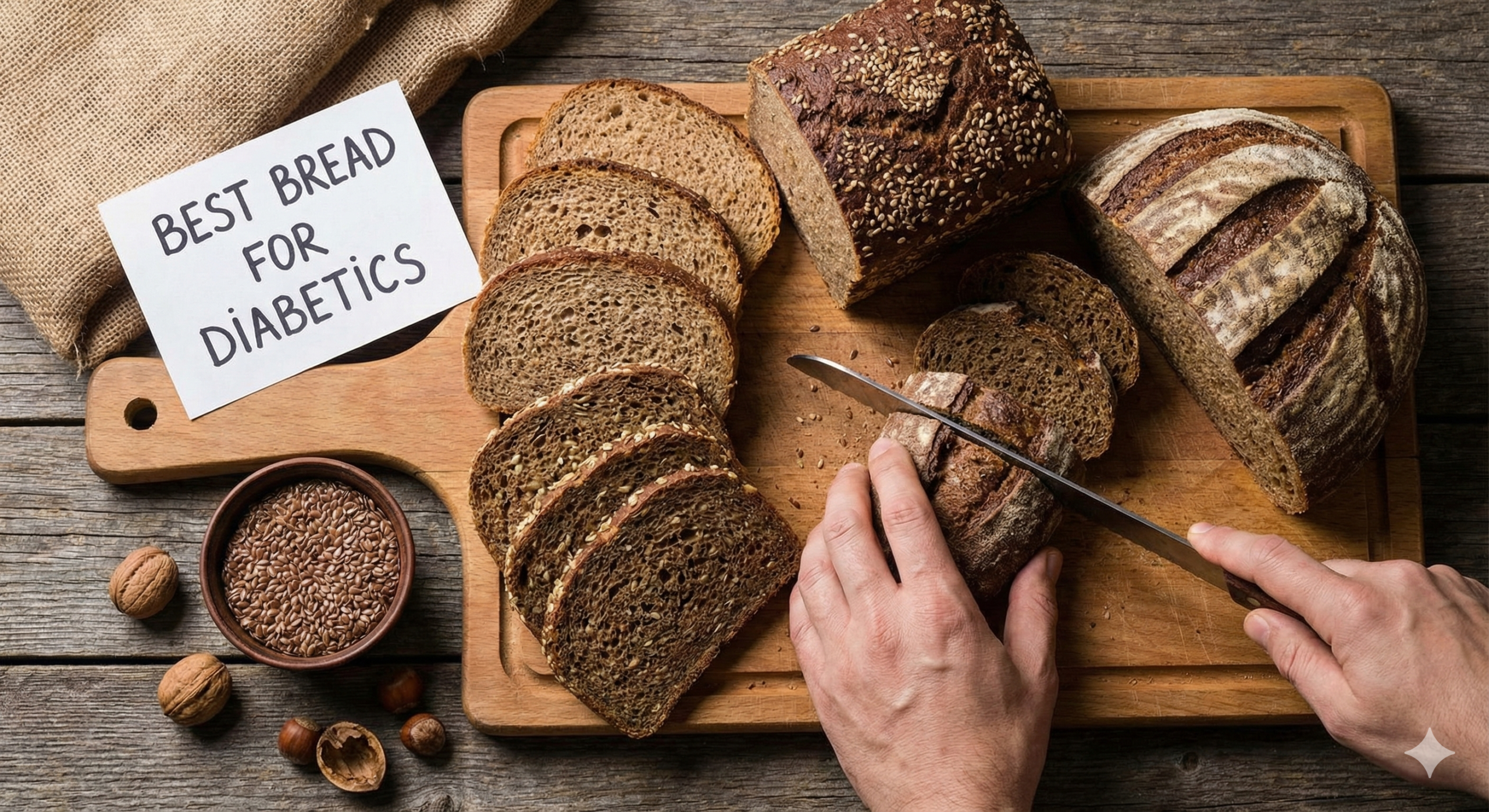
Best Bread for Diabetics: The Ultimate Guide to Low-Carb Loaves
For many people newly diagnosed with diabetes, the first question is often a panicked, “Do I have to give up bread?” The simple answer is no. However, the days of mindlessly grabbing a loaf of fluffy white sandwich bread are likely over.
Bread is a carbohydrate powerhouse, and carbs turn into glucose. While this energy is essential, traditional refined breads cause rapid blood sugar spikes that can be dangerous for diabetics. The secret lies in choosing breads that digest slowly, are packed with fiber, and have a low Glycemic Index (GI).
In this guide, we will break down the science behind diabetic-friendly breads, rank the top healthy options available in grocery stores, and teach you exactly how to read a nutrition label so you never buy a “sugar bomb” loaf again. Plus, we’ve expanded deep into Glycemic Load, baking tips, brand comparisons, and clever pairings to keep your glucose steady.
The “Diabetic-Friendly” Checklist
Before we list specific types, you need to know what separates a “good” bread from a “bad” one. When shopping, look for these three pillars:
- High Fiber: Fiber is your best friend. It acts as a buffer, slowing down the absorption of sugar into your bloodstream. Aim for at least 3g of fiber per slice. Soluble fiber (like beta-glucan in oats/barley) is particularly effective at blunting glucose spikes.
- Whole Grains First: The very first ingredient should be “Whole Wheat Flour” or “Sprouted Grains,” not “Enriched Bleached Flour.”
- Low Sugar: Many commercial breads hide high-fructose corn syrup to improve texture. Look for breads with less than 2g of added sugar per serving. Also watch for malt syrup, cane juice, or honey – they all affect blood sugar.
Hidden sugar traps: Even “healthy” breads sometimes add dried fruit (raisins, dates) which concentrate sugar. Always check the ingredient list.
Glycemic Index vs. Glycemic Load – Why It Matters
The Glycemic Index (GI) tells you how fast a carbohydrate raises blood sugar (0–100). Pure glucose is 100. But GI alone can be misleading; Glycemic Load (GL) also accounts for portion size. GL = (GI x grams of carbs per serving) / 100. A GL under 10 is low.
Example: A slice of sprouted bread might have GI ~45 and 15g carbs → GL ≈ 6.8 (low). White bread GI ~75, 20g carbs → GL = 15 (high). That’s why low-GI, moderate-carb breads are the goal. Always aim for a per‑slice GL below 10. This is the real metric that predicts blood sugar impact.
1. Sprouted Grain Bread (The Gold Standard)
If there is a king of diabetic breads, it is sprouted grain bread (often known by the popular brand Ezekiel 4:9). Unlike traditional flour made from pulverized grain, sprouted bread is made from kernels that have been allowed to sprout (germinate) before being baked.
Why it works: The sprouting process breaks down some of the starch in the grain, naturally lowering the carbohydrate content. It also increases the bioavailability of nutrients like zinc and iron. Because it contains no flour—only mashed, sprouted grains—it has a very low Glycemic Index, causing a much gentler rise in blood sugar compared to standard whole wheat.
Top Brands: Food for Life (Ezekiel), Silver Hills Bakery, Dave’s Killer Bread (Sprouted varieties).
2. Authentic Sourdough
Sourdough is unique because it relies on fermentation. Traditional sourdough is made with a “starter” of wild yeast and lactic acid bacteria, rather than instant commercial yeast.
Why it works: During the long fermentation process, the bacteria “eat” some of the starches and sugars in the dough. This results in a bread that has a lower Glycemic Index than regular white or wheat bread. Furthermore, the lactic acid produced helps slow down your stomach’s emptying rate, keeping you fuller for longer and stabilizing glucose levels.
Note: Make sure you buy “authentic” sourdough from a bakery. Many supermarket “sourdough” loaves are just white bread with vinegar added for flavor, which does not offer the same health benefits.
3. Pumpernickel and Rye
Traditional heavy, dark rye breads (like Pumpernickel) are staples in Northern European diets for a reason. They are incredibly dense and rich in flavor.
Why it works: True pumpernickel is made with coarse rye flour and whole rye berries. Because the particles are larger and harder to digest, your body takes much longer to break them down into glucose. This results in a very low Glycemic load. However, be careful of American-style “dark rye” which is often just white bread colored with molasses or coffee to look healthy.
4. Low-Carb & Keto Breads
In recent years, the keto trend has exploded, bringing dozens of “zero net carb” breads to the market. These are typically made with alternative flours like almond flour, coconut flour, or huge amounts of added dietary fiber.
Why it works: These breads often have 0-2g of net carbs per slice, meaning they have almost zero impact on blood sugar. Brands like Sola, Carbonaut, and Franz Keto allow you to have a sandwich without the carb guilt.

Carbonaut Low Carb White Bread
A favorite among the keto community. It tastes surprisingly like “real” white bread but contains only 2g of net carbs per slice, making it excellent for blood sugar management.
Check Price on AmazonTop Tips for Pairing Bread to Minimize Spikes
Even the healthiest bread can raise glucose if eaten alone. The magic lies in pairing:
- Add protein: Top with eggs, turkey, cheese, or nut butter. Protein slows gastric emptying and stimulates glucagon, preventing sharp rises.
- Include healthy fat: Avocado, olive oil, or salmon further flatten the glucose curve.
- Vinegar hack: A drizzle of vinegar (or pickle on the side) can reduce post-meal glucose by up to 20% – acetic acid temporarily inhibits starch-digesting enzymes.
- Cinnamon: Sprinkle cinnamon on your toast. Studies suggest it improves insulin sensitivity. Combine with a low-carb bread for double benefit.
Example: Instead of plain sprouted toast, have it with smashed avocado + a poached egg + a dash of chili. Balanced, delicious, and glucose friendly.
Breads to Avoid (The “Sugar Traps”)
Not all brown bread is healthy. Marketers often use tricks to make unhealthy bread look nutritious. Steer clear of:
- “Honey Wheat”: This is usually white bread with a tiny bit of wheat flour and a lot of added honey (sugar).
- “Multigrain” (without Whole): If the first ingredient is “Enriched Flour,” it doesn’t matter if it has seven grains sprinkled on top; it’s still refined carbs.
- White Bread/Bagels: These are pure, fast-acting carbs that will spike blood sugar almost instantly.
Bread Alternatives for Diabetics (When You Want a Break)
Sometimes you crave the sandwich experience without the grains. Try these low‑carb swaps:
- Cloud bread: Made from eggs and cream cheese – almost zero carbs, fluffy, and can hold sandwich fillings.
- Lettuce wraps: Butter lettuce or collard greens are crisp, hydrating, and carb‑free.
- Portobello mushroom caps: Grilled portobellos make excellent “buns” for burgers.
- Almond flour flatbread: Quick to make, high in protein and healthy fats.
- Norrland / cheese wraps: Thin slices of cheese (or hard cheese baked until crisp) can double as bread.
How to Read a Bread Label Like a Pro
Don’t look at the front of the package; look at the Nutrition Facts on the back.
- Check Serving Size: Is the data for one slice or two?
- Calculate Net Carbs: Take Total Carbohydrates and subtract Dietary Fiber. For example, if a slice has 15g Total Carbs and 5g Fiber, the Net Carbs are 10g. Lower is better.
- Scan Ingredients: The word “Whole” must be the first word. If it says “Wheat Flour” or “Unbleached Flour,” put it back.
How to Bake Your Own Diabetic-Friendly Bread at Home
When you bake yourself, you control every ingredient. Simple low‑carb formula: combine almond flour, psyllium husk, eggs, baking powder, and a little salt. Variations:
- Seeded quick bread: Add sunflower, flax, and pumpkin seeds for fiber and crunch.
- Coconut flour loaf: Coconut flour is highly absorbent – use 1/4 cup plus 4 eggs.
- Yeasted low‑carb bread: Use vital wheat gluten and oat fiber to mimic traditional texture with low net carbs.
Many recipes online use resistant starch (like green banana flour) to further lower glycemic impact. Homemade bread also avoids preservatives and hidden sugars.
Brand Comparison Table (per slice)
| Brand / variety | Calories | Total carbs | Fiber | Net carbs | Protein |
|---|---|---|---|---|---|
| Ezekiel 4:9 Sprouted Grain | 80 | 15g | 3g | 12g | 4g |
| Carbonaut Low Carb White | 50 | 12g | 10g | 2g | 4g |
| Dave’s Killer Bread (21 Grains) | 110 | 22g | 5g | 17g | 5g |
| Franz Keto White | 45 | 11g | 9g | 2g | 5g |
| Silver Hills Sprouted Power | 90 | 16g | 4g | 12g | 6g |
Note: Net carbs = total carbs minus fiber. Aim for <10g net carbs per slice, but also consider overall glycemic load.