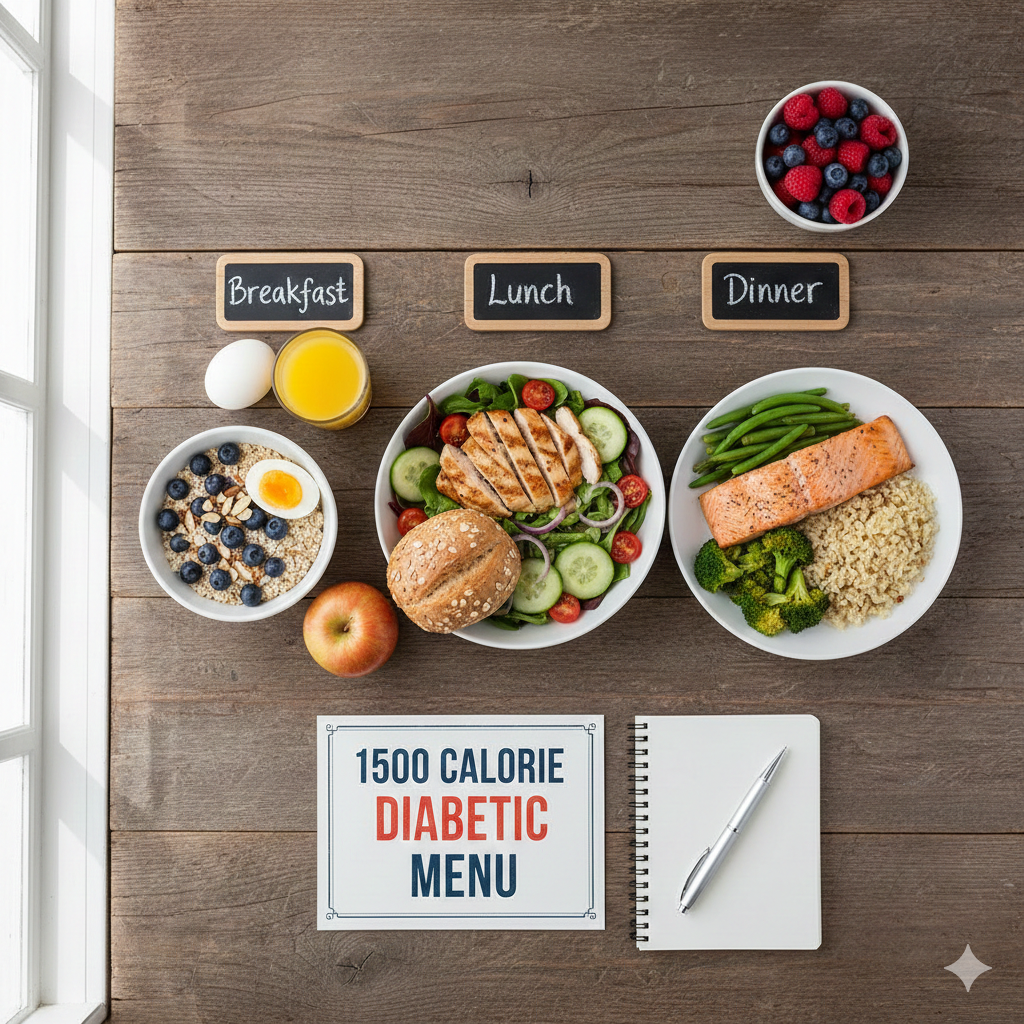
The 1500 Calorie Diabetic Menu: The “Sweet Spot” for Weight Loss and Control
Finding the perfect balance between feeling satisfied and managing your blood sugar can feel like walking a tightrope. Eat too much, and your glucose spikes; eat too little, and you risk hypoglycemia or the kind of hunger that leads to a binge later. For many adults managing Type 2 diabetes, the 1500 calorie diabetic menu represents the “Goldilocks Zone”—it is not as restrictive as a 1200-calorie diet (which can be hard to sustain), yet it creates enough of a deficit to promote healthy, sustainable weight loss without triggering starvation signals.
Unlike a 1-day simple diabetic menu which serves as a quick reset, a 1500-calorie lifestyle is designed for the long haul. It provides enough energy for moderate exercise (walking, yoga, light strength training) and daily work life while keeping portions tight enough to improve insulin sensitivity. For many, 1500 calories is the threshold where fat loss begins without the body cannibalizing muscle.
In this guide, we will break down exactly what 1500 calories looks like when optimized for blood sugar control. We will explore how to prioritize nutrient density so you never feel deprived, and provide a full 7-day meal plan to take the guesswork out of your week. We also incorporate “volume eating” strategies—making the most of low-calorie vegetables—to keep your stomach full and your glucose steady.
Why 1500 Calories? The Science of the Deficit
For the average adult with a sedentary to moderately active lifestyle (most office workers, retirees, or those with light activity), 1500 calories is often the magic number for weight loss without extreme deprivation. Here is why it works for diabetes management:
The Metabolic Sweet Spot: Why 1500 Works
Weight loss is one of the most effective non-pharmaceutical ways to lower A1C. Dropping just 5-10% of body weight can drastically improve how your body uses insulin, sometimes reducing the need for medication.
- Vs. 1200 Calories: A 1200 calorie diabetic menu can be too restrictive for active people, leading to muscle loss, fatigue, and rebound hunger. 1500 calories provides that extra buffer for protein and energy, preserving lean mass while still losing fat.
- Vs. 2000+ Calories: For many, 2000 calories is maintenance level (or even surplus). To burn stored fat, you need a consistent deficit. 1500 creates that deficit without triggering “starvation mode” or extreme cravings, making it sustainable for months.
This calorie level is versatile. It works well for our working adults menu because it allows for enough energy to get through the workday and focus mentally, unlike stricter crash diets that cause brain fog. For seniors, we often recommend a slightly modified version (see senior 1200 plan or the general senior diabetic menu).
Precision is Key
The difference between 1500 and 1800 calories is often just a few tablespoons of oil or peanut butter — or an extra slice of bread. A digital food scale ensures you are actually hitting your goals, not overestimating portions.
Check Price on AmazonStrategic Calorie Allocation: Make Every Bite Count
You can eat 1500 calories of junk food (soda, chips, fast food) or 1500 calories of nutrient-dense fuel. For a diabetic, the quality of calories matters as much as the quantity. We follow a specific macro-nutrient split to ensure satiety, stable glucose, and adequate vitamins.
The Daily Split (Sample Timing)
To keep blood sugar stable throughout the day (and avoid the 3 p.m. slump), we don’t save all calories for dinner. We spread them out into four eating occasions:
- Breakfast: 400 Calories (high protein, moderate complex carbs)
- Lunch: 450 Calories (lean protein + fiber-rich veggies)
- Snack: 200 Calories (protein + fat combos for satiety)
- Dinner: 450 Calories (balanced plate with protein, veggies, smart carb)
The Plate Method Modified for 1500 Calories
We stick to the classic diabetic plate method but monitor portion sizes of the carb quadrant strictly, using visual cues:
- 50% Non-Starchy Vegetables: Unlimited volume (Leafy greens, broccoli, peppers, zucchini). These provide bulk without many calories.
- 25% Lean Protein: 4-5oz per meal (Chicken, Fish, Tofu, Eggs). About the size of your palm.
- 25% Complex Carbs: Measured strictly (1/2 cup cooked Quinoa, Sweet Potato, Beans, or 1 slice whole-grain bread).
For those new to carb counting, our weekly diabetic meal plan provides a solid foundation.
Your 7-Day 1500 Calorie Meal Plan (Volume Focused)
This menu focuses on high-volume foods to keep you full. It includes elements from our standard weekly plans but tailored precisely for this calorie limit. Each day includes a snack and notes on hydration.
Choosing Your Calorie Level: 1500 vs Others
Is 1500 right for you, or should you go lower or higher? Use this guide based on your body type and activity.
| Calorie Level | Best For | Pros | Cons / Considerations |
|---|---|---|---|
| 1200 Calories | Petite women, Sedentary seniors | Rapid weight loss, simple structure | Hard to sustain, risk of muscle loss, nutrient gaps |
| 1500 Calories | Average women, Inactive to lightly active men | Sustainable, Good energy, flexible | Requires portion measuring, slower than 1200 |
| 1800+ Calories | Active men, Teenagers, Athletes | High energy for sports, less hunger | Slower weight loss, may need to exercise more |
If you fall into the senior category, please review our specific 1200 calorie senior menu or the general senior diabetic menu for texture modifications.
Eating Well on a Budget with 1500 Calories
1500 calories of high-quality protein and fresh veggies can be expensive if you’re not strategic. To keep costs down while maintaining nutrient density:
- Eggs are Essential: They are the cheapest, most bio-available protein source. Use them for breakfast, lunch salads, or quick dinners.
- Frozen over Fresh: Frozen broccoli, spinach, green beans, and berries are flash-frozen at peak ripeness, nutrient-dense, and often cheaper (and won’t spoil).
- Buy in Bulk: Oats, brown rice, quinoa, and lentils are pennies per serving when bought in large bags from bulk bins.
- Rotisserie Chicken Hack: A whole rotisserie chicken (remove skin) provides several meals of lean protein for under $7; use bones for broth.
For more tips, check our low-income diabetic menu guide which aligns perfectly with the 1500-calorie approach.
Prep for Success
When you are counting calories, “winging it” leads to failure. Portion your 450-calorie lunches on Sunday so you don’t have to think during the work week. Glass containers keep food fresh and are microwave-safe.
Check Price on AmazonExpert Tips: Breaking Through Plateaus on 1500 Calories
Even on a well-structured 1500-calorie plan, weight loss can stall after a few weeks. Here is how to keep moving forward without dropping calories dangerously low:
1. Re-Calculate Your Basal Metabolic Rate (BMR)
As you lose weight, your body burns fewer calories. After losing 10-15 lbs, you may need to adjust your intake (maybe drop to 1450 for a week) or increase your activity (add 3,000 steps per day) to restart the deficit.
2. Watch the “Licks and Bites” — Hidden Calories
Tasting food while cooking, finishing your kid’s nuggets, or adding “just a splash” of creamer to coffee can add 200+ hidden calories a day, silently erasing your deficit. Log everything for three days to identify these gaps.
3. Fiber is the Secret Weapon
If you aren’t losing weight, increase your fiber intake. Soluble fiber (oats, beans, flax) binds to fat and sugar in the digestive tract and reduces the total calories absorbed. Aim for 30g+ per day. It also helps lower cholesterol.
4. Vary Your Protein Sources
Rotate between chicken, fish, eggs, tofu, and lean red meat. This ensures a wider amino acid profile and prevents food boredom, which is a major cause of diet abandonment.
Frequently Asked Questions: 1500 Calorie Diabetic Diet
Is 1500 calories enough for a diabetic man?
For many men, 1500 calories is an aggressive weight loss target. While safe for short periods under medical supervision, active men may require 1800-2000 calories to maintain muscle mass. Always consult your doctor before starting a calorie deficit.
How quickly will I lose weight on this menu?
Depending on your starting weight and activity level, a 1500-calorie diet typically results in a safe, sustainable weight loss of 1 to 2 pounds per week, which is optimal for long-term maintenance.
Can I have cheat meals on this plan?
Instead of “cheat” meals which can cause blood sugar spikes, try “flex” meals where you eat a favorite food but keep the portion small to stay within your daily calorie and carb limits. For example, a single slice of pizza with a huge salad.
Do I need to count macros or just calories?
For diabetics, carbohydrate counting is just as important as calorie counting. This menu balances both, ensuring you stay within a caloric limit while keeping carbs low enough to manage insulin response. Protein and fat matter for satiety.
What if I feel hungry between meals?
If you are genuinely hungry, reach for “free foods”—non-starchy vegetables like cucumber slices, celery, or a small handful of leafy greens. Drink a large glass of water first, as thirst often mimics hunger.
Is this diet safe for someone on insulin?
Yes, but reducing calories often requires a reduction in insulin dosage to prevent hypoglycemia (low blood sugar). You must monitor your glucose closely and work with your endocrinologist to adjust dosages. Do not change insulin independently.
Can I drink alcohol on a 1500 calorie diet?
Alcohol contains empty calories (7 per gram) and halts fat burning. On a 1500-calorie budget, it is best to limit alcohol significantly to save room for nutrient-dense foods. If you do drink, choose dry wine or spirits with zero-sugar mixers.
How does this compare to a Keto diet?
This is a balanced macronutrient diet with moderate carbs. Keto is very low carb and high fat. While Keto can be effective, this 1500-calorie approach is often easier to sustain socially and provides more fiber, which is beneficial for gut health and cholesterol.
What is ‘volume eating’ and how does it help?
Volume eating means choosing foods that are low in calorie density but high in physical bulk—like leafy greens, broccoli, and cucumbers. They fill your stomach, triggering stretch receptors that signal satiety, without blowing your calorie budget.
Should I eat the same calories every day?
Consistency helps regulate blood sugar and insulin levels. However, some people benefit from ‘calorie cycling’ (slightly different day-to-day) to prevent metabolic adaptation. The weekly average should be around 1500. Listen to your body’s energy cues.
Consistency Over Perfection
The 1500 calorie diabetic menu is a powerful tool for regaining control over your health. It offers the perfect blend of restriction for weight loss and flexibility for real life — enough structure to see results, but enough variety to prevent burnout. By following this plan, you aren’t just counting numbers; you are training your body to be more insulin sensitive and your mind to build sustainable habits.
Start with Day 1. If you slip up (a work lunch, a birthday party), don’t abandon the week; just get back on track with the next meal. Consistency over many weeks matters more than perfection on any single day. Your journey to better A1C, more energy, and a healthier weight starts with the next bite.