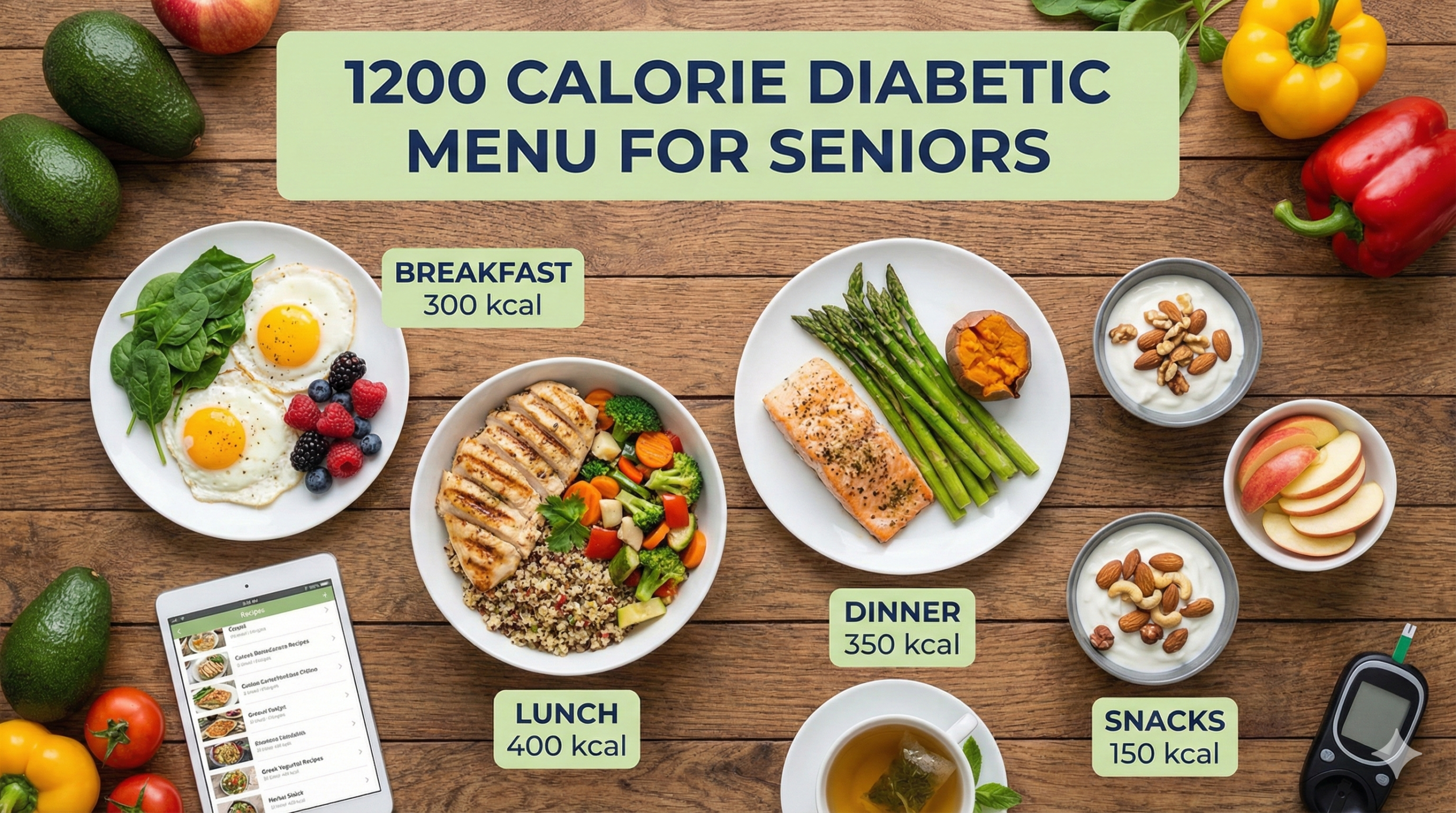
The Strategic 1200 Calorie Diabetic Menu for Seniors: Balancing Weight and Vitality
Aging with diabetes presents a unique nutritional puzzle. The metabolism naturally slows, muscle mass (sarcopenia) becomes a concern, and the risk of insulin resistance often climbs. For many older adults, losing even 5–10% of body weight can significantly improve blood sugar control, reduce medication dependence, and boost energy. But weight loss must be approached cautiously — aggressive calorie cuts can backfire, leading to muscle loss and frailty.
That’s why a carefully constructed 1200 calorie diabetic menu for seniors can be a powerful tool — but only if it’s nutrient-dense and senior-specific. Every calorie must work hard to provide protein for muscles, fiber for glucose stability, and essential vitamins for bone and immune health. This plan is designed with petite, sedentary seniors in mind (often women over 65) who need a structured deficit to jumpstart weight loss. For those needing a slightly higher intake, our 14-day diabetic meal plan offers a moderate 1500-calorie framework.
Below you’ll find a 7-day rotation that prioritizes simplicity, soft textures (considering dental health), and affordability. Each day totals roughly 1200 calories, distributed to prevent glucose spikes and preserve energy.
⚠️ Medical Caution: 1200 Calories Is Not For Everyone
A 1200-calorie diet is considered a low-calorie level. While it can be effective for weight loss in smaller-framed, less active seniors, it may be insufficient for men, taller women, or those who remain physically active. Restricting too severely can lead to unintended weight loss of muscle, electrolyte imbalances, and increased risk of hypoglycemia. Always consult your physician or a registered dietitian before adopting this or any calorie-restricted menu, especially if you take insulin or sulfonylureas. Blood glucose monitoring is essential during the first few weeks.
Designing a Senior-Safe 1200 Calorie Day
To make 1200 calories sustainable, we spread them across three meals and one smart snack. The goal is to provide steady energy and prevent the “hangries.” Here’s the macro strategy:
- ~300 cal Breakfast: high in protein (≥20g) to preserve muscle and enhance satiety; includes fiber-rich carbs for morning energy.
- ~350 cal Lunch: lean protein + colorful veggies + complex carb; keeps afternoon glucose steady.
- ~400 cal Dinner: moderate protein, healthy fats, and low-glycemic vegetables; designed to avoid overnight hypoglycemia.
- ~150 cal Evening Snack: optional but recommended for those on insulin; combines protein and a small carb to stabilize morning readings.
This structure also aligns with the American Diabetes Association’s general guidance for older adults: consistent carbohydrate intake at meals, adequate protein, and reduced saturated fat. If you prefer more flexibility, our weekly diabetic meal plan offers similar principles at higher calorie levels.

Precision is Key at 1200 Calories
With a limited calorie budget, guessing portion sizes can easily add 100–200 unexpected calories. A simple digital scale with a backlit display helps you accurately measure chicken, fish, grains, and even snacks. It’s an essential tool for anyone serious about a 1200 calorie diabetic menu for seniors.
Check Price on AmazonYour 7-Day 1200 Calorie Senior Menu
All meals are chosen for ease of preparation, softness (where needed), and nutrient density. Estimated calories are approximate; using a food scale is recommended.
Day 1: Protein-First Breakfast
- 295 cal Breakfast: 2 scrambled eggs (cooked in 1 tsp olive oil) with 1 cup fresh spinach wilted in. 1 slice thin whole-grain toast (like Dave’s Killer Bread 21 Grains, thin-sliced) with a light spread of butter. Black coffee or tea.
- 345 cal Lunch: Tuna salad: 3 oz water-packed tuna (drained), 1½ tbsp light mayonnaise, diced celery and red onion. Serve over 2 cups mixed greens with a drizzle of balsamic vinegar. One small apple (about 4 oz) on the side.
- 405 cal Dinner: 4 oz baked chicken breast seasoned with garlic powder and paprika. ½ cup steamed broccoli florets (fork-tender). ½ cup roasted sweet potato cubes (tossed in 1 tsp olive oil, roasted until soft).
- 150 cal Snack: 1 part-skim mozzarella string cheese (80 cal) + 5 small whole-grain crackers (70 cal).
Day 2: Heart-Healthy Omega-3s
- 300 cal Breakfast: ½ cup cooked rolled oats (made with water, cooked soft) mixed with 1 scoop (25g) unflavored or vanilla whey protein. Top with ¼ cup blueberries and 1 tbsp chopped walnuts. Cinnamon to taste.
- 350 cal Lunch: 1 cup lentil soup (low-sodium, if canned; add extra veggies). Side salad: 1½ cups romaine, cucumber, tomato with 2 tsp olive oil + lemon juice. Lentils provide soluble fiber for blood sugar control.
- 400 cal Dinner: 3 oz baked salmon (wild-caught if possible), brushed with 1 tsp maple syrup and mustard. 1 cup roasted asparagus (tossed with 1 tsp olive oil, salt-free seasoning). ⅓ cup cooked quinoa.
- 150 cal Snack: ½ cup plain Greek yogurt (nonfat) with 2-3 crushed raspberries (adds sweetness).
Day 3: Easy Digestion & Smoothie
- 295 cal Breakfast: Berry protein smoothie: ½ cup frozen mixed berries, ½ small banana, 1 cup unsweetened almond milk, 1 scoop (25g) vanilla protein powder. (Blend until smooth; easy on teeth).
- 350 cal Lunch: Open-faced egg salad sandwich: 2 hard-boiled eggs mashed with 1 tbsp plain Greek yogurt + mustard. Serve on 1 slice whole-grain toast. Side of ½ cup cucumber slices.
- 400 cal Dinner: Turkey meatloaf (3 oz cooked slice) made with lean ground turkey, oats, onion. Serve with 1 cup mashed cauliflower (steamed then mashed with 1 tbsp light cream cheese) and ½ cup green beans (cooked tender).
- 150 cal Snack: 3 cups air-popped popcorn (no butter) sprinkled with nutritional yeast for a cheesy flavor and B vitamins.
If you’re new to meal planning, our 1-day simple diabetic menu offers a gentle introduction.
Day 4: Plant-Forward & Calcium Rich
- 290 cal Breakfast: 1 cup low-fat cottage cheese (creamy, high protein) with ½ cup sliced peaches (canned in juice, drained). Sprinkle of cinnamon.
- 360 cal Lunch: Vegetable frittata wedge: 2 eggs + 1 oz cheddar, baked with diced bell peppers, onions, mushrooms. 1 small orange (eaten slowly, provides vitamin C).
- 400 cal Dinner: 3 oz lean beef strips (stir-fried with 1 tsp sesame oil). Add 1 cup broccoli florets and ½ cup bell peppers, 1 tbsp low-sodium soy sauce, ginger. Serve over ½ cup cauliflower rice (steamed).
- 150 cal Snack: 10 raw almonds (dry roasted, no salt).
Day 5: Comfort Food Lightened Up
- 300 cal Breakfast: 1 poached egg on ½ whole wheat English muffin. ½ grapefruit (if on statins, check with doctor; otherwise enjoy).
- 350 cal Lunch: Leftover beef stir-fry (from Day 4) — reheat gently.
- 400 cal Dinner: 4 oz baked cod or tilapia with lemon, dill, and 1 tsp butter. ½ cup stewed tomatoes (low sodium). 1 small baked potato (3 oz) with skin (fiber) and 1 tbsp sour cream.
- 150 cal Snack: Sugar-free gelatin cup with 2 tbsp light whipped topping.
Day 6: Soup & Salad Saturday
- 300 cal Breakfast: Two-egg omelet with 1 slice low-fat American cheese, ¼ cup diced tomato. Serve with ½ cup diced melon.
- 350 cal Lunch: 1 cup minestrone soup (check sodium; choose low-salt). 5 whole-grain crackers (like Triscuit Thin). Small side of carrot sticks.
- 410 cal Dinner: Zucchini noodles (1 large spiralized zucchini) with 3 oz lean ground turkey marinara sauce (½ cup marinara, no sugar added). Sprinkle 1 tbsp Parmesan. Turkey provides iron and protein without excess calories.
- 140 cal Snack: 1 hard-boiled egg (peeled, sprinkle of paprika).
For lower-carb variations, check our low-carb weekly diabetic menu for ideas.
Day 7: Simple Sunday Roast
- 300 cal Breakfast: 2 small protein pancakes (using ¼ cup almond flour, 1 egg, 1 scoop protein powder, baking powder). Serve with 2 tbsp sugar-free syrup and ¼ cup sliced strawberries.
- 350 cal Lunch: Spinach salad: 2 cups baby spinach, 3 oz grilled chicken strips, ¼ cup sliced strawberries, 1 tbsp chopped pecans, 2 tbsp light balsamic vinaigrette.
- 400 cal Dinner: 3 oz roasted pork loin (trimmed of fat). ½ cup roasted carrots and ½ cup roasted turnips (tossed with rosemary and 2 tsp olive oil).
- 150 cal Snack: 1 small ripe pear (sliced).
This rotation provides variety while respecting the 1200-calorie boundary. For a longer commitment, adapt our 30-day diabetic menu using these senior-friendly modifications.
1200 Calories vs. Higher Intake: What Fits You?
Selecting a calorie target depends on body size, gender, and activity. Use this table as a rough guide when discussing with your dietitian.
| Feature | 1200 Calorie Plan (this menu) | 1500–1800 Calorie Plan |
|---|---|---|
| Typical Candidate | Sedentary women under 5’4″, petite frame, aiming for 1-2 lb weekly loss | Active women, most men, taller individuals, or those aiming for slow weight loss/maintenance |
| Protein Target | ~70-80g daily (requires intentional protein at each meal) | ~90-110g daily, easier to meet without protein supplements |
| Hunger Management | Requires high-volume veggies, fiber, and strategic snacks | More flexibility; less risk of between-meal hunger |
| Risk of Muscle Loss | Moderate if protein is inadequate — emphasize protein first | Lower risk; easier to preserve lean mass |
| Best For | Older women with type 2 diabetes needing weight loss, limited mobility | Seniors who are active, have higher muscle mass, or are male |

Visualize Your Success
Portion control plates take the guesswork out of meals. They’re designed with sections for non-starchy veggies (half), lean protein (quarter), and carbs (quarter). Perfect for seniors who want a low-tech way to stick to a 1200 calorie diabetic menu without constant weighing.
Check Price on AmazonCritical Nutrients for Seniors on a Calorie Budget
When total food volume is low, you cannot afford empty calories. Here are three nutrients that demand attention:
1. Calcium & Vitamin D — For Bone Resilience
Older adults need 1200 mg calcium and 800–1000 IU vitamin D daily to slow bone loss. This menu includes dairy (yogurt, cheese, milk) at most meals. If you avoid dairy, consider fortified plant milk and discuss supplements with your doctor.
2. Protein — The Anti-Sarcopenia Weapon
Research suggests seniors need 1.0–1.3 g/kg body weight. For a 140 lb senior, that’s 64–82g daily. This 1200-calorie plan is built around that target: eggs, poultry, fish, dairy, and occasional plant proteins. Protein at breakfast (instead of just carbs) preserves muscle better than skewed distribution.
3. Fiber — For Heart and Glucose
Fiber slows glucose absorption and lowers cholesterol. This menu aims for 25g+ fiber per day through oats, lentils, berries, and vegetables. If chewing is tough, opt for cooked vegetables and ground flaxseed stirred into yogurt.
For a more comprehensive senior approach (without the calorie limit), explore our diabetic menu for seniors resource.
Frequently Asked Questions
Is 1200 calories enough for a senior diabetic?
For many sedentary, petite senior women aiming for gradual weight loss, 1200 calories can be adequate and safe. However, for active seniors, men, or those with larger frames, a 1200-calorie menu may be too low and risk muscle wasting. A healthcare provider can determine your baseline needs using factors like height, weight, and activity level. This menu should serve as a starting point for discussion, not a rigid rule.
How does calorie restriction affect blood sugar?
Calorie restriction, especially when combined with carbohydrate consistency, typically enhances insulin sensitivity. Lowering total calorie intake reduces the amount of glucose entering the bloodstream and helps lower fasting blood sugar. However, sudden large drops in calories can also trigger hypoglycemia if diabetes medications aren’t adjusted accordingly. Always monitor blood glucose closely when starting a reduced-calorie plan like this 1200 calorie diabetic menu for seniors.
Can I swap meals in this 1200 calorie menu?
Yes, flexibility is encouraged as long as you maintain similar calorie ranges and macronutrient balance (protein ~20-30g per meal, fiber-rich carbs, healthy fats). For example, you can exchange a chicken dinner for a fish dinner of equal calories. The key is to keep portions controlled and avoid processed foods. Swapping also prevents taste fatigue, making the plan more sustainable.
What should I do if I feel hungry on this plan?
Hunger can derail any diet. Prioritize non-starchy vegetables like zucchini, spinach, mushrooms, and bell peppers — they add bulk and fiber for minimal calories. Drink a full glass of water 15 minutes before meals, and include protein at every eating occasion. If hunger persists between meals, a small 50-calorie snack like celery with one tablespoon of peanut butter can help without breaking your budget.
Are artificial sweeteners safe for seniors?
In moderation, FDA-approved sweeteners such as stevia, monk fruit, erythritol, and aspartame are considered safe for seniors. They can help reduce sugar intake without spiking blood glucose. However, some older adults may experience digestive discomfort (bloating) with sugar alcohols. Whole foods with natural sweetness, like berries, are always preferable for overall health.
Do I need supplements on a 1200 calorie diet?
Because 1200 calories provides limited food volume, it can be challenging to meet all micronutrient requirements. Senior-specific concerns often include vitamin D (for bone health), vitamin B12 (especially with metformin), and calcium. A daily multivitamin formulated for seniors 50+ may bridge gaps, but always check with your doctor first, as some supplements can interact with medications.
Is this menu suitable for someone with kidney disease?
No, this menu is not designed for diabetic kidney disease (nephropathy). Renal diets require precise limits on potassium, phosphorus, and sometimes protein. For example, our menu includes high-potassium foods like tomatoes, potatoes, and bananas, which may need restriction in later-stage kidney disease. If you have any kidney impairment, consult a renal dietitian before following any meal plan.
How quickly will I lose weight on this plan?
A healthy, sustainable weight loss for seniors is about 0.5 to 1 pound per week. This gradual pace helps preserve muscle mass and bone density, which are critical for preventing falls and frailty. Rapid weight loss (more than 1.5 lbs/week) can increase the risk of gallstones, nutrient deficiencies, and sarcopenia. Combine this menu with light physical activity as approved by your physician.
Can this menu help lower A1C?
Yes, consistently following a lower-calorie, portion-controlled diabetic menu like this one can lead to improvements in A1C over 2–3 months. By reducing overall calorie intake and focusing on fiber-rich, low-glycemic foods, you help your body use insulin more effectively. Many seniors see their A1C drop by 0.5 to 1 point with combined dietary changes and weight loss.
What if I’m a vegetarian senior?
Vegetarian adaptations are possible: replace meat with tofu, tempeh, eggs, or legumes. For example, swap chicken for ½ cup cooked chickpeas or 3 oz firm tofu. Ensure adequate protein by including Greek yogurt, cottage cheese, and protein powders. Keep an eye on iron and B12; fortified cereals or supplements may be necessary.
A Menu for Health, Not Deprivation
Adopting a 1200 calorie diabetic menu for seniors is about making every bite count. It’s about choosing foods that fuel your body, protect your bones, and stabilize your glucose, allowing you to enjoy your golden years with vitality and energy. This plan is a template — listen to your body, work with your care team, and adjust as needed.
For more variety and meal planning tools, browse our 30-day diabetic menu or jumpstart with our 3-day diabetic meal plan. Remember, sustainable change happens one meal at a time.
Disclaimer: This content is for informational purposes only and is not a substitute for professional medical advice, diagnosis, or treatment. Always seek the advice of your physician or other qualified health provider with any questions you may have regarding a medical condition or dietary changes.