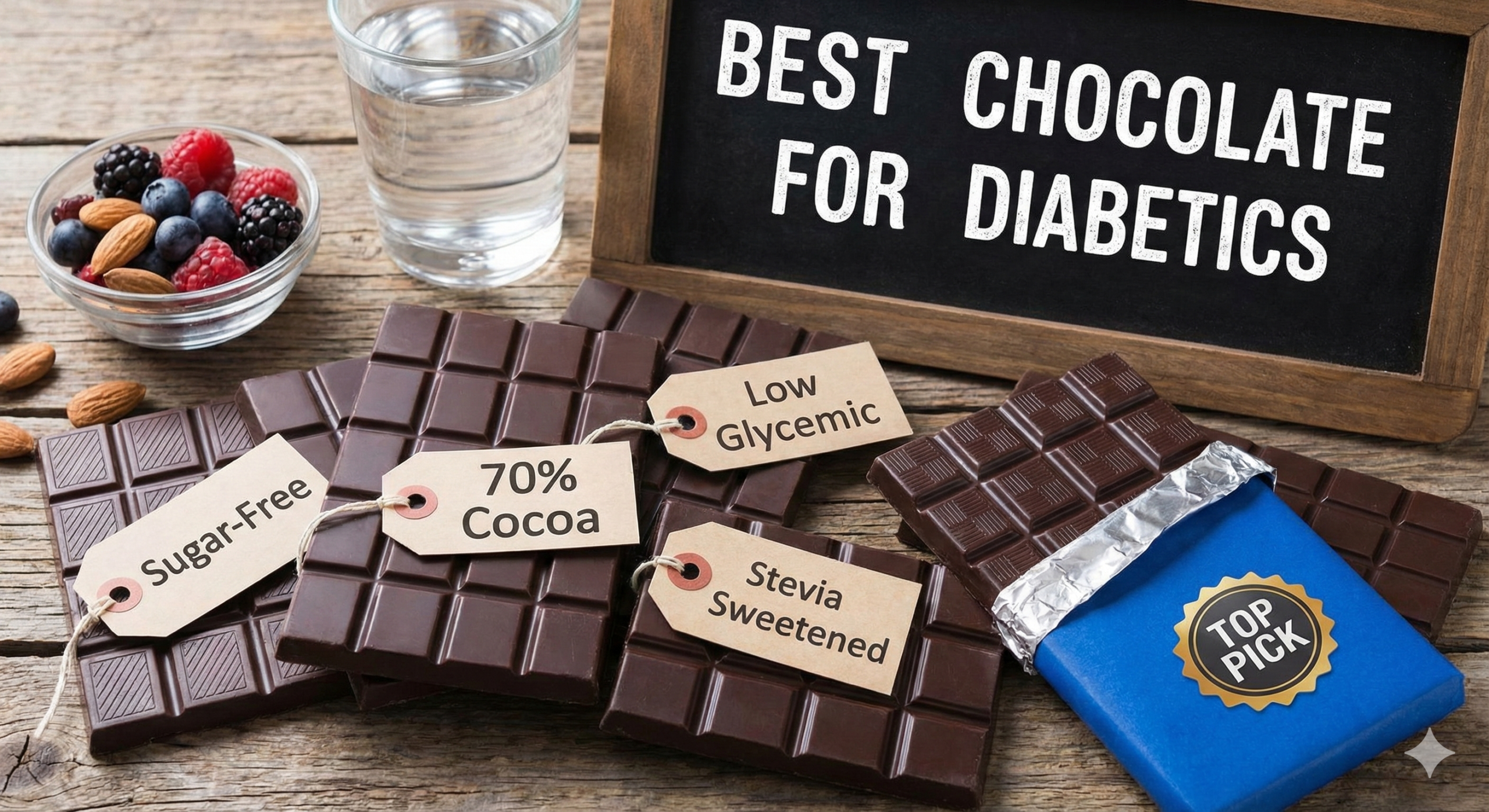
7 Best Chocolates for Diabetics: Indulge Without the Spike (2026 Review)
For those managing Type 2 diabetes or insulin resistance, a diagnosis doesn’t have to mean the end of chocolate. In fact, emerging science suggests that high-quality chocolate—specifically dark chocolate rich in flavonoids and antioxidants—can actually help improve insulin sensitivity, lower blood pressure, and support heart health.
The problem has never been the cocoa; it’s the sugar. Fortunately, the “diabetic chocolate” aisle has undergone a massive revolution. We have moved past the days of waxy, chalky “diet” bars that leave a chemical aftertaste. Today, artisanal brands are using advanced plant-based sweeteners like Stevia, Monk Fruit, Erythritol, and Allulose to create bars that melt in your mouth without spiking your blood glucose levels.
Cocoa percentage matters: Experts generally recommend chocolate with at least 70% cocoa for diabetics. Higher cocoa content usually means less sugar and more flavanols. For example, a 70% bar contains roughly half the sugar of a 50% bar. This guide focuses on bars that either use safe sweeteners or naturally low sugar through high cocoa mass.
In this comprehensive guide, we have analyzed ingredients, calculated net carbs, and taste-tested the top diabetic-friendly chocolates on the market to bring you the 7 best options for guilt-free indulgence.
Buying Guide: How to Read the Label
Before you buy, you need to look beyond the “Sugar-Free” label. Here is what matters for blood sugar management:
1. The Sweetener Hierarchy
- The Best (Green Light): Stevia, Monk Fruit, Erythritol, and Allulose. These have a Glycemic Index (GI) of 0 and virtually no impact on blood sugar.
- The Cautionary (Yellow Light): Maltitol and Sorbitol. These are sugar alcohols often found in cheaper candies. Maltitol has a GI of around 35-52, meaning it can raise blood sugar and insulin levels, albeit slower than table sugar.
- The Natural Route: High percentage cacao (85%+). This relies on minimal cane sugar rather than artificial substitutes.
2. Understanding Net Carbs
For diabetics and those on a Keto diet, “Total Carbs” can be misleading. You want to look for Net Carbs.
Formula: Total Carbs – Fiber – Sugar Alcohols (like Erythritol) = Net Carbs.
Fiber and most sugar alcohols pass through the body undigested, so they don’t spike your blood sugar. A bar might have 20g of Total Carbs, but if 10g is fiber and 8g is Erythritol, the Net Carbs are only 2g.
3. Portion Control: Even “safe” chocolate adds up
No matter how clean the ingredients, calories and carbs still count. A serving is typically 1–2 squares (about 15–30g). Eating an entire family-sized bar in one sitting, even if sugar‑free, can lead to digestive discomfort and unwanted calorie intake. Practice mindful indulgence.
1. Lily’s Sweets (Best Overall)
Lily’s has become the gold standard for low-carb and keto-friendly chocolate. You can find it in almost any grocery store, and they offer a massive variety—from Salted Caramel Milk Chocolate style to 92% Dark. They also make excellent chocolate chips for baking diabetic-friendly cookies. Their seasonal offerings (like pumpkin spice) keep things exciting.
Sweetener: Erythritol, Stevia, and Chicory Root Fiber.

Lily’s Salted Almond Milk Chocolate Style
The perfect balance of creamy and crunchy without the sugar crash. Sweetened with Stevia and Erythritol, offering a classic milk chocolate taste that satisfies cravings. Fans also love the crispy rice and sea salt varieties for texture.
Pros
- Huge variety of flavors
- Widely available in stores
- Certified Gluten-Free & Non-GMO
- Great for baking (chips available)
Cons
- Pricey compared to standard bars
- Contains soy lecithin (in some flavors)
2. ChocZero (Best No Sugar Alcohols)
If sugar alcohols like Erythritol hurt your stomach or leave a cooling aftertaste, ChocZero is your savior. They refuse to use sugar alcohols, instead using Monk Fruit and prebiotic soluble corn fiber to achieve sweetness and texture. This makes them exceptionally high in fiber. They also produce sugar-free syrups and peanut butter cups that are popular in the keto community.
Sweetener: Monk Fruit Extract.

ChocZero Keto Bark (Dark Chocolate Almond)
Zero sugar alcohols means zero bloating for sensitive stomachs. This bark is famous for its satisfying snap and rich flavor, offering just 1g of Net Carbs per serving. The bark format breaks into perfect portions.
Pros
- No sugar alcohols (gut friendly)
- 1g Net Carb per serving
- High fiber content
- Soy-Free and Gluten-Free
Cons
- Soluble corn fiber doesn’t agree with everyone
- Melts easily in shipping
3. Lindt Excellence 90% Cocoa (Best Natural)
Sometimes the best sugar-free chocolate is just… chocolate. Lindt 90% is widely available and technically contains regular sugar, but the cocoa content is so high that the sugar amount is negligible (approx 1.3g per square). This is the best option for those wanting the full cardiovascular benefits of flavonoids without artificial ingredients. Lindt sources their cocoa beans sustainably, and the 90% bar is also rich in iron, magnesium, and copper.
Sweetener: Demerara Sugar (Very small amount).

Lindt Excellence 90% Cocoa Supreme Dark
The connoisseur’s choice. Pure, intense cocoa experience with minimal sugar. Packed with heart-healthy antioxidants to combat inflammation.
Pros
- No artificial sweeteners or aftertaste
- High in antioxidants/minerals
- Available everywhere
- Simple, clean ingredient list
Cons
- Acquired taste (can be bitter)
- Not strictly “sugar-free”
4. Gatsby Chocolate (Best Low Calorie)
From the co-founder of Halo Top Ice Cream comes Gatsby, the low-calorie chocolate revolution. Most diabetic chocolates are high in fat (and calories), but Gatsby uses Allulose and esterified propoxylated glycerol (EPG)—a modified plant-based fat—to create a bar with half the calories of regular chocolate. Allulose is a rare sugar that tastes like sugar but doesn’t raise blood glucose or insulin. Gatsby also makes chocolate-covered almonds and peanut butter cups.
Sweetener: Allulose.

Gatsby Almond Dark Chocolate
The “Halo Top” of chocolate. Incredibly low calorie and low sugar thanks to Allulose, a rare sugar found in raisins that doesn’t impact blood glucose.
Pros
- Lowest calorie option on the list
- Allulose doesn’t spike insulin
- Very smooth texture
- Keto friendly
Cons
- Can be pricey
- Contains gluten (some varieties)
5. Russell Stover Sugar Free (Best Budget)
This is the classic “candy aisle” option. Russell Stover makes sugar-free versions of Turtles (Pecan Delights), Peanut Butter Cups, and Mint Patties. They taste almost exactly like the real thing, but diabetics should exercise caution due to the use of Maltitol. If you tolerate maltitol well, these are an affordable treat. They also offer sugar-free hard candies and toffee.
Sweetener: Stevia and Maltitol.

Russell Stover Sugar Free Pecan Delights
The nostalgic taste of caramel, pecans, and chocolate without the sugar. Affordable and easy to find in drugstores.
Pros
- Tastes like traditional candy
- Very affordable
- Individual portions help portion control
Cons
- Contains Maltitol: May cause gas/bloating
- Maltitol may cause slight glucose rise
6. Hu Kitchen Simple Dark (Best Clean Label)
Hu (Human) Kitchen is a cult favorite among Paleo, Clean Eating, and Vegan communities. They do not use refined sugar, sugar alcohols, or lecithin. They use organic coconut sugar, which gives a caramel-like note to the dark chocolate. Their mission is “simple ingredients” – you won’t find any fillers or emulsifiers. The chocolate is ethically sourced and certified Paleo.
Sweetener: Unrefined Coconut Sugar.

Hu Kitchen Simple Dark Chocolate
No weird ingredients. Just cacao, cocoa butter, and unrefined coconut sugar. A clean, Paleo-friendly option for those avoiding chemicals.
Pros
- Zero artificial ingredients
- No sugar alcohols
- Paleo, Vegan, & Gluten-Free
- Organic ingredients
Cons
- Coconut sugar still impacts blood glucose (higher GI than Stevia)
7. Lakanto Sugar-Free Chocolate (Best Monk Fruit)
Lakanto is famous for their Monk Fruit sweetener, and their chocolate bar utilizes it perfectly. It is handcrafted from heirloom Arriba Nacional cacao beans, giving it a premium floral flavor profile often missing in sugar-free chocolates. They also offer baking chips and salted almond varieties. The brand is a top choice for those who prioritize zero glycemic impact.
Sweetener: Monk Fruit and Erythritol.

Lakanto Sugar-Free Chocolate Bar
A gourmet sugar-free experience. Uses heirloom cacao beans and Monk Fruit for a zero-glycemic treat that tastes luxurious.
Pros
- Zero Glycemic Index
- Vegan, Dairy Free, & Gluten-Free
- High quality heirloom cacao
- Keto friendly
Cons
- Can be hard to find in local stores
Quick Comparison Chart
| Brand | Sweetener | Net Carbs (per serving) | Best For |
|---|---|---|---|
| Lily’s | Stevia / Erythritol | 3-4g | Baking & Variety |
| ChocZero | Monk Fruit | 1g | Sensitive Stomachs / Fiber |
| Lindt 90% | Sugar (Minimal) | ~3g | Heart Health / Purists |
| Gatsby | Allulose | 4-5g | Low Calorie Diets |
| Russell Stover | Maltitol / Stevia | Varies | Budget / Candy Taste |
| Hu Kitchen | Coconut Sugar | ~9g | Paleo / Clean Eating |
The Science of Cocoa: How Flavonols Benefit Diabetics
Cocoa is rich in flavonols (a type of flavonoid) that have been shown to improve endothelial function and increase insulin sensitivity. A 2017 meta-analysis published in Nutrients found that regular consumption of dark chocolate (with high flavonol content) was associated with a significant reduction in fasting blood glucose and HbA1c in type 2 diabetics. The key is choosing chocolate that retains these flavonols—processing with alkali (Dutch processing) reduces them, so look for “natural cocoa” or high-percentage dark chocolate.
Additionally, the magnesium in dark chocolate helps regulate blood sugar by improving insulin receptor function. A square of 90% dark chocolate provides about 10% of your daily magnesium needs.
Tips for Including Chocolate in a Diabetic Meal Plan
- Pair with protein or fat: Eating chocolate with a handful of almonds or a slice of cheese can slow down sugar absorption even further.
- Test your response: Everyone reacts differently to sweeteners. Try a small piece and check your blood sugar after 1–2 hours to see how your body handles it.
- Use it as a dessert, not a snack: Having chocolate right after a fiber-rich meal can blunt any potential glucose spike.
- Watch out for “sugar-free” mix-ins: Some sugar-free chocolates contain maltitol-sweetened caramel or crisps that may raise glucose more than the chocolate itself.
- Store properly: To avoid melting and bloom, keep chocolate in a cool, dark place (not the fridge if humidity is high).