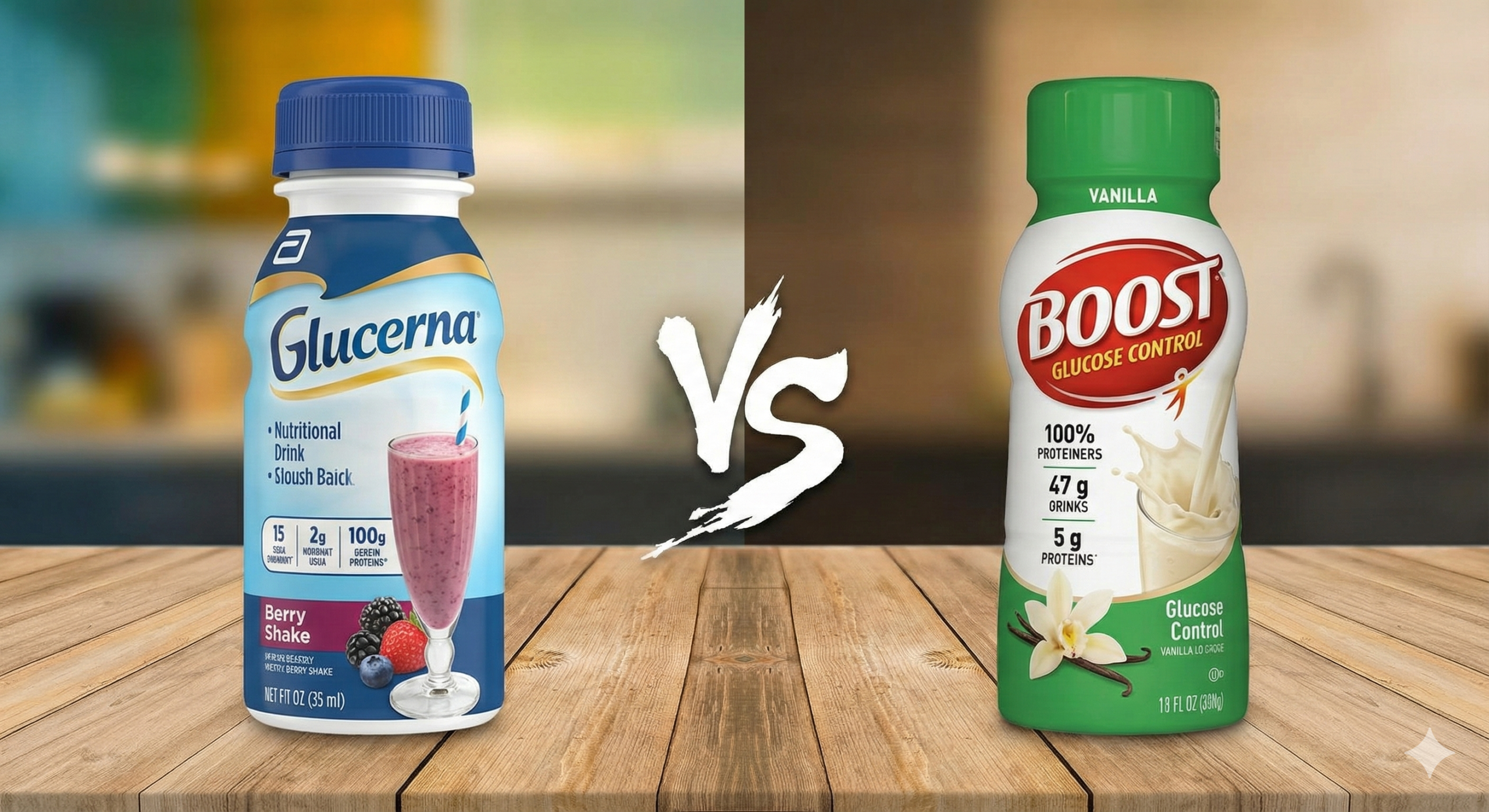
Living with diabetes is a constant balancing act. You are perpetually monitoring numbers, counting carbs, and trying to find snacks that won’t send your continuous glucose monitor (CGM) graph soaring into the danger zone. It’s exhausting. That’s why meal replacement shakes like Glucerna and Boost Glucose Control have become staples in pantries worldwide.
These aren’t just protein shakes; they are scientifically formulated nutritional tools designed to minimize blood sugar spikes while keeping you full. But when you’re standing in the pharmacy aisle staring at these two titans, the choice isn’t always clear. Is Glucerna’s “Carbsteady” technology superior? Does Boost actually taste better? Which one gives you more bang for your buck?
In this comprehensive guide, we are stripping away the marketing jargon to look at the hard facts. We will compare ingredients, macronutrients, taste profiles, and cost to help you decide which shake deserves a spot in your daily routine. We’ve also added deep insights into clinical studies, timing strategies, digestive health, and specific use‑cases for seniors and active individuals.
Quick Comparison: At a Glance
Don’t have time to read the full breakdown? Here is the cheat sheet. Both products are designed for people with diabetes, but they have distinct nutritional profiles.
| Feature | Glucerna (Original) | Boost Glucose Control |
|---|---|---|
| Calories | 180 | 190 |
| Carbohydrates | 16g | 16g |
| Sugars | 4g | 4g |
| Protein | 10g | 16g (Higher) |
| Tech Claim | Carbsteady® (Slow Release) | Clinically shown glucose control |
| Best For | Snacking & Light Meal Replacement | Higher Protein Needs & Satiety |
Deep Dive: Glucerna
Manufacturer: Abbott Laboratories
Glucerna has long been the gold standard recommendation by many doctors and dietitians. Its primary claim to fame is Carbsteady®, a proprietary blend of slow-release carbohydrates. The idea is simple: instead of hitting your bloodstream all at once (like white bread or juice), the carbs in Glucerna digest slowly, creating a gentle “hill” on your glucose monitor rather than a sharp “mountain peak.”
Key Features:
- Carbsteady® Blend: Designed specifically to minimize blood sugar spikes.
- Variety: Available in Shake, Snack Bars, and hunger-smart variations.
- Micronutrients: Packed with 26 vitamins and minerals, including Vitamin D for immune health.
The “Hunger Smart” Variation
It’s important to note that Glucerna offers a “Hunger Smart” line, which bumps the protein up to 15g to compete more directly with Boost. However, the standard original shake sits at a modest 10g of protein.
Glucerna Original Nutrition Shake
The classic choice for managing blood sugar. Features Carbsteady technology to help minimize blood sugar spikes. Best for mid-day snacks.

Deep Dive: Boost Glucose Control
Manufacturer: Nestlé Health Science
Boost is the heavy hitter in the protein world, and their Glucose Control line brings that muscle to the diabetic market. The most striking difference right off the bat is the protein content. The standard Boost Glucose Control shake offers 16g of protein—significantly more than the standard Glucerna shake.
Key Features:
- High Protein: 16g per serving helps maintain muscle mass and keeps you feeling fuller for longer.
- Fiber Blend: Includes a specific blend of fibers to aid digestion and slow carb absorption.
- Bone Health: Fortified with Calcium and Vitamin D.
Protein is a critical macronutrient for diabetics because it does not spike blood sugar and helps slow the digestion of carbohydrates eaten in the same meal. For seniors or those struggling to eat enough meat, this higher protein count is a major advantage.
Boost Glucose Control Shake
The protein powerhouse. With 16g of protein per serving, this is the ideal choice for those looking to stay full and maintain muscle mass.

Head-to-Head: Nutrition Breakdown
Let’s get into the weeds. If you are tracking macros, small differences matter. Here is how they stack up in the critical categories.
1. Carbohydrates & Sugar
Both shakes have effectively tied here. Both contain roughly 16g of total carbohydrates and 4g of sugar. This is low compared to standard Ensure or regular Boost (which can have 20g+ of sugar), but it is not “zero carb.”
Winner: Tie.
2. Protein Content
This is the main differentiator.
Glucerna Original: 10g Protein
Boost Glucose Control: 16g Protein
If you are using this shake as a meal replacement, 10g of protein might leave you hungry in an hour. 16g is much closer to a satiating meal. For older adults who naturally lose muscle mass (sarcopenia), Boost provides a better nutritional safety net.
Winner: Boost Glucose Control.
3. Fat Content
Fat slows digestion. Glucerna typically has slightly higher fat content (around 9g) compared to Boost (around 7g), although formulas change. Both use heart-healthy vegetable oils (canola, corn, or soy) as their fat source.
Winner: Tie (Depends on your fat intake goals).
Clinical Evidence & Glucose Curves
Both brands cite clinical research, but the endpoints differ. A study published in Diabetes Therapy (2018) compared a Glucerna shake to an isocaloric breakfast cereal. Participants who consumed Glucerna had a 20% lower glucose excursion over 4 hours. The Carbsteady system uses a blend of slow-digesting carbohydrates (isomaltulose, sucromalt) that bypass rapid absorption.
Boost Glucose Control has been studied for its effect on glycemic response in type 2 diabetes. A 2020 trial showed that replacing a high‑carb snack with Boost Glucose Control reduced postprandial glucose by 29% and insulin demand by 33%. The higher protein content also increased GLP‑1, a hunger‑suppressing hormone.
Taste & Texture: Which is Drinkable?
Nutritional stats don’t matter if you can’t stomach the taste. Taste is subjective, but looking at thousands of user reviews reveals a consensus.
Glucerna
Users often describe Glucerna as smoother and thinner. The “Homemade Vanilla” flavor is frequently cited as tasting less “chemical” than competitors. Because it is slightly lower in protein, it lacks that chalky aftertaste that plagues high-protein drinks. If texture is a big issue for you, Glucerna goes down easy.
Boost Glucose Control
Boost is often described as richer and thicker. The “Rich Chocolate” flavor has a cult following, with many saying it tastes like chocolate milk. However, some users note a slight metallic vitamin aftertaste, which is common in fortified beverages. If you like a shake that feels like a dessert, Boost wins.
Flavor Variety
Both brands offer the holy trinity: Chocolate, Vanilla, and Strawberry. Glucerna occasionally offers seasonal or special flavors like Butter Pecan, which gives it a slight edge for variety seekers.
Price & Value Proposition
Diabetes is expensive. Between insulin, test strips, and doctor visits, your wallet takes a hit. Which shake is kinder to your budget?
Historically, Glucerna tends to be slightly more expensive per ounce than Boost. Abbott (Glucerna) positions itself as a premium medical nutrition product. Nestlé (Boost) leverages its massive supply chain to keep costs slightly lower.
However, the price gap often disappears with sales. Both brands are frequently available in bulk at Costco, Sam’s Club, and Amazon. The real value calculation comes down to protein-per-dollar. Since Boost offers 60% more protein per bottle for a similar price, strictly mathematically, Boost offers better “nutrient density” for your money.
When to Drink Them – Meal Timing Strategies
Using these shakes strategically can optimize glucose control.
- As a breakfast replacement: If morning insulin resistance is high (dawn phenomenon), a low‑GI shake can replace cereal. Boost’s extra protein helps sustain energy until lunch.
- Pre‑workout: 30 minutes before exercise, a half‑shake provides steady fuel without a crash. Glucerna’s smooth texture sits well.
- Bedtime snack: A shake before bed can prevent nocturnal hypoglycemia in insulin users. The casein in both shakes digests slowly, providing overnight amino acids.
- Post‑meal correction: If you missed a meal and need quick nutrition without a spike, either works, but Boost’s higher protein helps muscle repair.
Digestive Health & Fiber
Both shakes contain a fiber blend to support gut health and slow carb absorption. Glucerna uses a combination of soy fiber and fructooligosaccharides (FOS), which also act as prebiotics. Boost Glucose Control includes polydextrose and inulin. Some people with IBS may find inulin (in Boost) causes gas; if you have a sensitive stomach, start with half a bottle. The fiber content in each is roughly 3‑4g per serving – a solid contribution to your daily target of 25‑30g.
Special Focus: Seniors & Muscle Loss
For older adults, maintaining muscle is as important as controlling glucose. Sarcopenia (age‑related muscle loss) accelerates with poor protein intake. The recommended dietary allowance for protein is 0.8g/kg, but many experts suggest 1.2‑1.5g/kg for seniors. A single Boost Glucose Control provides 16g protein – almost 30% of that goal. Glucerna Original at 10g is helpful but less potent. For seniors using these as meal supplements, Boost is often the better choice. However, Glucerna’s “Hunger Smart” (15g) narrows the gap.
Verdict: Who Should Choose Which?
There is no single “best” shake, but there is a best shake for you.
Choose Glucerna If:
- You are sensitive to textures: You want a smooth, non-chalky drink.
- You are snacking: You need a light bridge between lunch and dinner and don’t need a heavy protein load.
- You want variety: You enjoy flavors like Butter Pecan.
- You need a gentle carb curve: You find Carbsteady works specifically well for your body.
Choose Boost Glucose Control If:
- You need a meal replacement: The 16g of protein makes it much more viable as a breakfast substitute.
- You are losing weight/muscle: The extra protein is vital for preserving muscle mass.
- You want value: You get more macronutrients per dollar.
- You love chocolate: Their chocolate flavor generally polls higher in taste tests.
Frequently Asked Questions (expanded)
This expanded guide now includes clinical insights, timing strategies, digestive health considerations, and specific advice for seniors – everything you need to make an informed choice between Glucerna and Boost Glucose Control.