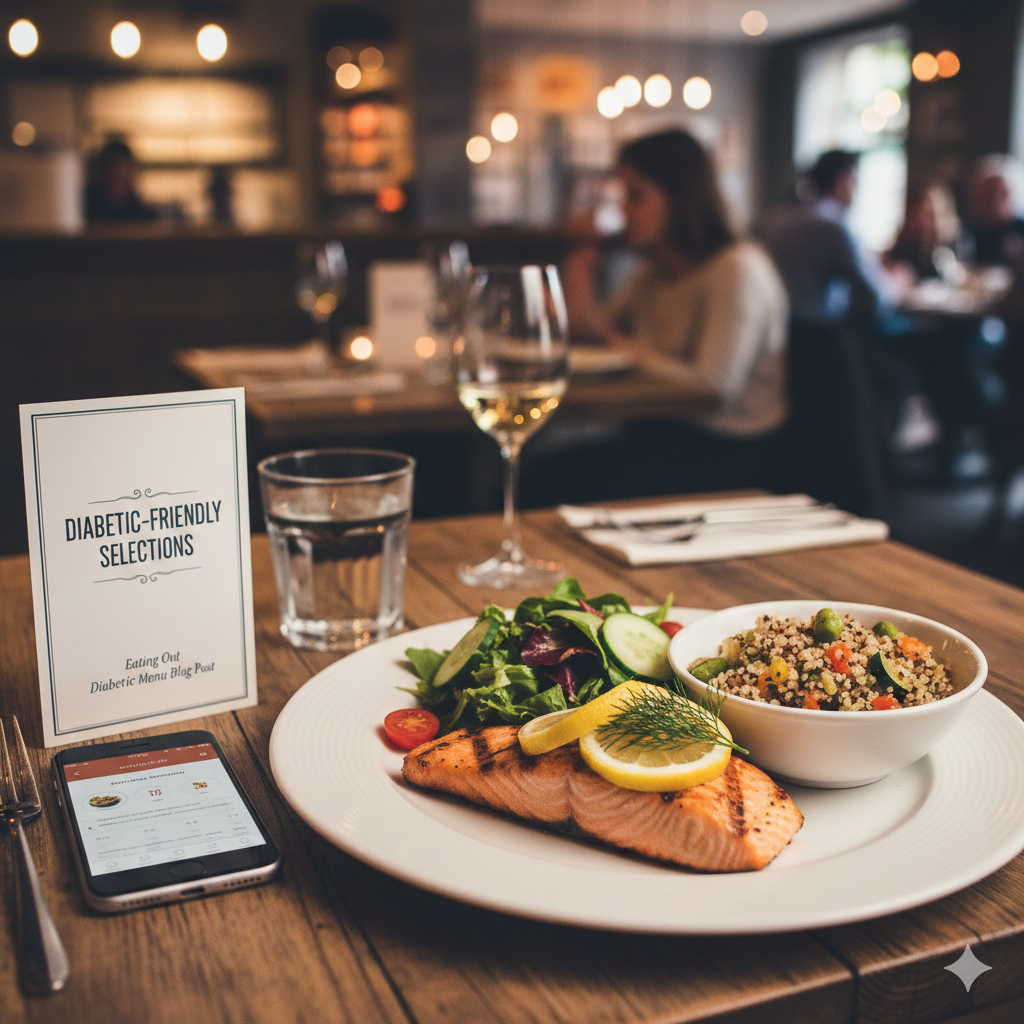
Eating Out Diabetic Menu: The Ultimate Guide to Restaurant Dining
Category: Lifestyle Guide | Reading Time: 15 Minutes
For many, the phrase “eating out” conjures images of relaxation, celebration, and convenience. However, for the millions of people living with diabetes, walking into a restaurant can feel less like a treat and more like a tactical mission. Hidden sugars in sauces, oversized portions, and the mystery of carbohydrate counts can turn a simple dinner into a source of anxiety.
But having diabetes does not mean you are sentenced to a lifetime of Tupperware and eating at home. An eating out diabetic menu strategy is entirely possible. It requires a shift in mindset: moving from passive consumption to active selection. Whether you are managing Type 1, Type 2, or Pre-diabetes, the restaurant world is still your oyster (which, incidentally, is a great low-carb choice!).
In this comprehensive guide, we will dismantle the menu. We will explore how to navigate everything from fast food joints to high-end steakhouses. We will discuss how to integrate restaurant meals into your weekly diabetic meal plan without derailing your progress. Put down the menu anxiety—it’s time to order with confidence.
The Pre-Game Strategy: Planning Before You Arrive
The battle for blood sugar control is often won or lost before you even step foot in the restaurant. Spontaneity is fun, but preparation is safe. If you are following a strict regimen like a 1500 calorie diabetic menu, checking the menu online is non-negotiable.
1. Analyze the Online Menu
Most restaurants publish nutritional information online. Look for the carbohydrate counts and sodium levels. If you are on a low sodium diabetic meal plan, you will be shocked to find that a single appetizer can contain your daily limit of salt.
2. The “Appetizer Trap”
Arriving hungry is dangerous. The bread basket or the bowl of tortilla chips is the nemesis of stable glucose. Consider eating a small, high-protein snack before you leave the house—perhaps something from our list of diabetic snack ideas—so you aren’t famished when you sit down.
3. Timing Your Medication
Restaurant service is slower than home cooking. If you take rapid-acting insulin, taking it when you order might lead to hypoglycemia if the food takes 45 minutes to arrive. Wait until the appetizer arrives or you see the food coming.

The Calorie King Calorie, Fat & Carbohydrate Counter
The pocket-sized bible for eating out. Quickly look up carb counts for thousands of restaurant chains and generic foods discreetly at the table.
Check Price on AmazonCuisine-Specific Survival Guides
Different cuisines present different challenges. Here is how to navigate the most common restaurant types while sticking to your health goals.
1. Italian: The Carb Conundrum
Italian food is notorious for pasta and pizza, making it difficult for those on a low carb weekly diabetic menu.
- The Swap: Ask for “Zoodles” (zucchini noodles) or gluten-free pasta (often bean-based, which has more fiber). If not available, order a meat dish like Chicken Piccata or Marsala and swap the side of pasta for double steamed broccoli.
- The Pizza Hack: Thin crust is non-negotiable. Eat one or two slices max and fill up on a large Caesar salad (no croutons) beforehand.
2. Mexican: The Hidden Lard and Chips
Mexican food can actually be very diabetic-friendly if you avoid the fried tortillas. It fits well with high-fiber diets due to the beans.
- The Order: Fajitas are the gold standard. Grilled meat, peppers, and onions. Skip the tortillas and eat them with a fork, or ask for lettuce cups.
- The Beans: Ask for whole black beans or pinto beans instead of refried beans, which are often cooked with lard. This aligns better with a heart-healthy diabetic menu.
3. Chinese and Asian: The Sweet Sauce Trap
Asian cuisine is tricky because sauces like Teriyaki, General Tso’s, and Sweet & Sour are essentially sugar syrups.
- The Order: Steamed protein with sauce on the side. Brown rice is better than white, but still high carb—limit to 1/2 cup.
- The Soup: Hot and Sour soup or Egg Drop soup are generally low carb choices compared to Wonton soup (which has flour wrappers).
4. The Steakhouse: The Simplest Choice
A steakhouse is often the easiest place to eat. It naturally aligns with a high protein diabetic menu.
- The Order: Filet or Sirloin (leaner cuts).
- The Sides: Swap the loaded baked potato for grilled asparagus or spinach. Be wary of creamed spinach, which is high in calories.
The Fast Food Reality Check
Sometimes, life happens, and the drive-thru is the only option. Busy professionals relying on a diabetic menu for working adults know this struggle well.
Burger Joints
Most major chains will do a “lettuce wrap” or “protein style” burger. Removing the bun saves you 30-40g of carbohydrates instantly. Pair it with a side salad instead of fries. If you must have fries, choose the smallest size (kids size) and skip the ketchup (which is high sugar).
Sandwich Shops
Turn any sub into a salad (“sub in a tub”). If you need the bread, choose whole wheat and scoop out the soft inside dough to reduce the carb load. Load up on vinegar and oil instead of sugary onion sauce or honey mustard.
Breakfast Chains
Avoid the pancakes and waffles. Look for egg bites, oatmeal (unsweetened), or breakfast burritos where you can eat the filling and discard the tortilla. This mimics a good diabetic breakfast menu option.

Portable Portion Control Containers
Discreet containers to help you visualize proper portion sizes or pack leftovers instantly. Great for managing intake on the go.
Check Price on AmazonNavigating Drinks and Desserts
The meal isn’t just the food. What you drink can have a bigger impact on your blood sugar than what you chew.
Alcohol and Diabetes
Alcohol prevents the liver from releasing glucose. This sounds good, but it can actually lead to delayed hypoglycemia (low blood sugar), especially if you are on insulin. Never drink on an empty stomach.
- Best Choice: Light beer, dry wine (red or white), or spirits with diet soda/soda water.
- Avoid: Sweet cocktails (Margaritas, Piña Coladas), dessert wines, and craft beers with high residual sugar.
The Dessert Dilemma
If everyone is ordering dessert, you don’t have to sit there with a glass of water. Two strategies work:
- The Three Bite Rule: Order the dessert, take three mindful bites to satisfy the taste, and push it away (or share it).
- The Berry Option: Ask for a bowl of fresh berries with a dollop of unsweetened whipped cream. This is a staple in many low sugar diabetic weekly menus.
Dining Out vs. Home Cooking: A Diabetic Comparison
While we can make eating out safer, it is important to understand the trade-offs compared to preparing a 1-day simple diabetic menu at home.
| Factor | Eating Out | Home Cooking |
|---|---|---|
| Portion Control | Difficult (Portions often 2-3x needed) | Precise (Can use scales) |
| Sodium Content | Extremely High | Controllable |
| Carb Counting | Estimates/Guesswork | Accurate |
| Social Aspect | High (Relaxation) | Variable (Work involved) |
| Cost | High | Low |
Special Considerations for Complex Health Needs
If your diabetes is complicated by other conditions, the rules tighten slightly.
High Blood Pressure
For those needing a diabetic menu for high blood pressure, restaurant soups and marinades are the enemy. Request grilled meats with no salt added (just pepper) and dressing/sauces on the side. Lemon juice is your best friend for flavor.
Kidney Health
A renal diabetic meal plan requires watching potassium and phosphorus. This means avoiding the baked potato bar and tomato-based pasta sauces. Stick to white rice, cauliflower, and lean proteins.
Pregnancy
For a diabetic menu for pregnant women, food safety is paramount alongside blood sugar. Avoid undercooked meats (rare steaks), raw fish (sushi), and unpasteurized cheeses to prevent infections that could complicate the pregnancy.

Stylish Medical Alert Bracelet
If you have a hypoglycemic episode in a restaurant, this bracelet speaks for you. Essential safety gear for dining out alone or in groups.
Check Price on AmazonFrequently Asked Questions
The best method is to use a smartphone app or a reference book like Calorie King. If unavailable, use visual estimations: a fist size is roughly 1 cup (30-45g carbs for pasta/rice), and a palm is 3oz of protein. Always overestimate to be safe.
American-Chinese food can be high in sugar and refined carbs. However, you can make it diabetic-friendly by ordering steamed dishes (Buddha’s Delight or Steamed Chicken with Broccoli), asking for sauce on the side, and skipping the white rice in favor of brown rice or no rice.
Opt for thin-crust pizza to minimize dough. Limit yourself to 1-2 slices and load the pizza with vegetables and lean meats. Supplement the meal with a large green salad with vinaigrette dressing to fill up.
Yes, studies suggest that consuming vinegar (like in a salad dressing) before a high-carb meal can improve insulin sensitivity and blunt the blood sugar spike. Start your meal with a salad with oil and vinegar dressing.
Survey the entire buffet before picking up a plate. Fill half your plate with non-starchy vegetables first. Choose one carb dish to enjoy and skip the rest. Sit far away from the food stations to avoid the temptation of seconds.
Conclusion: Reclaiming the Joy of Dining Out
Eating out with diabetes requires mindfulness, but it doesn’t require misery. By understanding the menu, asking for modifications, and prioritizing protein and vegetables, you can enjoy social gatherings and delicious food without compromising your health.
Remember, one meal does not define your diabetes management. It is about the consistency of your choices over time. Whether you are grabbing a quick lunch or sitting down for a five-course anniversary dinner, the principles remain the same: Balance your plate, watch your portions, and enjoy the company.
If you need help structuring your meals at home to allow for these occasional indulgences, a structured plan is your best defense.
Get Your Blueprint for Healthy Eating
Explore our full range of meal plans designed to stabilize blood sugar.
View the 30-Day Plan