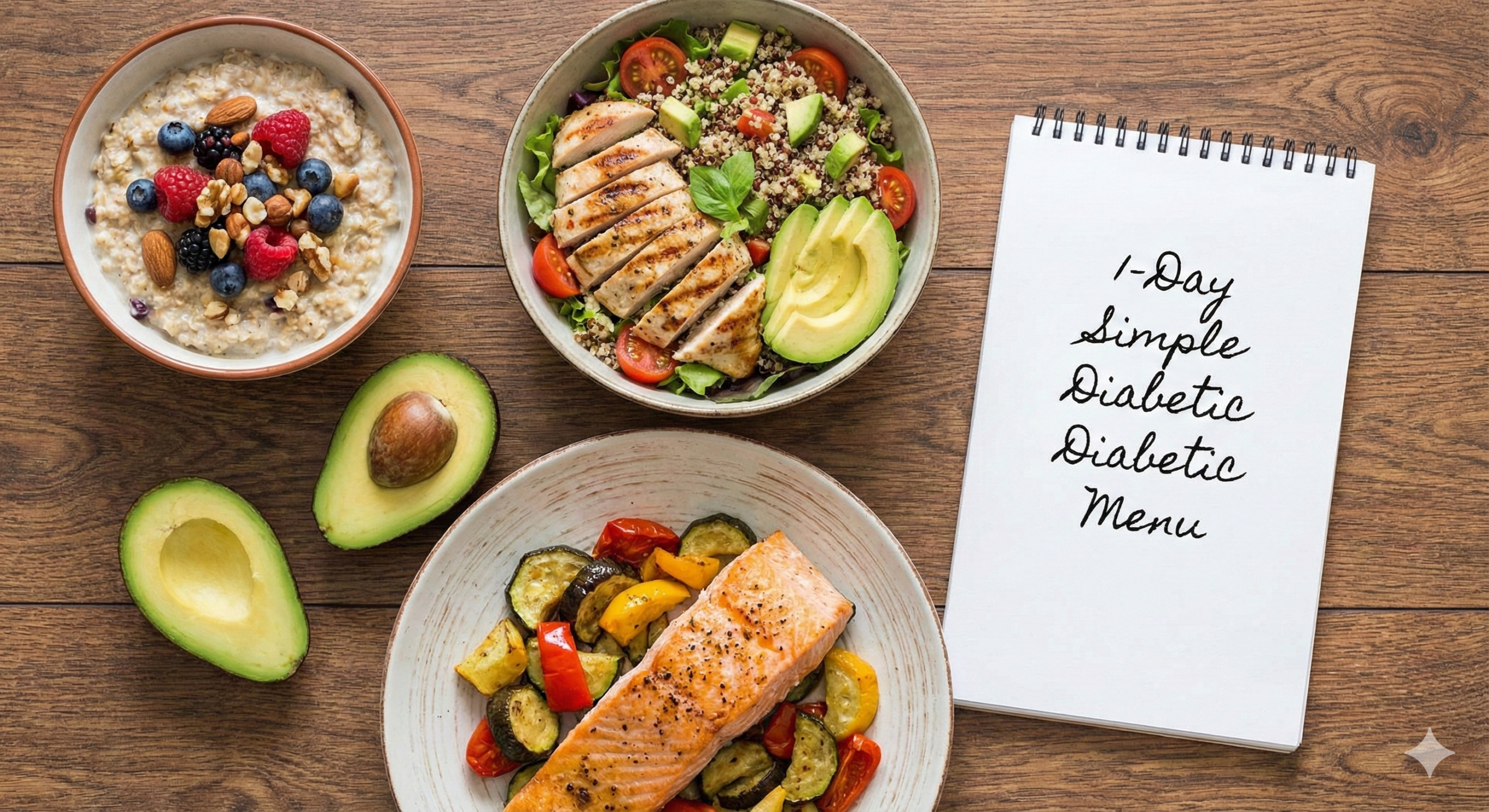
The Perfect 1-Day Simple Diabetic Menu: Reset Your Blood Sugar Today
Managing diabetes often feels like a full-time job where the rules keep changing. You are told to watch your carbs, monitor your portions, count calories, and check your glucose, all while trying to live a normal life. It is easy to feel overwhelmed by the sheer volume of decisions you have to make every time you open the refrigerator.
This is exactly why a 1-Day Simple Diabetic Menu is such a powerful tool. It removes the complexity. It eliminates the “what should I eat?” anxiety. For just 24 hours, you have a blueprint. It serves as a reset button for your body and your mind, proving to yourself that eating for blood sugar control can be delicious, satisfying, and surprisingly uncomplicated. And because it’s only one day, the commitment feels doable — you’re not signing up for a lifetime of deprivation, just one day of nourishment.
Whether you have been recently diagnosed with prediabetes, type 2 diabetes, or you are a veteran looking to get back on track after a holiday season of indulgence, starting with a single day is the most effective strategy. Once you master one day, extending it to a 3-day diabetic meal plan becomes effortless. For now, let’s focus on these 24 hours of steady glucose and delicious food.
Why Start With Just One Day? (The psychology of success)
The psychology of behavior change tells us that small, achievable goals lead to long-term success. Committing to a strict diet for a month can feel like a prison sentence. Committing to one day feels like an experiment — one you’re likely to ace.
The “Reset” Effect: More Than Just Glucose
A single day of clean eating won’t cure diabetes, but it can:
- Break the craving cycle: High-sugar foods trigger cravings for more sugar. A day of balanced macros breaks that loop, reducing the desire for sweets the next day.
- Stabilize morning numbers: A controlled dinner today leads to better fasting glucose tomorrow. Many people see a 10–20 mg/dL drop just from one disciplined day.
- Boost confidence: Accomplishing your goal for the day releases dopamine, motivating you to continue. Small wins build momentum.
- Reduce inflammation: Processed foods spike inflammatory markers. A day of whole foods gives your body a break, often reducing joint pain or brain fog.
If you find that this day goes well, you don’t have to stop there. You can easily transition into our 7-day diabetic menu for a full week of stability. But for now, let’s just focus on the next 24 hours.

Master Portions with Ease
One of the hardest parts of a diabetic diet is visualizing portions. A portion control plate takes the guesswork out of the “Plate Method” used in this menu. Just fill the sections and you’re perfectly balanced.
Check Price on AmazonThe Nutritional Strategy: Science Meets Simplicity
Before we look at the specific meals, it is vital to understand why this menu works. This isn’t just random healthy food; it is a chemically balanced approach to hormone regulation and glycemic control. Let’s dive deeper into the principles.
1. The Plate Method (visually foolproof)
We utilize the standard diabetic plate method: 50% non-starchy vegetables, 25% lean protein, and 25% complex carbohydrates. This ensures volume (fullness) without the glycemic load. Vegetables like spinach, broccoli, and peppers provide essential vitamins and antioxidants that combat diabetic complications.
2. Fiber-First Approach
Every meal in this plan includes fiber. Fiber acts as a physical barrier in your intestine, slowing down the absorption of sugar into your bloodstream. This prevents the dreaded post-meal spike. The target is at least 30g of fiber from oats, chia, beans, and greens. Soluble fiber also helps lower LDL cholesterol, which is often elevated in diabetics.
3. Hydration & Electrolytes
High blood sugar forces your kidneys to work overtime to flush out excess glucose, leading to dehydration. This plan emphasizes water intake (aim for 8 cups) to assist your kidneys and keep your energy levels high. Herbal teas and infused water with lemon count, too.
4. Glycemic Load Awareness
We don’t just count carbs; we choose carbs with a low glycemic index (GI). Steel-cut oats (GI 42), quinoa (GI 53), and sweet potatoes (GI 44) ensure that glucose enters the bloodstream gradually. By pairing carbs with protein or fat (apple with peanut butter), we further lower the glycemic response.
Your 1-Day Simple Diabetic Menu (step‑by‑step)
Here is your step-by-step guide from waking up to winding down. No fancy ingredients, no hours in the kitchen—just simple, real food. Feel free to adjust portion sizes based on your appetite and activity.
Breakfast: Fiber-Rich Oatmeal Power Bowl
Start your day with slow-burning energy. Unlike sugary cereals that spike and crash your energy, steel-cut oats provide a steady release of glucose. This meal is designed to keep you full until lunch without any mid-morning slump.
Ingredients:
- 1/2 cup cooked steel-cut oats (or rolled oats – cook with water or unsweetened almond milk)
- 1 tablespoon chia seeds (for Omega-3s and an extra 5g fiber)
- 1/4 cup blueberries or raspberries (antioxidants reduce oxidative stress)
- 1 hard-boiled egg on the side (for protein to stabilize morning glucose)
- Dash of cinnamon (helps improve insulin sensitivity)
Why this works: The fiber in the oats and chia seeds blunts the carb impact. The egg provides the protein necessary to keep you full until lunch. Berries add sweetness without spiking sugar.
Morning Snack: The Crunch Factor (blood‑smart pairing)
Bridge the gap between breakfast and lunch to prevent low blood sugar (hypoglycemia) or extreme hunger that leads to overeating. This snack is around 150 calories with a perfect macro split.
The Choice:
- 1 small apple (preferably with skin for extra fiber)
- 1 tablespoon natural peanut butter or almond butter (no added sugar or hydrogenated oils)
Tip: Always pair fruit with a fat or protein source. An apple alone raises blood sugar faster than an apple with peanut butter. The fat slows digestion, leading to a smooth glucose curve.
Lunch: The “Big Salad” Technique (high volume, low glycemic load)
Lunch is often where diets fail because of convenience foods. This meal takes 5 minutes to assemble if you have pre-washed greens. It’s packed with color and texture.
Ingredients:
- 2–3 cups mixed greens (spinach, kale, arugula – the more leaves, the better)
- 3-4 oz grilled chicken breast (or canned tuna, or 1/2 cup firm tofu for plant‑based)
- 1/2 avocado (healthy fats keep you satiated and help absorb vitamins)
- 1/4 cup chickpeas or black beans (rinsed, adds fiber and plant protein)
- Dressing: 1 tbsp extra virgin olive oil + squeeze of lemon juice + salt/pepper/oregano
Why this works: This meal is high volume but low calorie. The volume stretches the stomach, triggers satiety signals, while the lack of refined carbs keeps you from falling into a “food coma” in the afternoon. The beans add resistant starch.
Afternoon Snack: Savory Satisfaction (defeat the 3 p.m. slump)
Around 3:00 PM, the desire for chips or sweets usually hits. Combat it with crunch and salt without the carbs. This snack is also hydrating.
The Choice:
- 1 cup raw veggie sticks (cucumber, bell pepper, celery, jicama)
- 2 tablespoons hummus (look for no added sugar) or 2 tbsp guacamole
Dinner: Lean and Green Comfort (light carbs for overnight stability)
Dinner should be lighter on carbs than breakfast to prevent high blood sugar while you sleep (dawn phenomenon). We focus on protein and vegetables here with a small side of complex carbs.
Ingredients:
- 4-6 oz Baked Salmon or White Fish (Cod/Tilapia) seasoned with herbs and lemon
- 1 cup Roasted Broccoli, Asparagus, or Brussels sprouts (drizzled with olive oil)
- 1/2 cup Quinoa or small roasted Sweet Potato (about 3–4 oz)
Why this works: Fish is excellent for heart health—a major concern for diabetics. The omega-3 fatty acids reduce inflammation. The small portion of complex carbs ensures your liver has enough glycogen for the night without overloading your system. If you prefer even fewer carbs, swap quinoa for cauliflower rice.
Need more dinner ideas? Check out our weekly diabetic meal plan for diverse evening recipes.

Stay Informed, Stay Safe
Knowing your numbers is half the battle. A reliable, quick-response glucose monitor helps you see exactly how this 1-day menu improves your levels compared to your regular diet. Track before breakfast and 2 hours after meals.
Check Price on AmazonTips for Success on Your 1-Day Reset
Even the simplest plans can face hurdles. Here is how to guarantee success for your day.
1. Prep the Night Before
Decision fatigue is your enemy. Boil the eggs, wash the greens, and thaw the chicken the night before. When you wake up, the path of least resistance should be the healthy one. Pre-portion your snacks so you’re not tempted to overeat.
2. Test, Don’t Guess
Use this day as a data-gathering experiment. Test your blood sugar fasting, before lunch, and two hours after dinner. Seeing the stable numbers will be the biggest motivator to turn this 1-day plan into a 14-day routine. Write down your readings to spot patterns.
3. Adjust for Activity
If you plan on hitting the gym or going for a long walk (which you should!), you might need a slightly larger snack or a little extra complex carb. Listen to your body. If you are sedentary today, the portions listed above are likely sufficient.
4. Manage Cravings with Herbal Tea
When a sugar craving hits, wait 10 minutes and sip a warm herbal tea (peppermint, chamomile, or ginger). Often cravings are just boredom or thirst in disguise.
Comparison: 1-Day Planning vs. Other Methods
Is planning just one day really better than planning a whole month? Let’s compare the approaches. This table shows why the 1‑day method is ideal for beginners.
| Feature | 1-Day Simple Menu | Full Month Plan | “Winging It” (no plan) |
|---|---|---|---|
| Stress Level | Low — just 24 hours | High — can feel overwhelming | Moderate to High — constant decisions |
| Flexibility | High — easy to adapt | Low — rigid structure | Maximum — but risky |
| Cost Efficiency | Moderate — minimal waste | High (Bulk buying) | Low (Impulse buys, takeout) |
| Success Rate | Very High — 80%+ completion | Low (High drop-off after week 1) | Variable, usually poor control |
| Best For | Beginners, Resets, Busy schedules | Advanced preppers | Nobody managing Diabetes |
As you can see, the 1-day approach offers the highest success rate for beginners. Once you are comfortable, you can graduate to our 30-day diabetic menu for maximum cost efficiency and routine.
Adapting the Menu for Specific Needs
No two bodies are the same. Here is how to tweak this 1-day simple diabetic menu for your specific situation without losing the blood‑smart benefits.
For the Low-Carb Enthusiast
If you prefer a tighter control on carbohydrates, simply remove the oatmeal at breakfast and replace it with an extra egg and sautéed spinach. At dinner, swap the quinoa for cauliflower rice. This brings the menu closer to our low-carb weekly diabetic menu standards.
For the Busy Professional (meal prep shortcuts)
No time to cook salmon? Use rotisserie chicken (skin removed) for dinner and pre-packaged hard-boiled eggs for breakfast. Convenience doesn’t have to mean unhealthy. Pre-cut veggies from the grocery store save time for the salad.
For Vegans / Plant-Based
Replace chicken and salmon with baked tofu, tempeh, or a generous portion of lentils. Use maple dijon dressing instead of honey. This menu is easily veganized.
Frequently Asked Questions (clinical answers)
Why start with just a 1-day diabetic menu?
Starting with a single day reduces decision fatigue. It’s a low‑risk experiment that shows you can eat well without deprivation, paving the way for longer plans.
Can I drink coffee on this meal plan?
Yes, black coffee or with a splash of unsweetened almond milk. Avoid sugar and high‑fat creamers.
How many carbs in this 1-day plan?
Approximately 130–150g of complex carbs, spread across meals to prevent spikes. Adjust based on your doctor’s advice.
Is this menu suitable for vegetarians?
Absolutely. Swap chicken/fish for tofu, tempeh, or extra legumes. Keep the fiber high.
What if I get hungry between meals?
Try a low‑carb snack: celery, one boiled egg, or a few almonds. Drink water first — thirst mimics hunger.
Should I skip breakfast if morning blood sugar is high?
No — a protein‑focused breakfast (like eggs) helps stabilize rather than skipping, which can cause rebound spikes.
Can I use artificial sweeteners?
Moderate use of stevia, erythritol, or monk fruit is generally safe. Minimize reliance on them over time.
How does this compare to a keto diet?
This plan is balanced with complex carbs; keto is very low carb. This is often easier to sustain long term.
What if I eat out?
Follow the plate method: half veggies, quarter protein, quarter starch. Sauces on the side, no bread basket.
Do I need to weigh my food?
For a 1-day reset, visual cues (plate method) are fine. Measuring carbs like oats helps accuracy.
Can I reuse this menu multiple days?
Yes, many repeat this exact day. When bored, move to 3‑day or 7‑day plans for variety.
Is exercise recommended on reset day?
Light activity like a 20‑min walk after meals improves glucose uptake. Listen to your body.
Conclusion: Your Journey Starts with One Day
Managing diabetes is a marathon, not a sprint. But every marathon is just a series of single steps. This 1-Day Simple Diabetic Menu is your first step. It is proof that you are in control, not your condition.
By following this plan for just 24 hours, you give your body a break from the rollercoaster of blood sugar spikes and crashes. You will likely sleep better, think clearer, and feel more energetic. And the best part? If you can do it for one day, you can do it for two.
Once you’ve conquered today, don’t stop. Explore our comprehensive weekly plans to keep the momentum going.
*affiliate links help us create more free resources – all product URLs unchanged.